
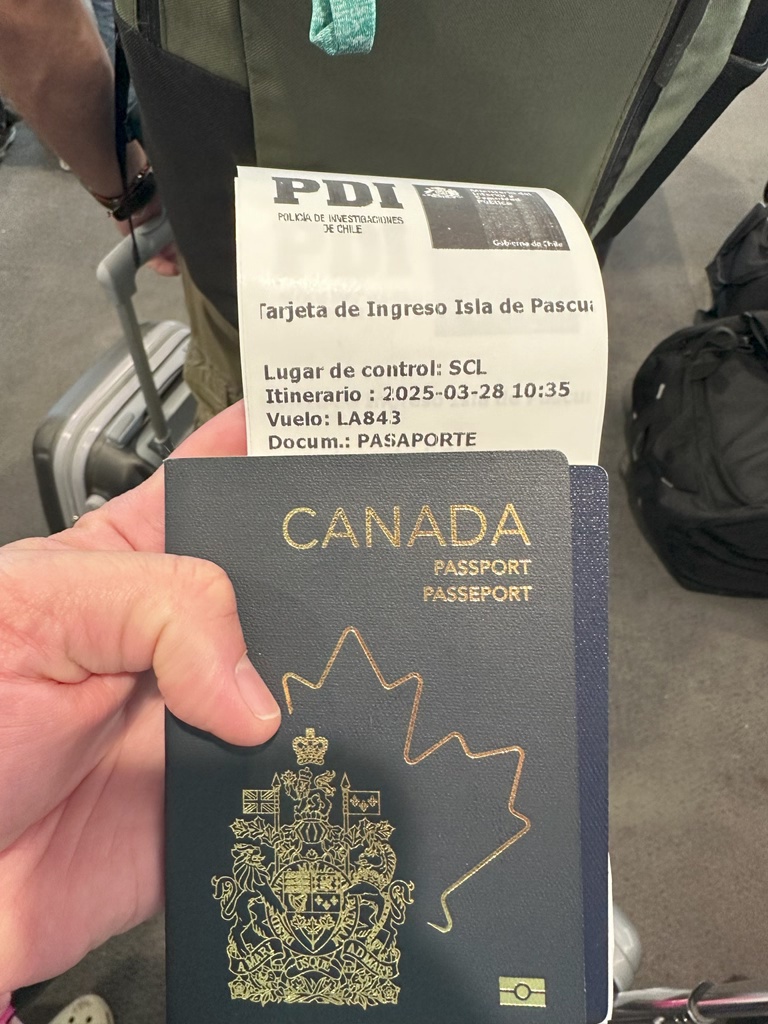
We had a restful night in Providencia and were once again back at the airport. I’d originally booked a flight at 9:10 am, so not too early, but the flight times were changed since then and we were bumped to an 8:15 flight. I never confirmed the change, and on certain days of the week, there are 2 daily flights to Rapa Nui. So last night I changed our flight time to the later one, at 10:35, so Ellie could sleep in a bit, and it was much appreciated. We arrived in plenty of time and went through the special document check for travelers to Rapa Nui (Easter Island, Isla de Pascua). You have to go through a similar process like border control, but not only is your passport checked, your accommodation booking and return flight booking are verified as well. It only took a few extra minutes because we were well prepared but I could see some people on the side scrambling last minute to find their documents and fill in the pre-departure form online.

You receive a PDI (immigration control) form just like you do when entering Chile once you’ve passed all this, and it gets handed over at flight boarding time.
We had plenty of time after that in a very busy lounge that was in a partially below grade level.

The food wasn’t very appealing.

The bar wasn’t open yet.
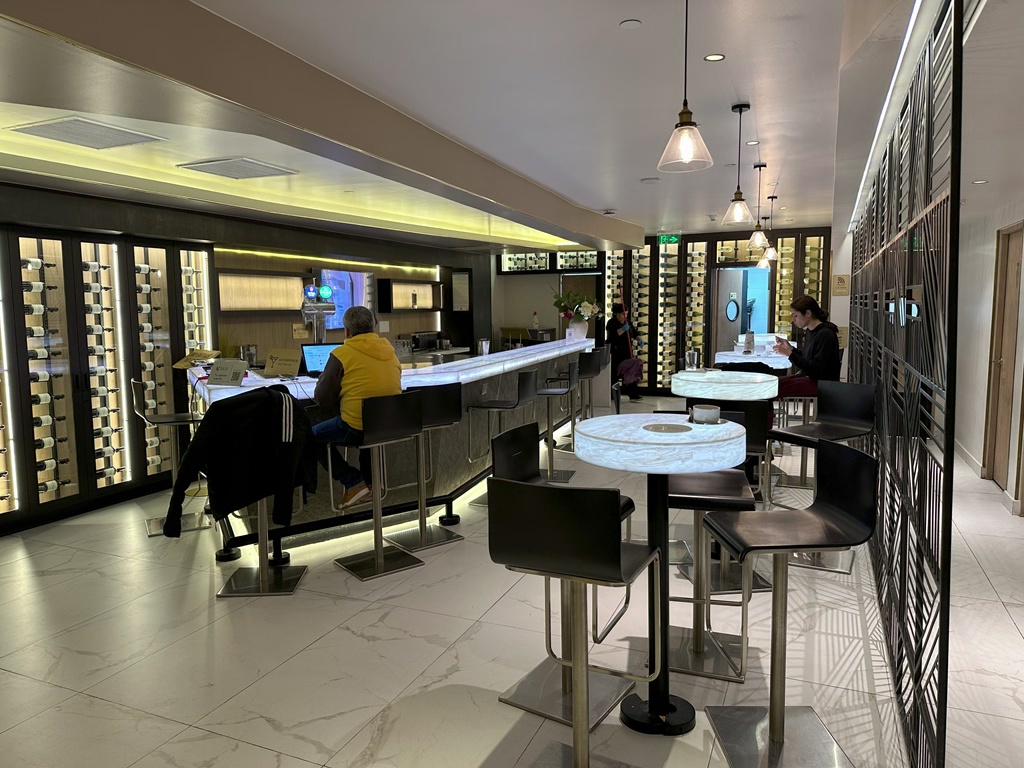
But it served its purpose to pass the time where we could have some snacks and drinks and relax before our next flight. Another LATAM Dreamliner flight today.

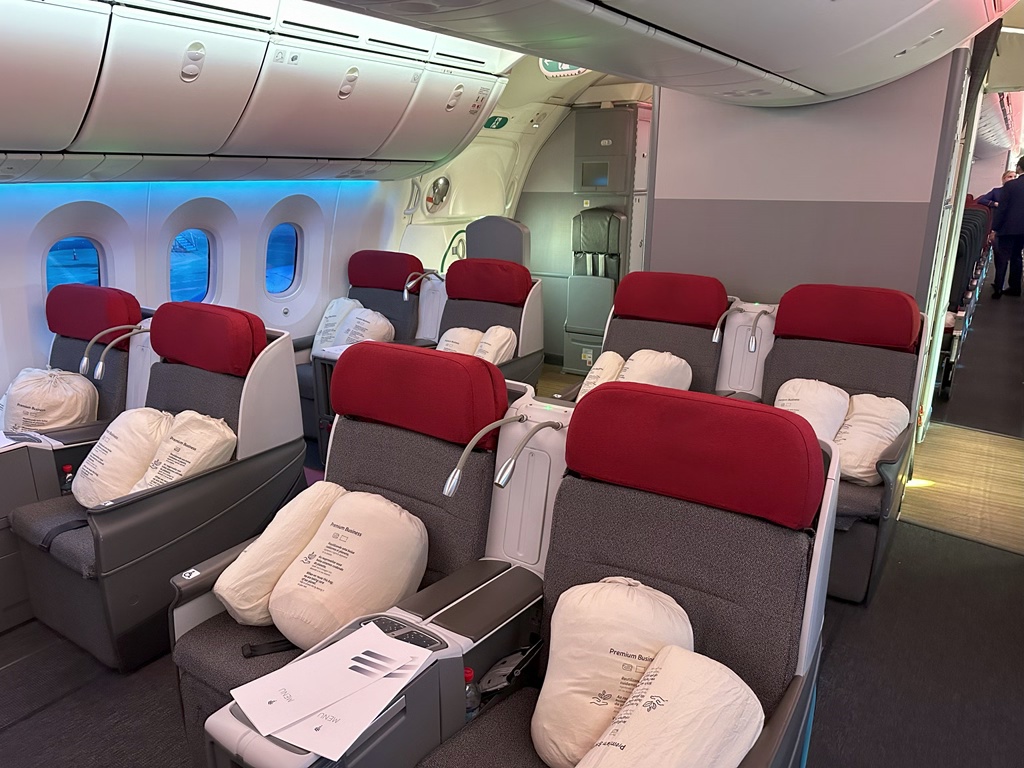
Ellie settled in right away with Tuci and her new stuffie, “Chile”, that she picked up at the Costanera Center yesterday.

The Santiago airport has a little forest in the middle of it. Very unexpected for such a dry, dusty place.
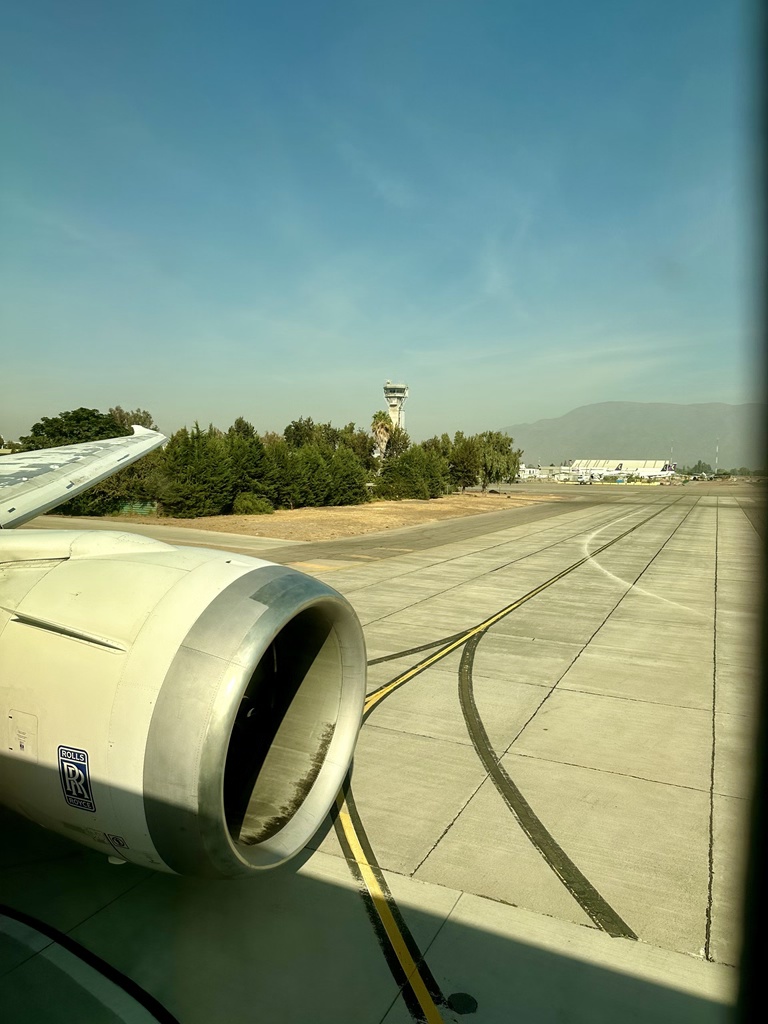
The dry air makes it a good place for long term aircraft storage though… we saw a few very interesting, ancient aircraft in the maintenance area.


We rose above the unfortunate ever-present layer of smog over Santiago into a brilliant blue sky.

And away from the city, it already started to clear up a bit.

Heading west, we passed over the rich agricultural and winelands of the Mallarauco and Maipo Valleys.

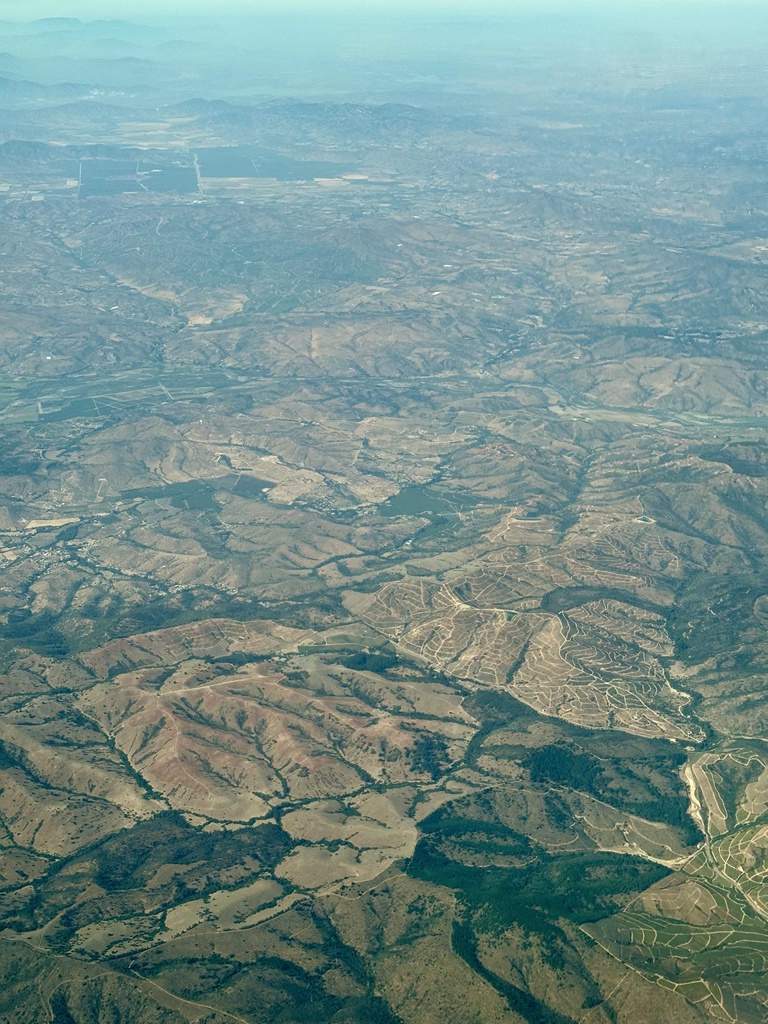
And before long, we were leaving the mainland of South America and we’ll be over the Pacific Ocean for the next 5 hours.
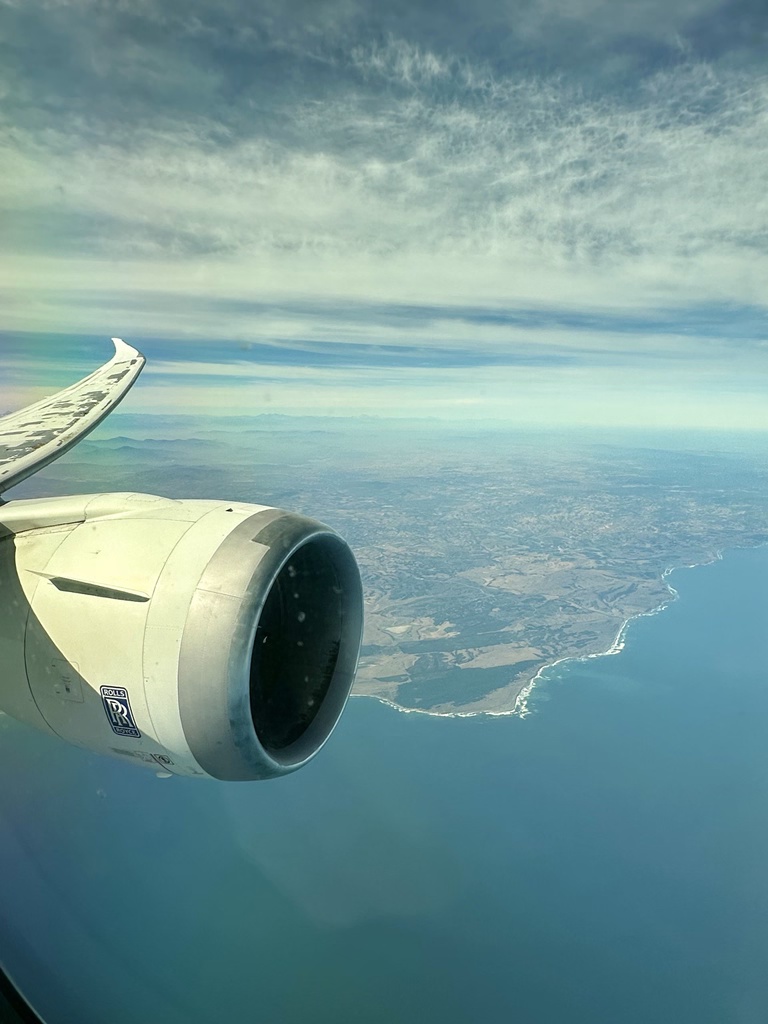
The view of just blue and clouds was broken up only by the Juan Fernandez Islands, about 700 km off the coast of Chile.


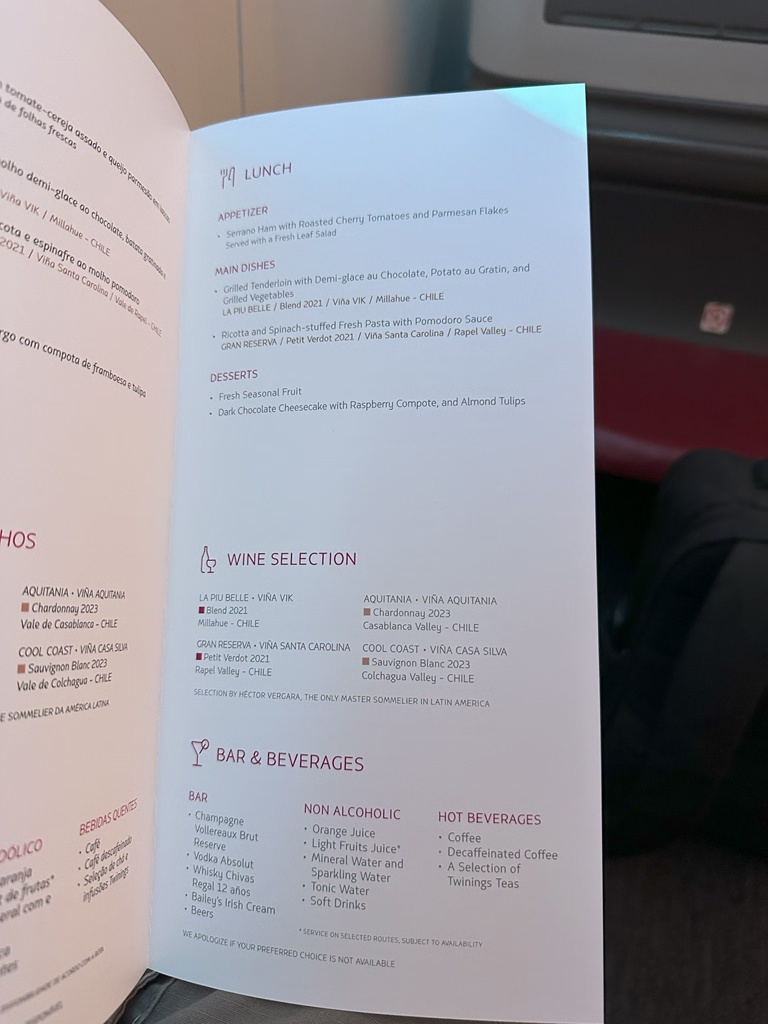
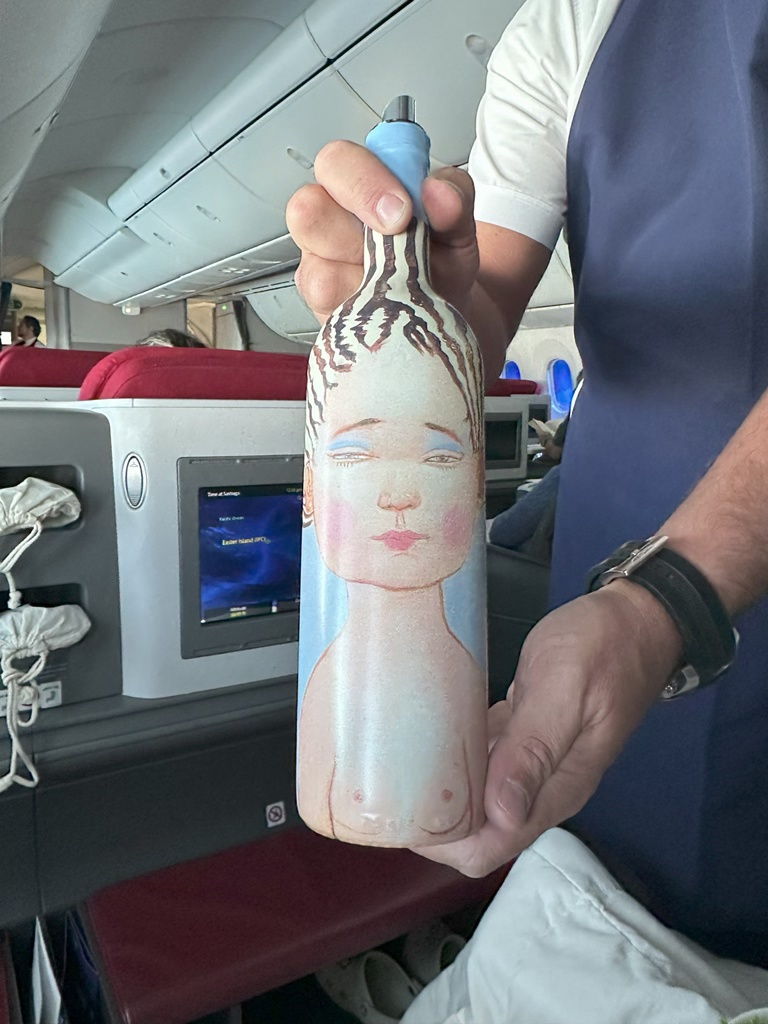
Lunchtime! Accompanied by a delicious Chilean red wine blend.

The air pollution from Chile reached almost 1000 km out into the ocean.

Chile got to enjoy some of the after lunch chocolates.

There was really nothing else to see until we were minutes away from landing. Mataveri International Aiport (IPC) is another one of those very small airports, where the plane has to turn around at the end of the runway to taxi back to the terminal. Rapa Nui itself is the most remote and isolated inhabited place on the planet. It is 3800 km from Santiago and Papeete, Tahiti, the next closest airport, is over 4200 km away, continuing west. Because of this, only one aircraft can be past the halfway point between Santiago and Mataveri at a time, as the alternate diversion airport in case of an issue at Mataveri is all the way back to Santiago. And checking the flight history for our flight, sometimes this happens! They can get all the way there and then have the airport socked in with thick fog, etc, and then passengers end up on a ten hour flight to nowhere. It’s really far away from everything out here!!
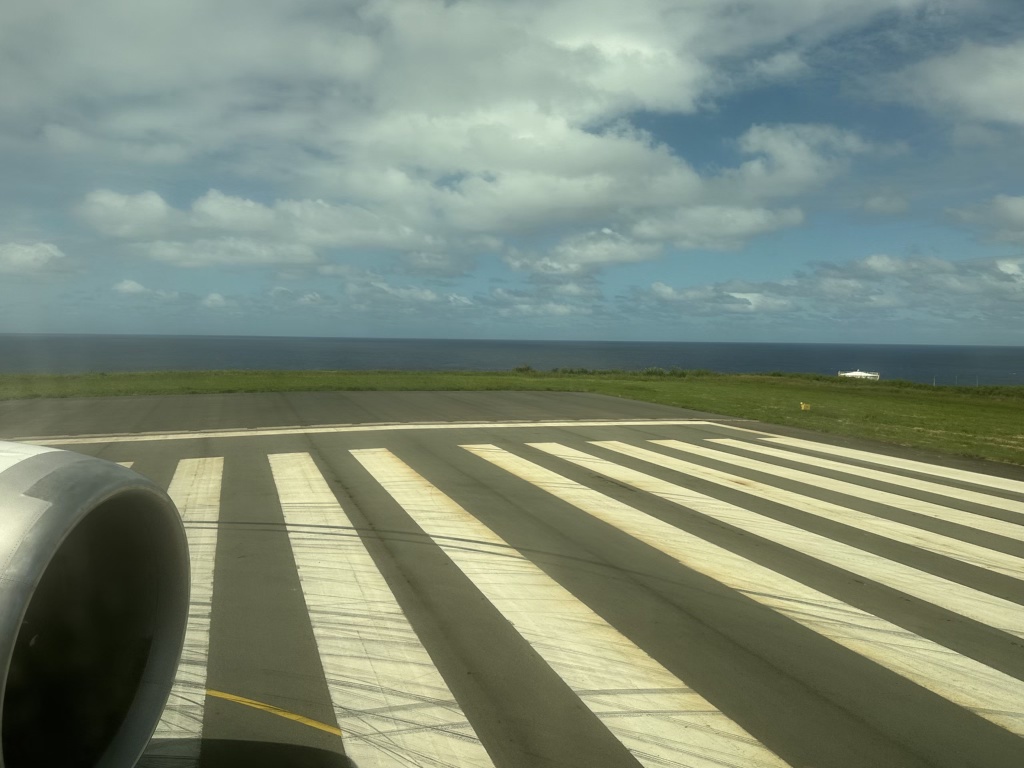
The earlier flight that were booked on until yesterday is getting ready to return to Santiago as we arrive.

The captain invited Ellie to come to the cockpit for some photos on arrival as he was suitably impressed by her flight logbook. How many places are there going to be palm trees right outside the windshield of a Dreamliner!
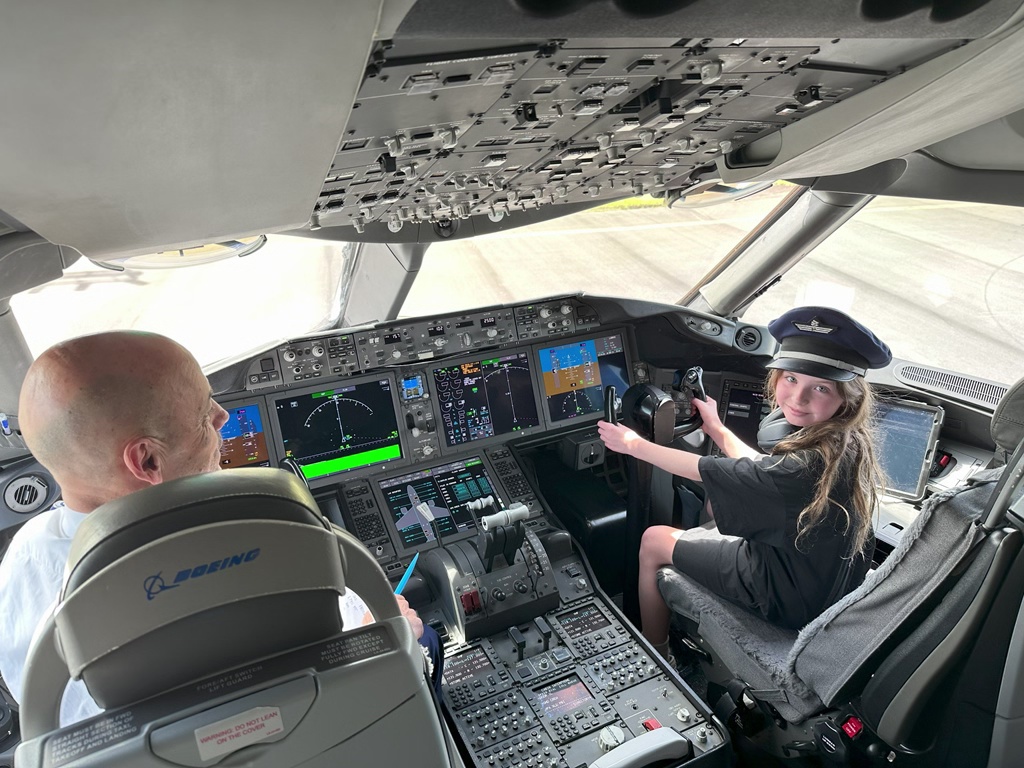


She also got to check out the crew rest bunks above the passenger cabin in Rows 1-2.

Ah, here we are now. What a lovely place to step outside onto stairs to deplane.

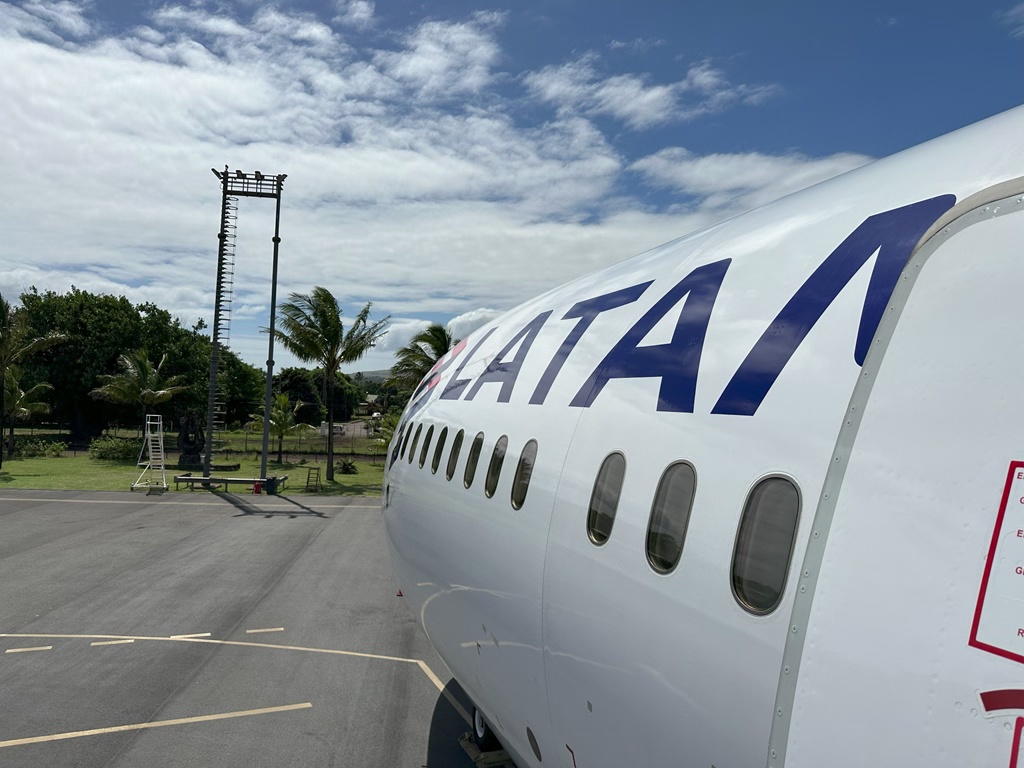
It was a bit windy but we were super excited to finally be here.


Iorana is the Rapa Nui greeting: it means both Hello and Goodbye.

This airport terminal is pretty sweet. A thatched roof hut in the style of the traditional Rapa Nui house.


With honu (sea turtles) in the tile floor.

And a carved wooden whale…

This was the extent of the entire arrivals area. Only one plane at a time here, remember!

After our luggage quickly came out, we were greeted by a staff member from the hotel, Juan, who welcomed us with fresh flower leis.
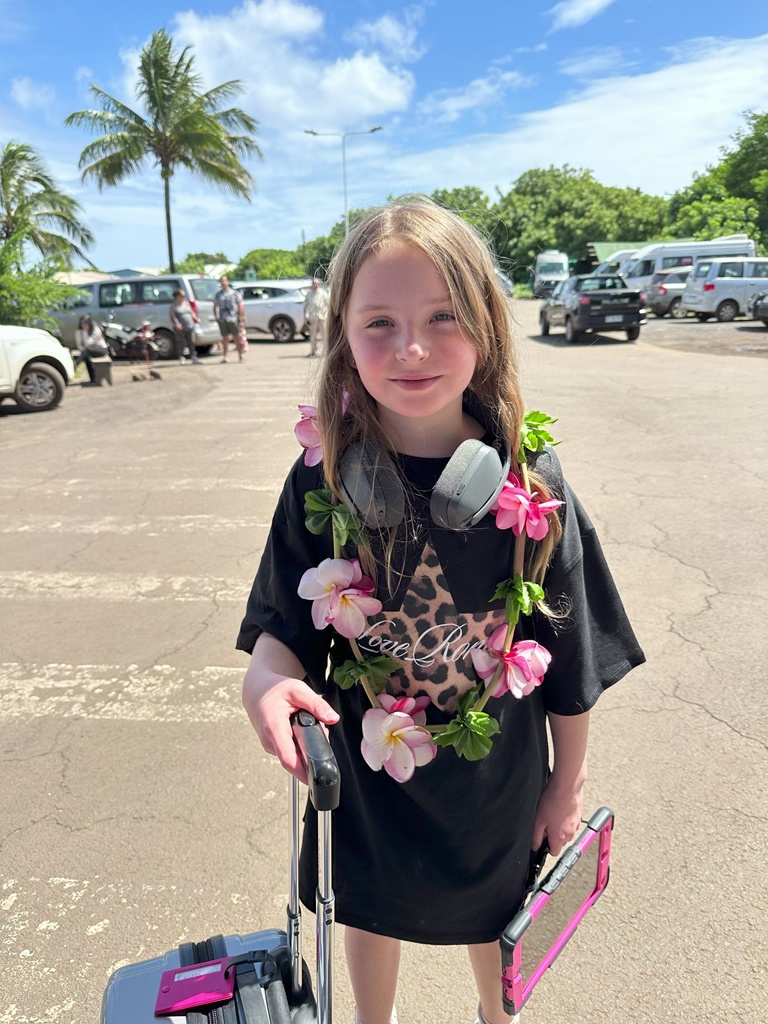

And then at the hotel, fresh pineapple juice. It was a hit with Ellie.

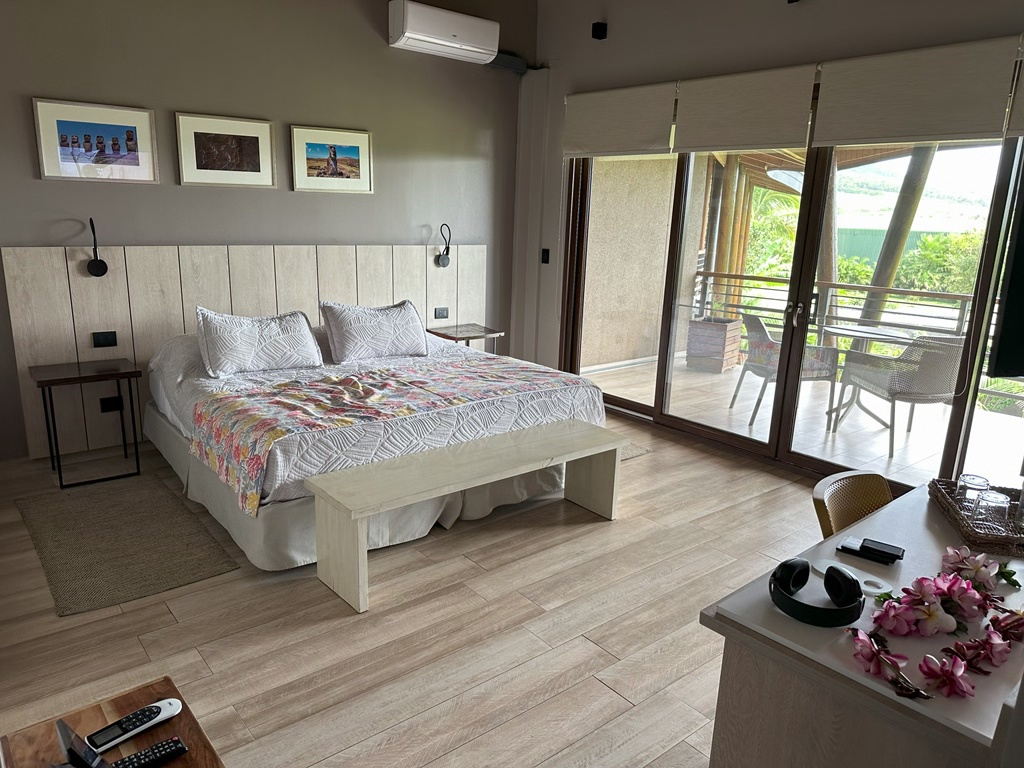
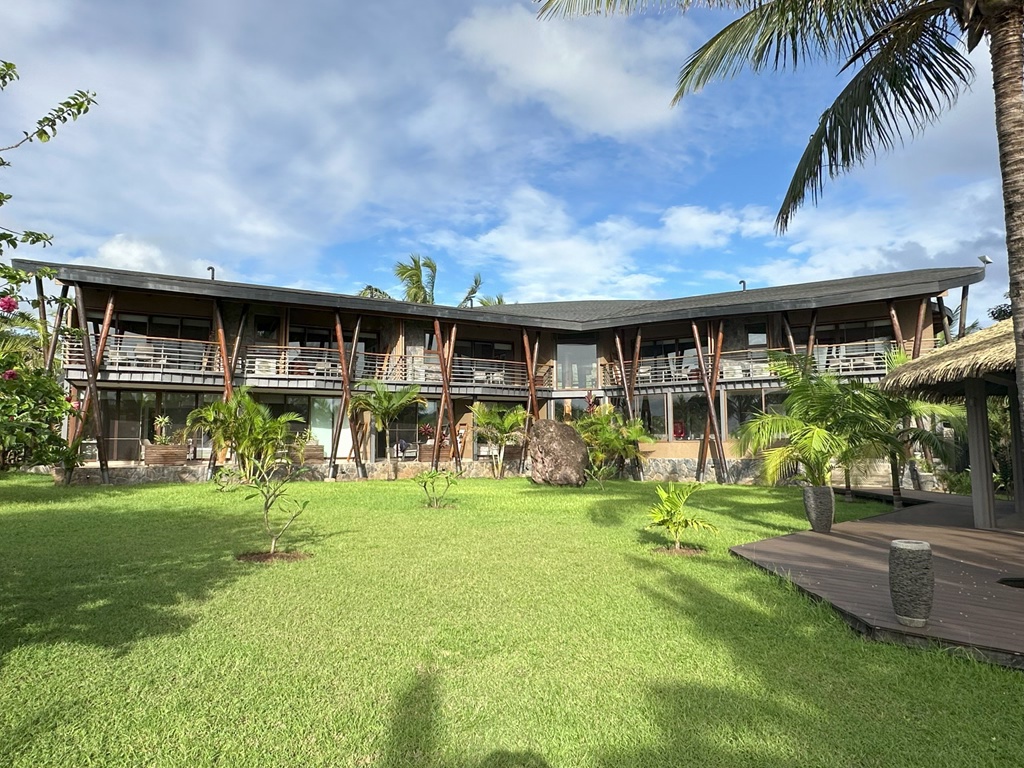
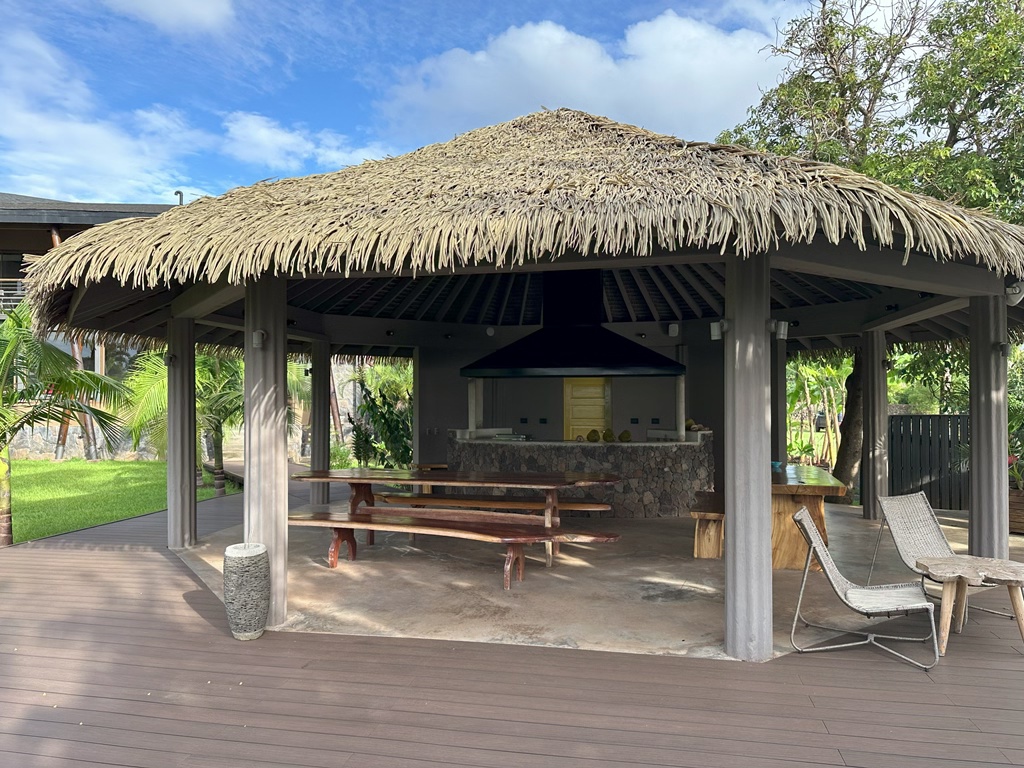
We are staying at Hotel Ohana, a newer, very small hotel on the outskirts of the main town of Rapa Nui, Hanga Roa. Hanga means bay in Rapa Nui and we’ll see the word everywhere over the next few days. Anyway, the hotel only has 9 rooms and was just gorgeous. We checked out the pool, and being unheated, it was a bit chilly, but still refreshing after a day of travel.


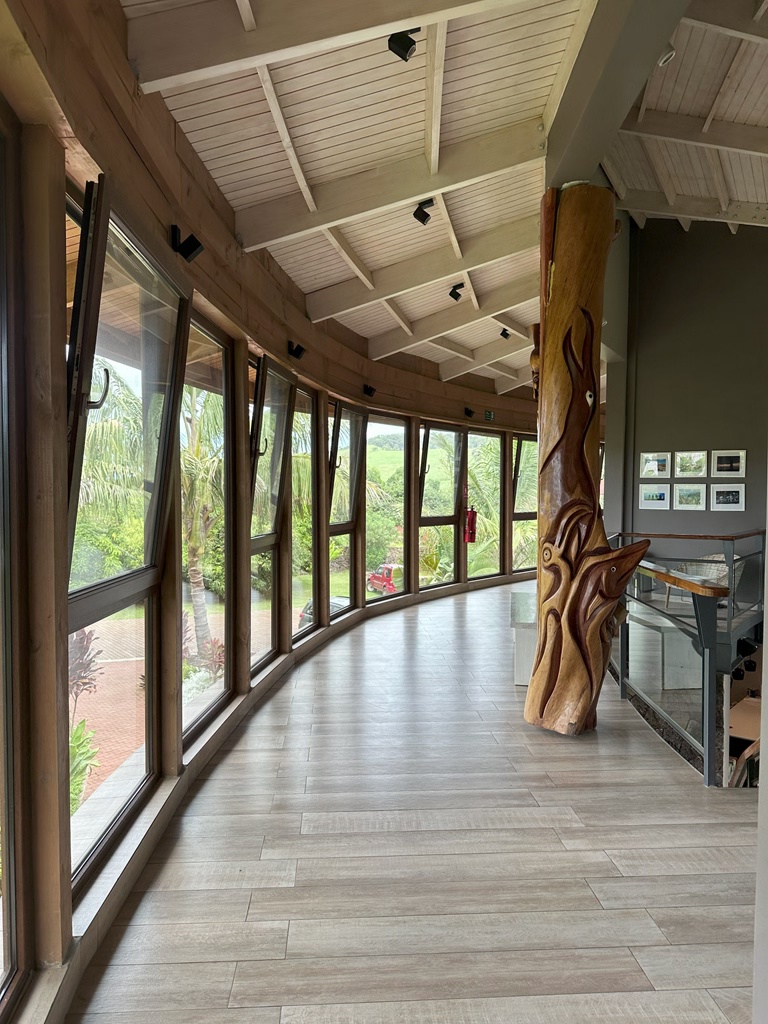
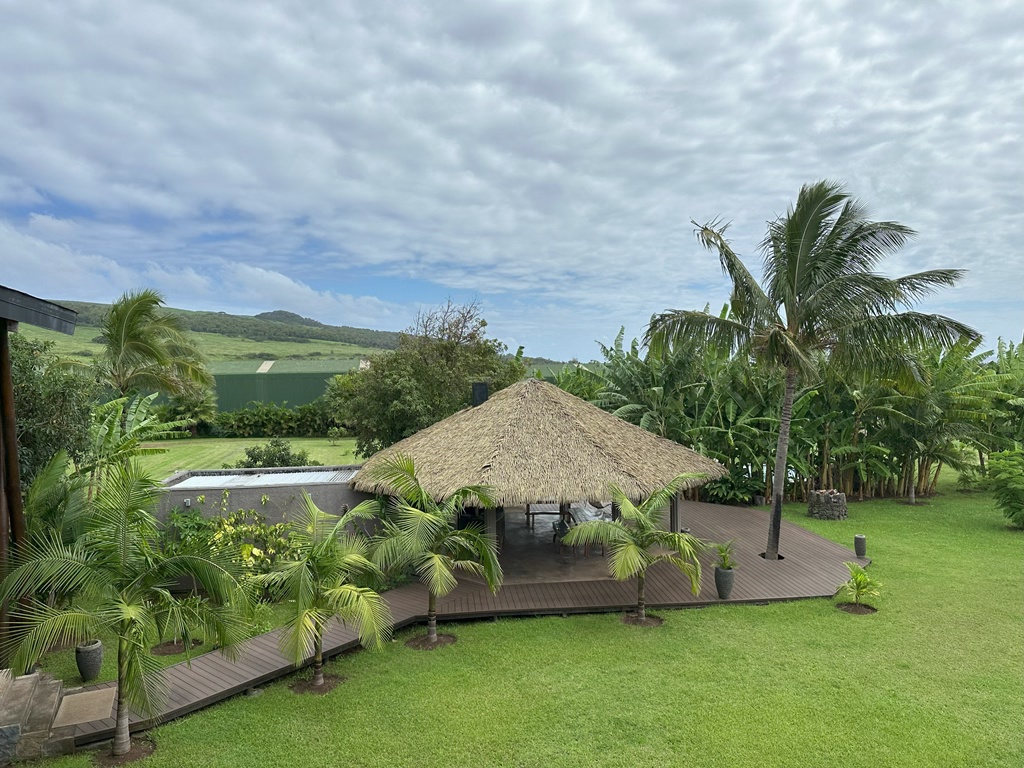

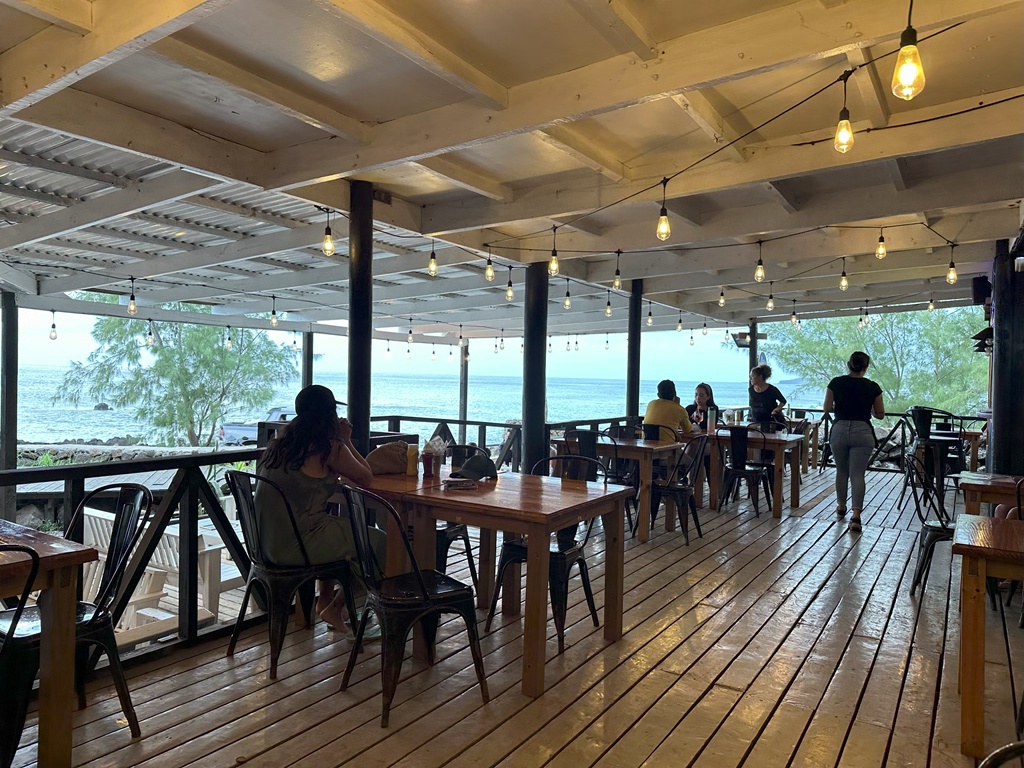
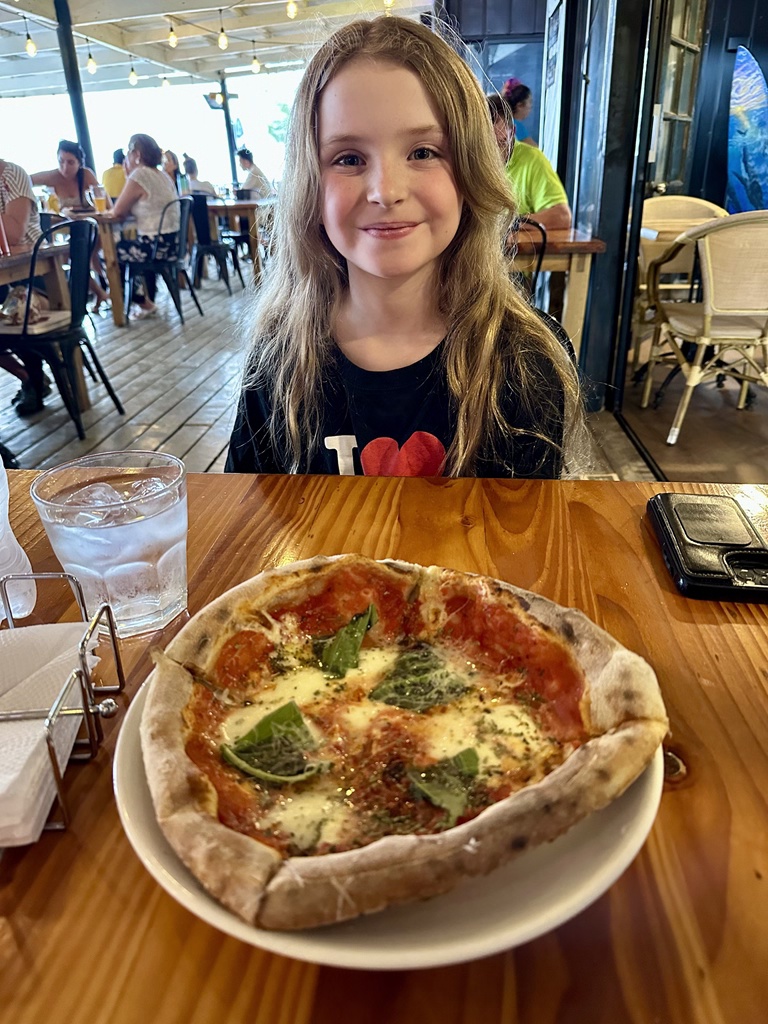
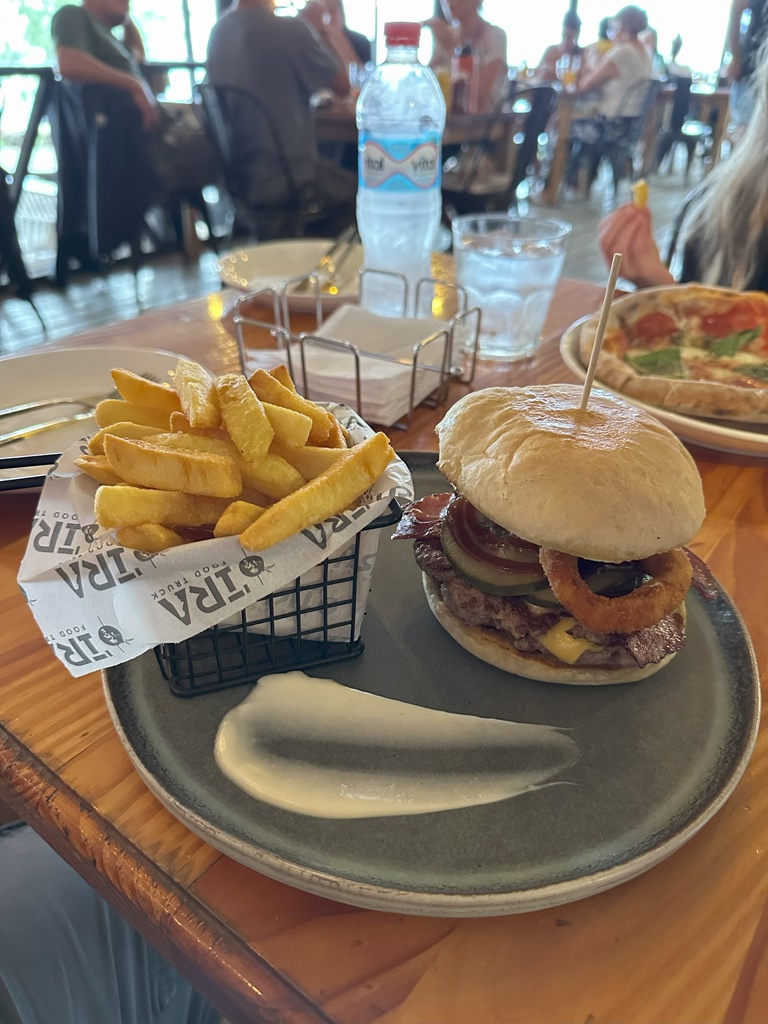
We ventured into town via taxi for dinner at a market style terrace joint right across the road from the ocean. One of the outlets did pizza (for Ellie) and another one smashburgers (for me). I also got a Pisco Sour since we were technically still in Chile.


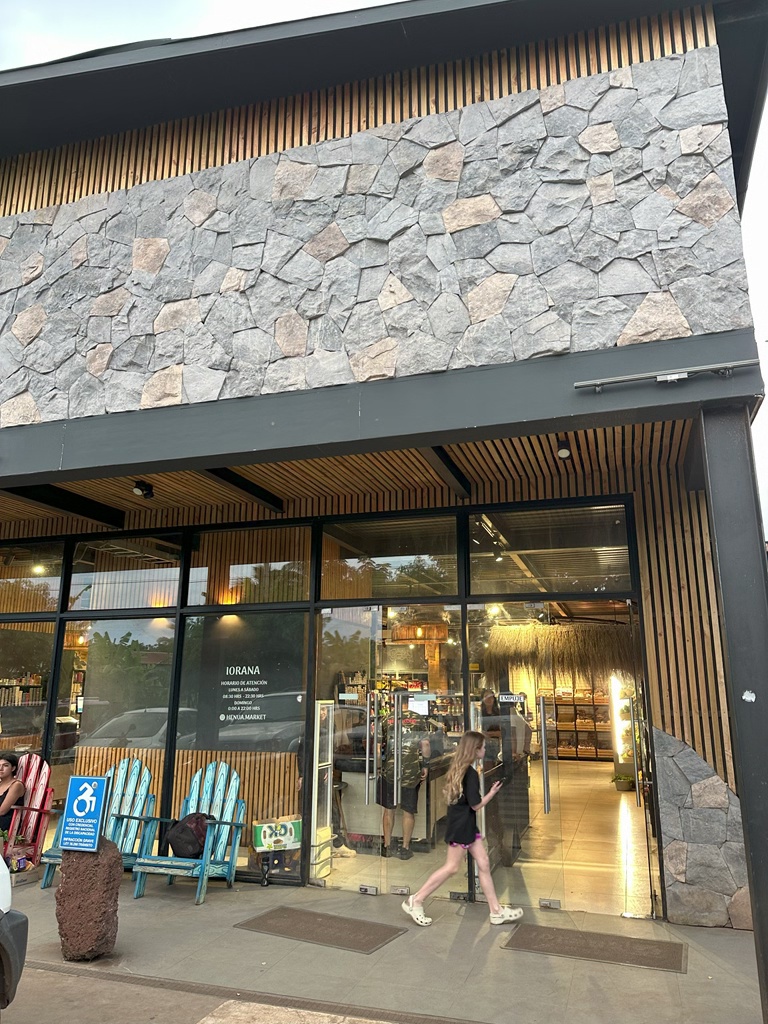
After dinner, we walked around a bit to explore. We stopped in the “fancy” supermarket of the island to pick up some snacks.
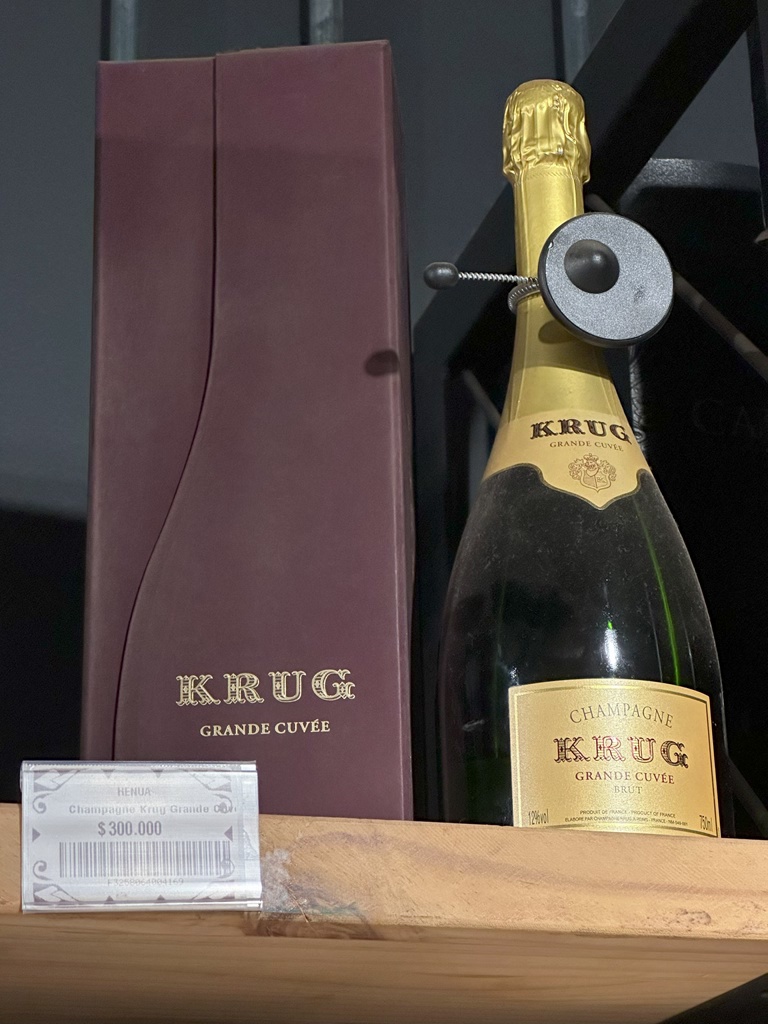
There was a bottle of high end champagne on the top shelf. Wonder how long it’s been sitting up there. The interesting thing is that food and drink were the same price here as they were in Santiago, even in these small stores. I assume the Chilean government covers the costs of shipping everything from Valparaiso (by sea) or on the LATAM flight.
The town is really small, about 7,000 people. Lots of side streets are dirt, and of course being tropical and on the leeward side of the island there is lush vegetation everywhere.


Oh yeah, and there were dogs literally everywhere in town. Apparently most of them have homes; they come out to visit tourists during the day to beg for snacks and attention. Then back home at dark for dinner and bed. They were all pretty well fed (ie: chubby!).

We did not have much success trying to hail a taxi on the street – the few we saw driving by had passengers already – so we walked all the way back to the restaurant and asked them to call us one, which was no problem at all. It wasn’t long before we were in bed after that.
Here’s Ellie in the dining room at the hotel after our yummy breakfast the next morning.

And then looking back at me, in the dining room, from our balcony. She was really happy about this arrangement!

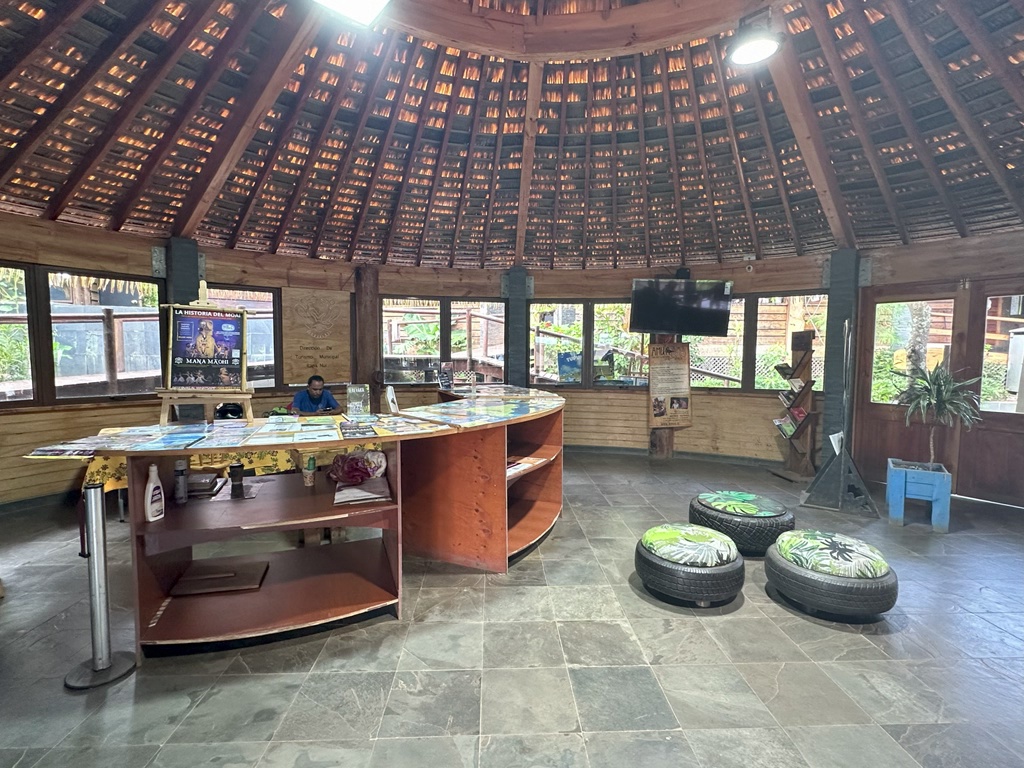
We are going out all day today on a tour of some of the national park sites. Since COVID, it is mandatory not only to have a park pass, but a licensed guide (which has to be a local) to enter most of the best sites. It is definitely expensive to have to do it this way, but I can see why they want to ensure that people living there are the ones financially benefitting from the unique tourism opportunities, rather than foreign owned tour companies. We picked up our park passes at the visitor center on one of the main streets in town.
Here’s Ellie, and our tour guide, Tito.

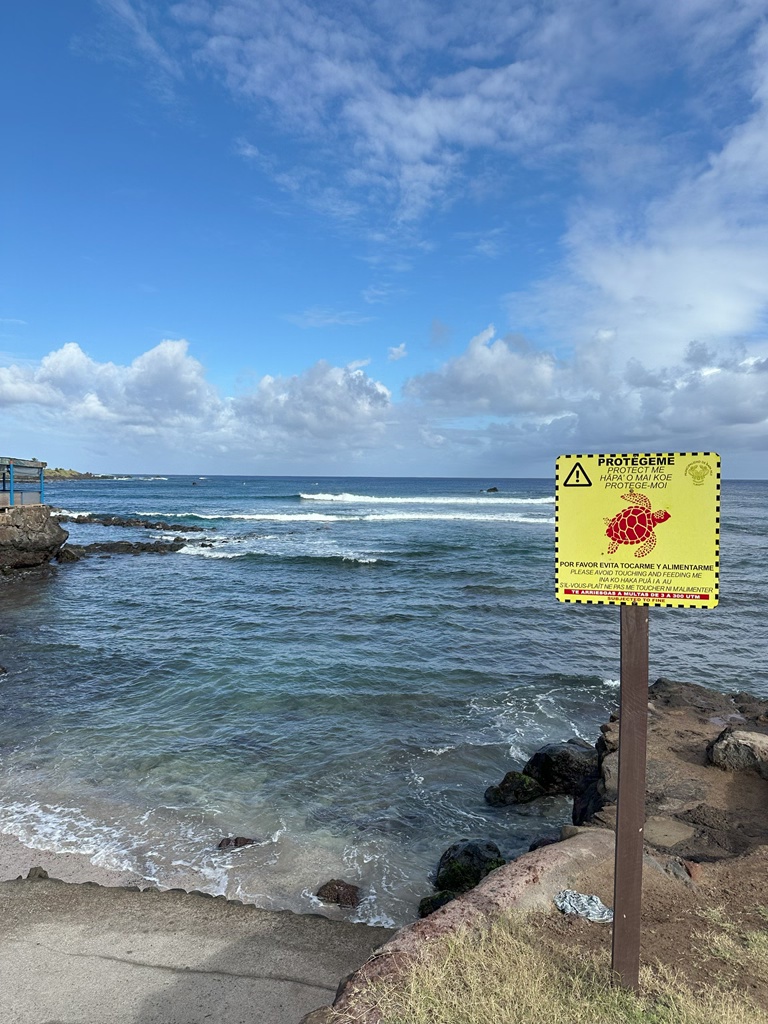
We went down the seaside road in town, where Tito pointed out a small swimming area that was known for plentiful sea turtles that you can swim with. We saw a few of them swimming around from the rocky shore, but the lighting wasn’t good enough for any pictures.
Going through town, we saw the main sports field which was busy on this Saturday morning.

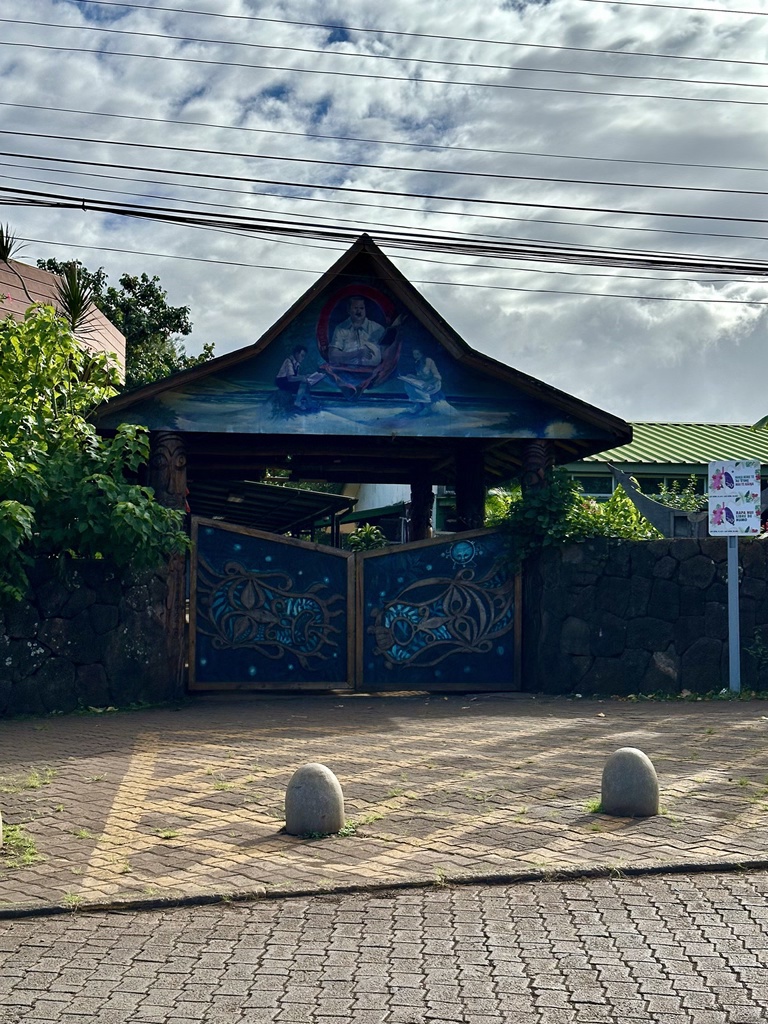
And one of the schools.
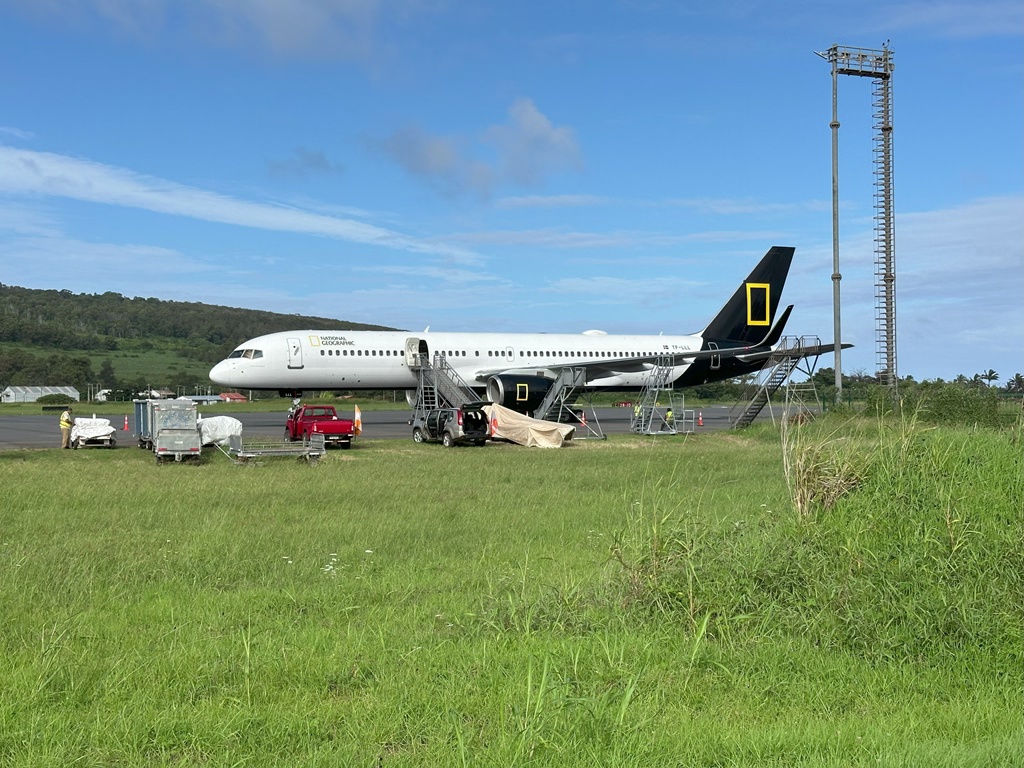
Passing by the airport again, there was this National Geographic livery 757 being packed up. The plane actually belongs to Icelandair but after looking up its history it must be chartered for long periods of time by National Geographic as it had been to many exotic places in the southern hemisphere recently. A couple hours later when we were out at one of the moai sites, we saw this plane departing and turning back to the west, presumably en route to Tahiti.
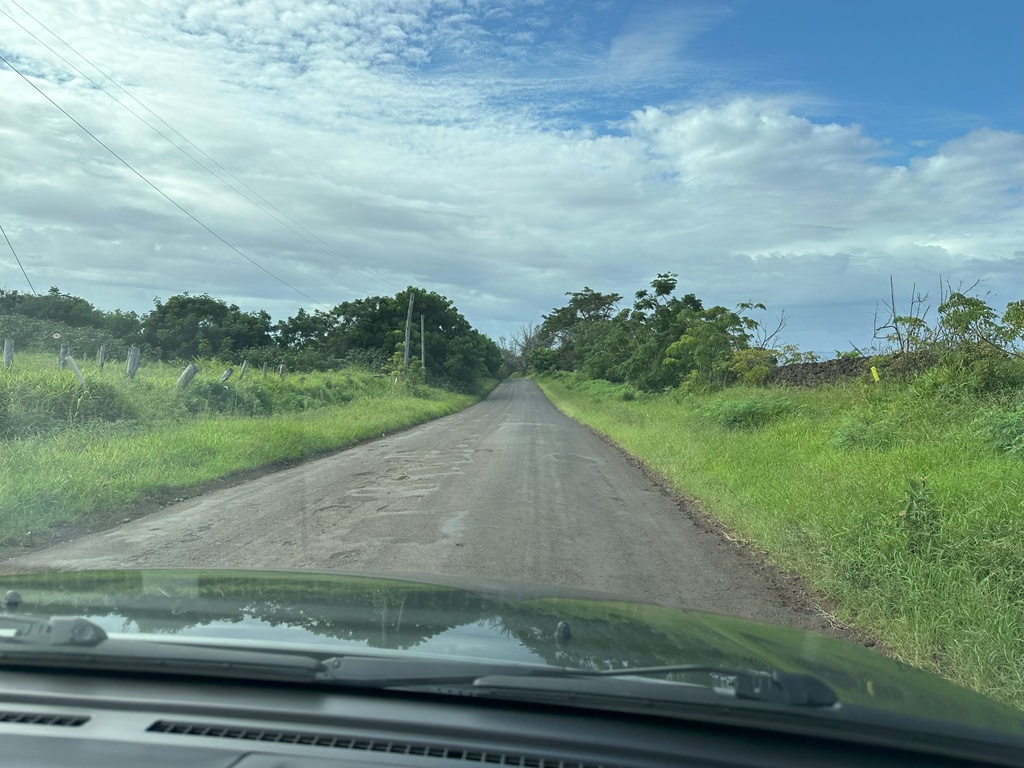
Here’s a typical road view in the interior of Rapa Nui.
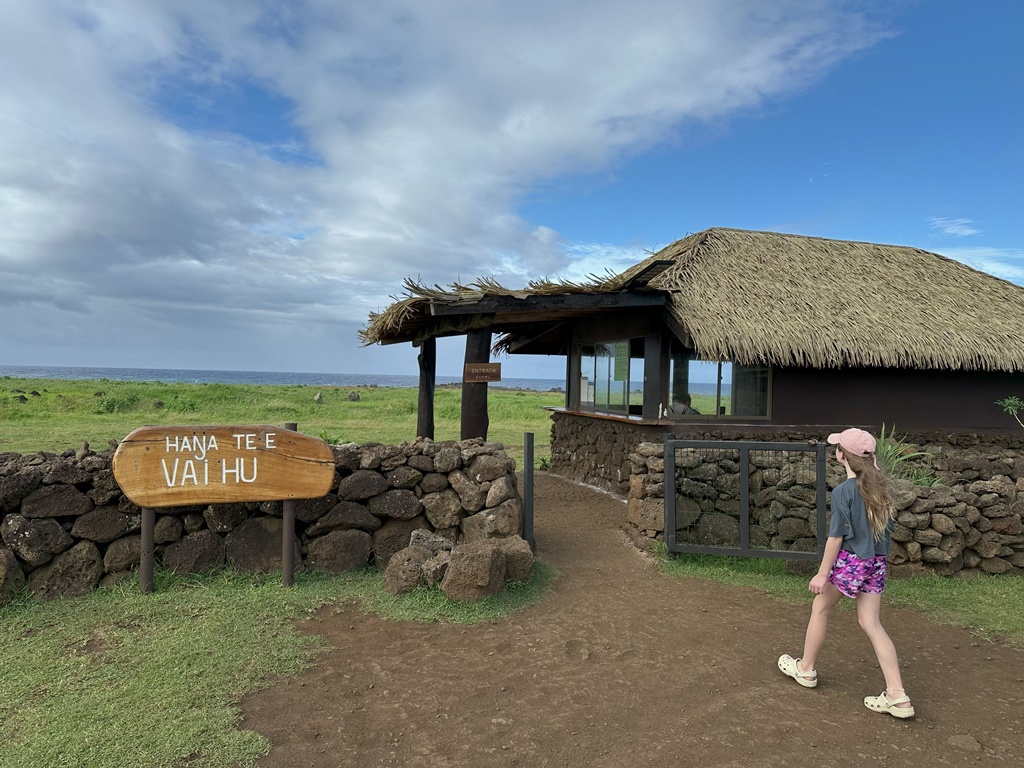
Our first stop – Vaihu at Hanga Te’e. Note the entry office where the park staff will check and stamp your pass, and verify that you’re with a guide.
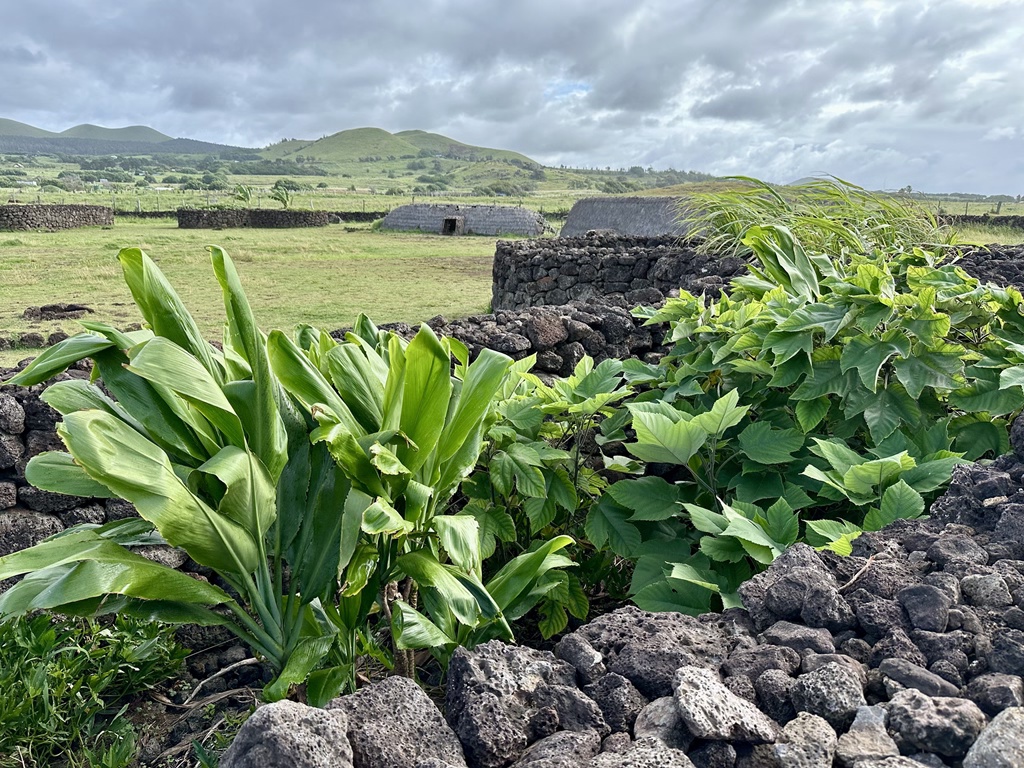
This stop is a restored small settlement, with these rock greenhouses, built to protect crops from both wind and salt spray.


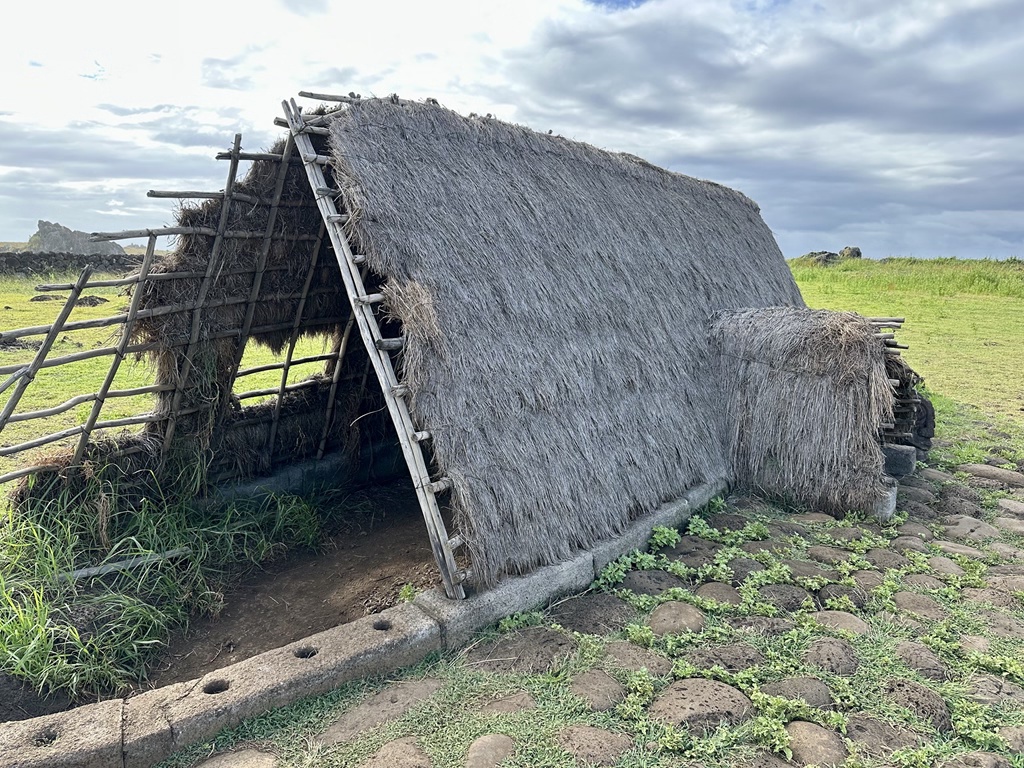
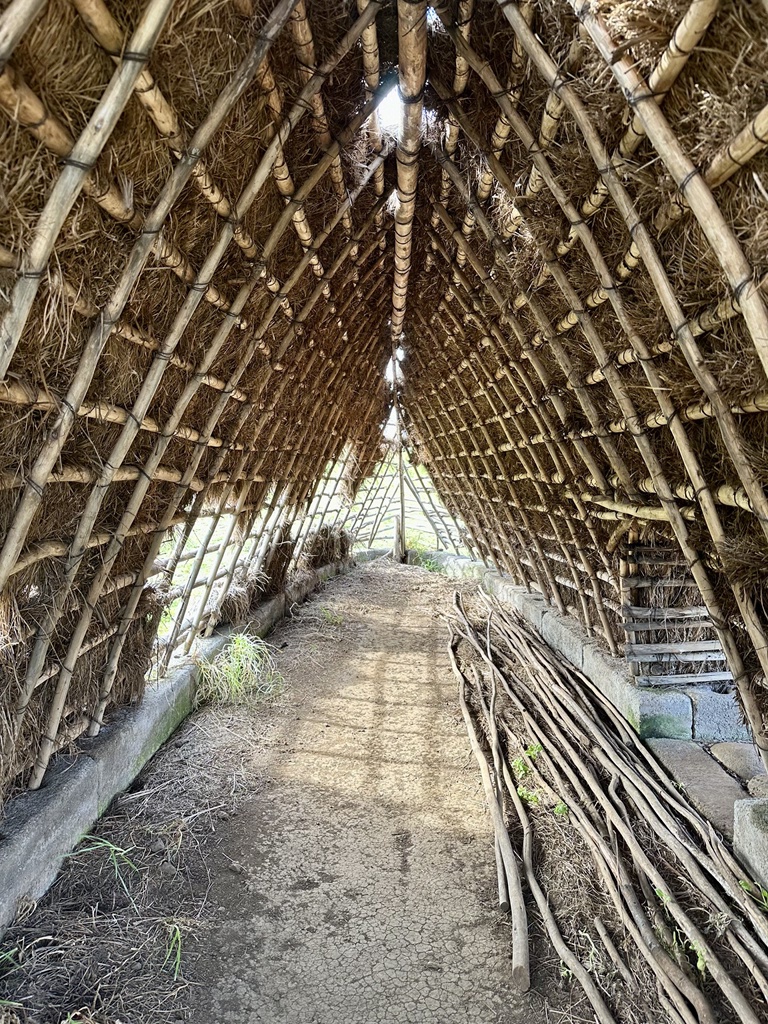
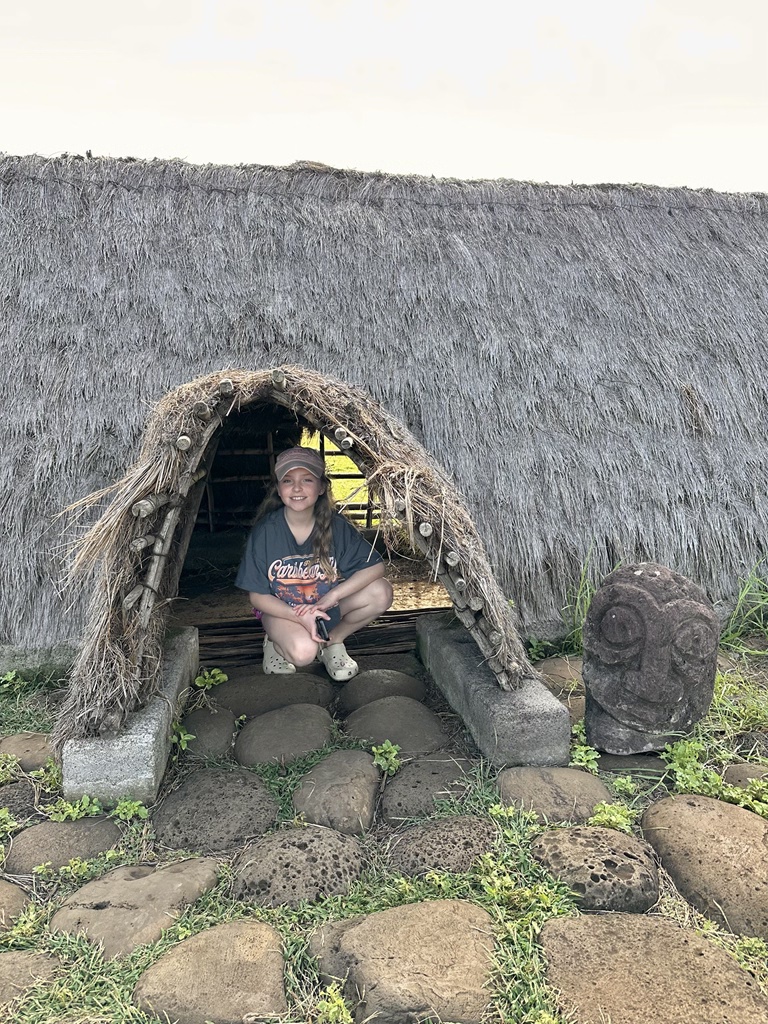
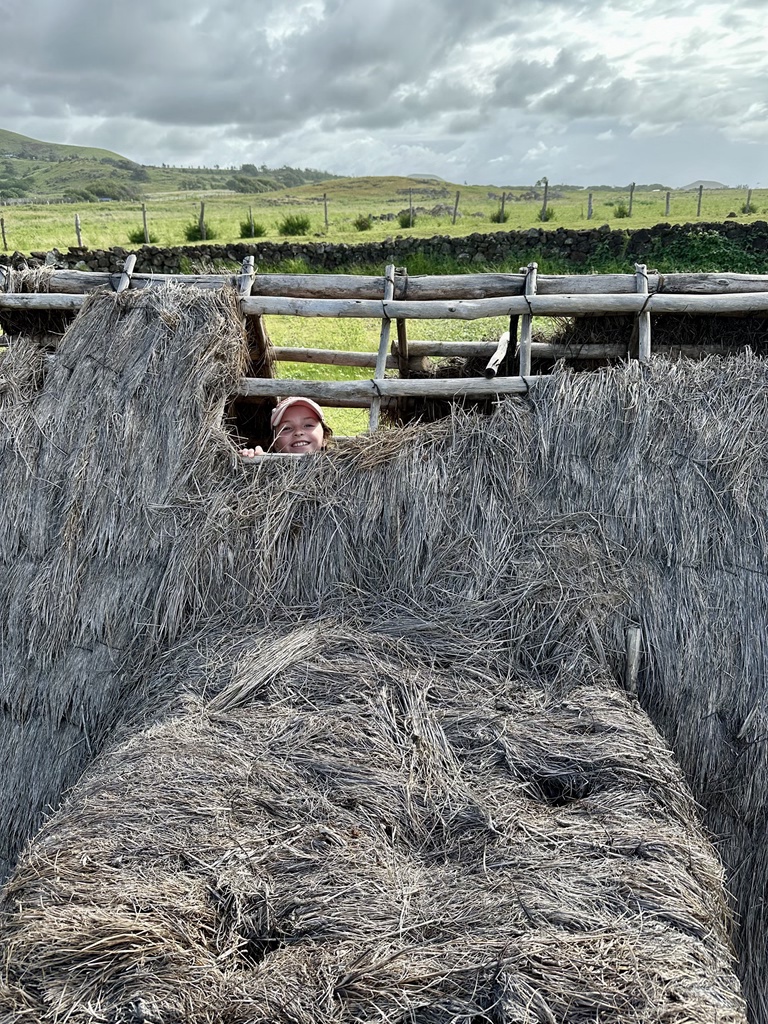
And rebuilt traditional, upside down canoe shaped houses – hare paenga.


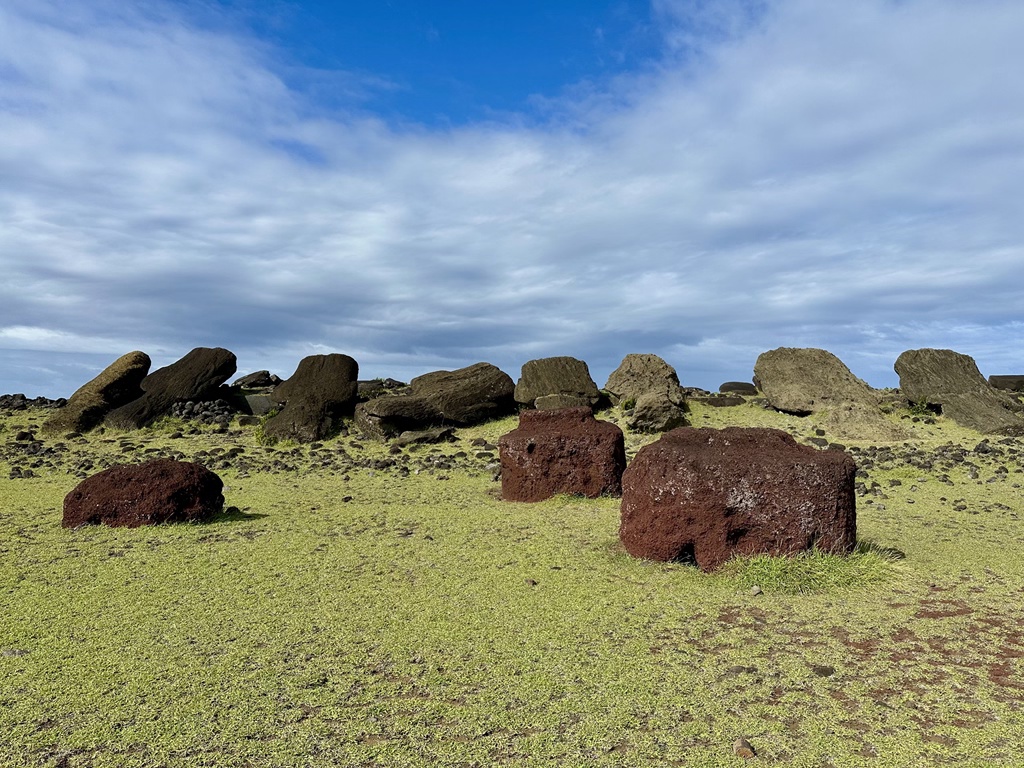
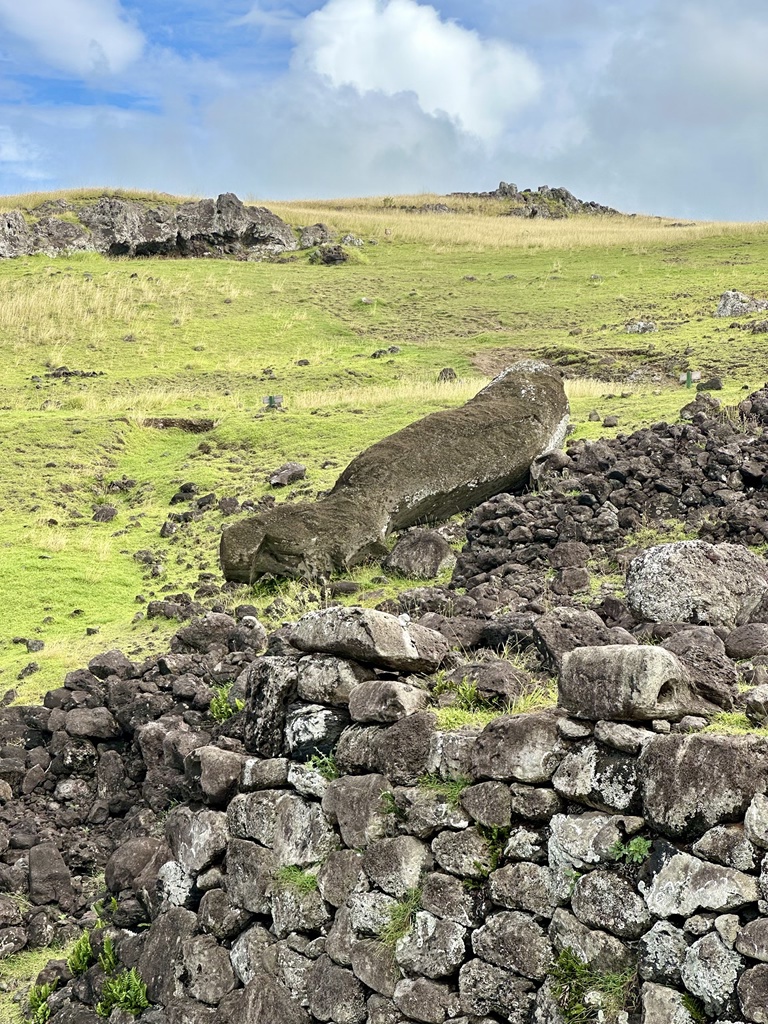
There are a bunch of moai still laying face down here. This platform (ahu) has not been restored and it is how it was found. There are pukao (the headdresses made from red volcanic rock) laying on the ground as well. These are remnants of the Huri Moai period around the year 1700 when Moai culture came to an end, with much internal fighting and toppling of the statues at various places.
This circular area was a “paina” where ceremonial rituals were held.

The waves were crashing on the shore and it was easy to just sit and watch them for a long time. It felt super isolated out here.


Next stop – Akahanga.


All of the moai were still knocked down here, as well.


Close to the sea, there were the remains of an umu pae – a stone oven.

This poor moai is face up, probably for the rest of time.


The pukao over here have some beautiful petroglyphs.

Another fallen giant, face down, as most of them were left.

We ventured into the cave Ana Akahanga to check it out, that was used as a temporary refuge from the elements, but not a permanent home.


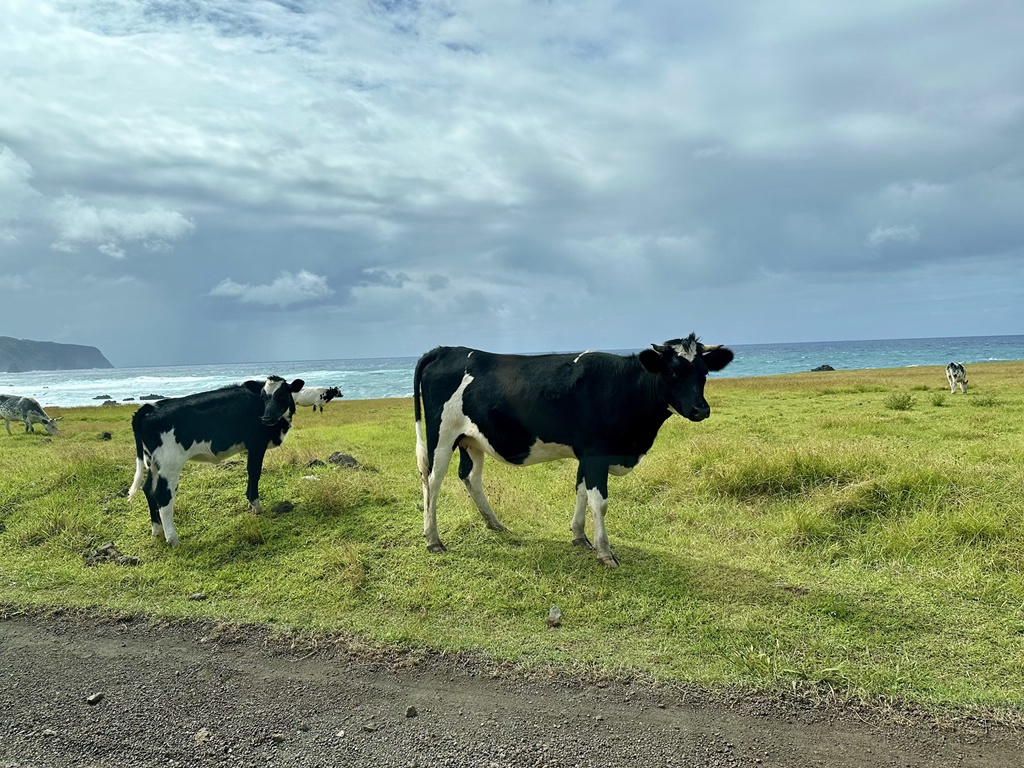
Back on the road, and we see one of the other prolific local groups: moo cows (not to be confused with pukaos)
Next stop is one of the coolest ones on the island. The quarry where all of the moai were manufactured: Rano Raraku. Rano Raraku is an old volcano. Rano is the Rapa Nui word for a volcano with a lagoon or lake within the crater. The volcanic rock created by this volcano is called Lapilli tuff, and it is the only place on the island with this type of rock, which was perfect for crafting the moai. It is estimated that this moai factory was in operation for approximately 500 years, ending in the mid-1700s; and 1200 moai were carved during this time.

There are still many unanswered questions about the moai, but it is believed that they were created to represent deceased elites, rulers, and other important Rapa Nui ancestors.

There was a display table with various types of volcanic rock at the site gate.


Moments after walking towards the hill, we saw a huge moai laying on its back for eternity.
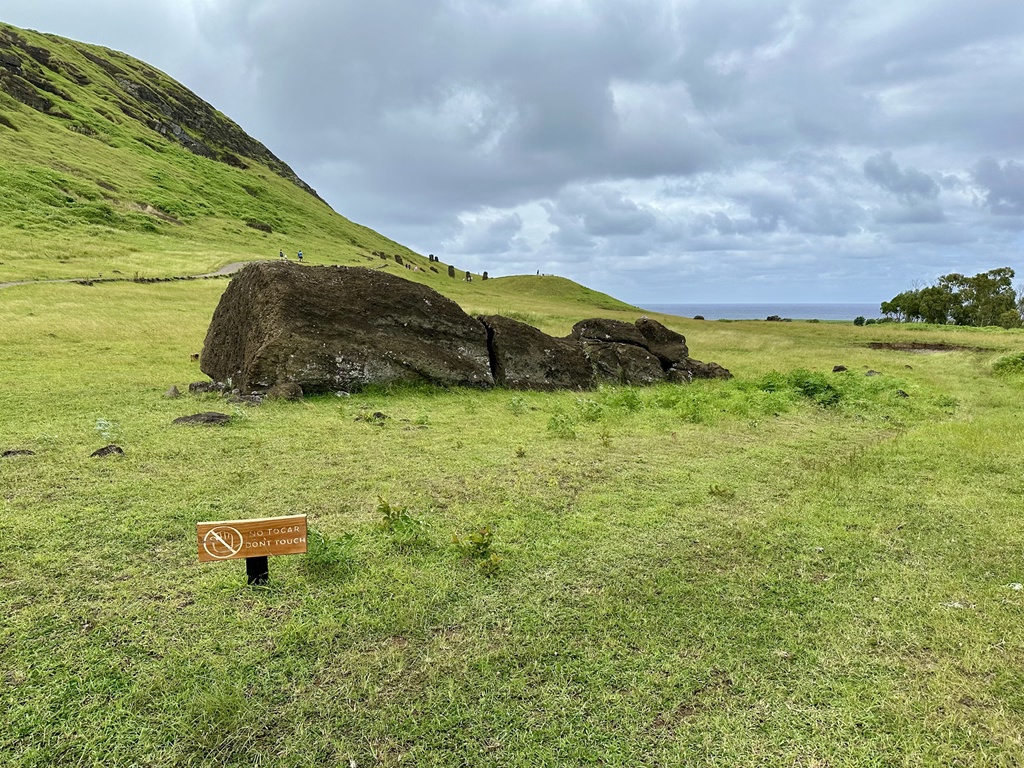
And then into the field of moai. Some were standing.


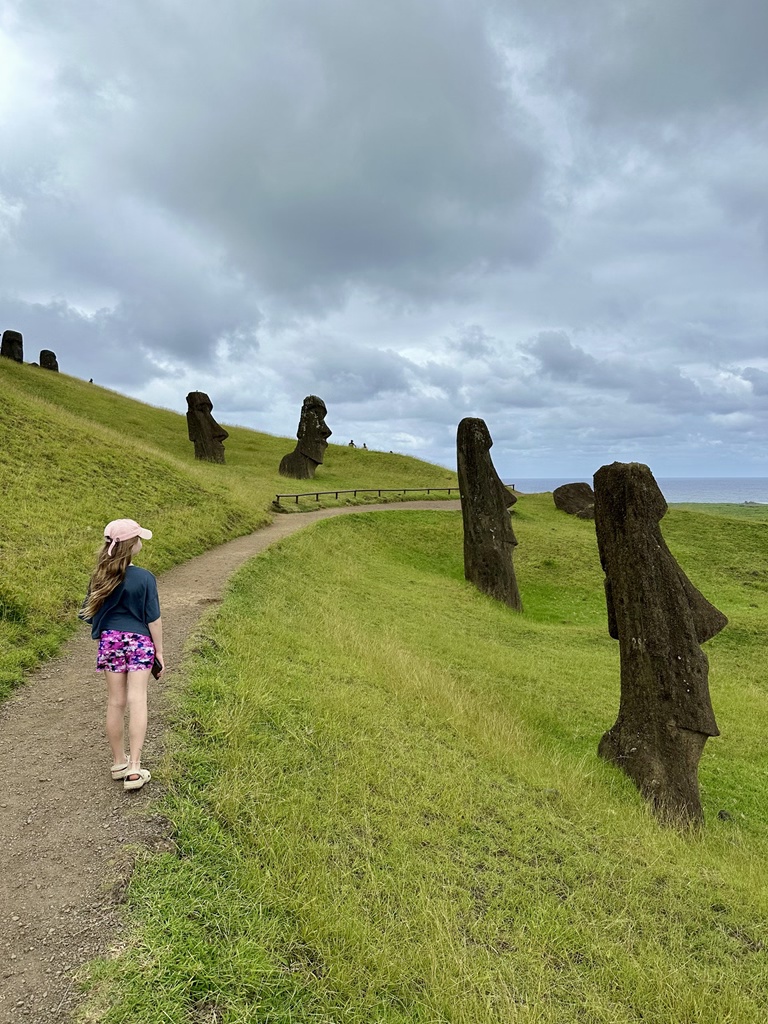
Some were leaning.

Many were buried most of the way up to their necks from years of slope erosion. It’s a common misconception that the moai are simply heads, but the head is only 1/3 of the total size.
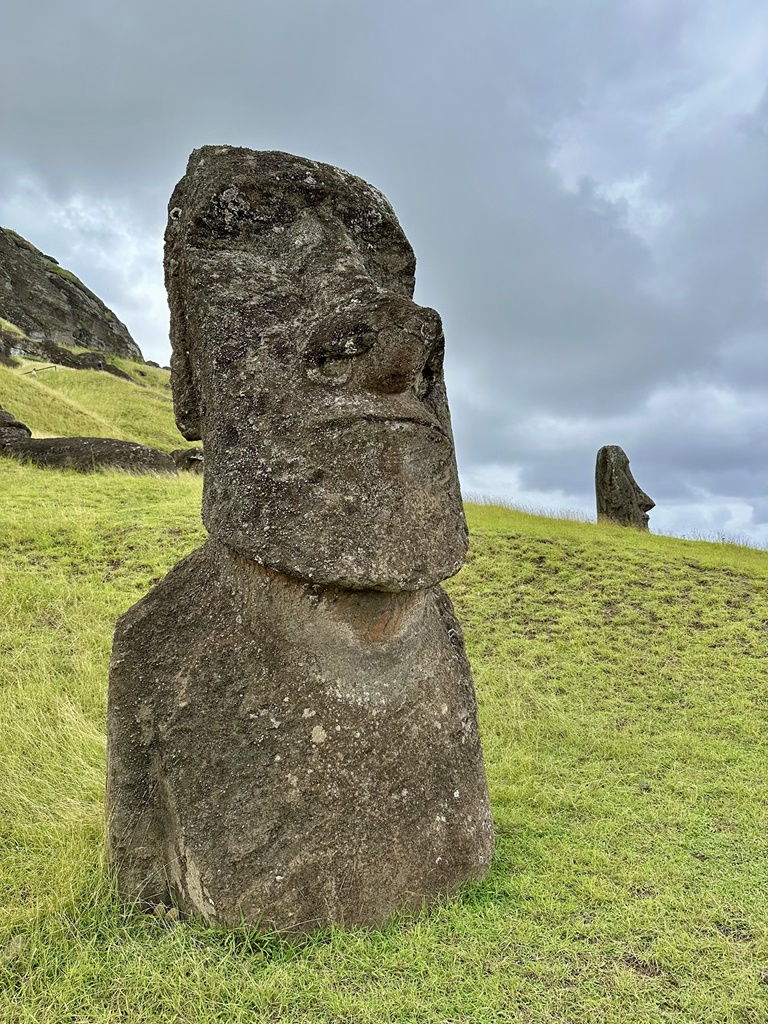


Even more were left under various stages of construction. In the center of this photo you can see a head looking up under the cliff face.
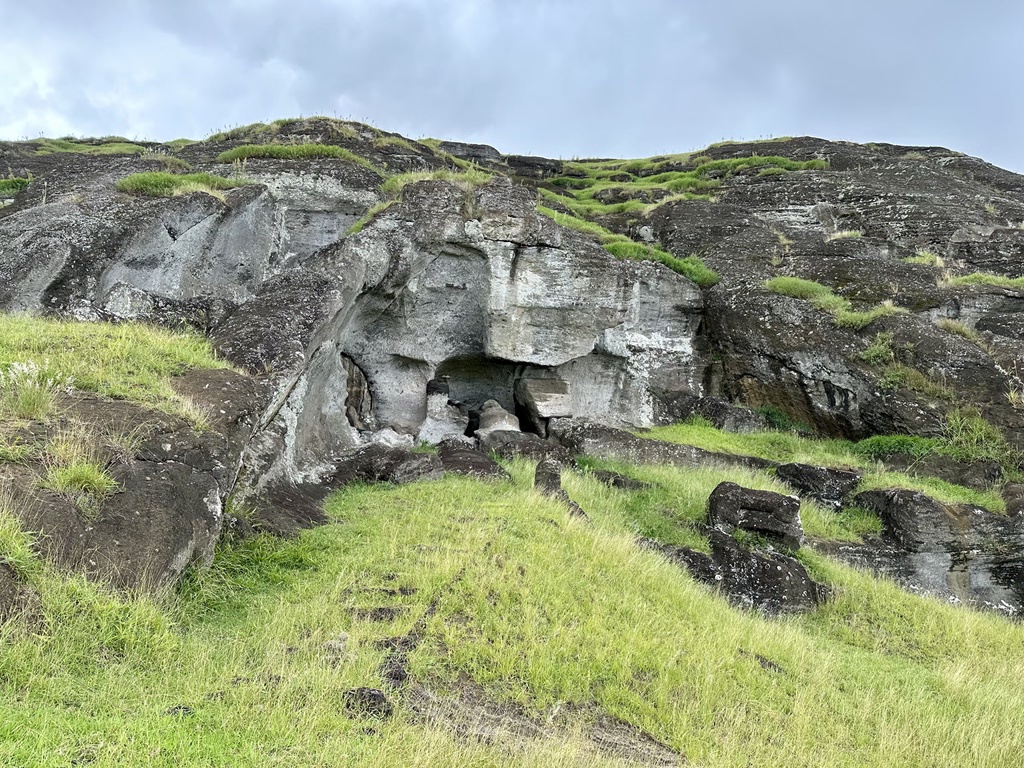
This slope was seaside when the volcano was active, but lava flows extended the land out to the present coastline we see in the distance.

Here is the largest moai which was never finished. His name is Te Tokanga, 22 metres long, and weighing 200 tons. Theory is that this one was left in place because they never would have been able to move the statue. Remember, literally everything was done by hand.
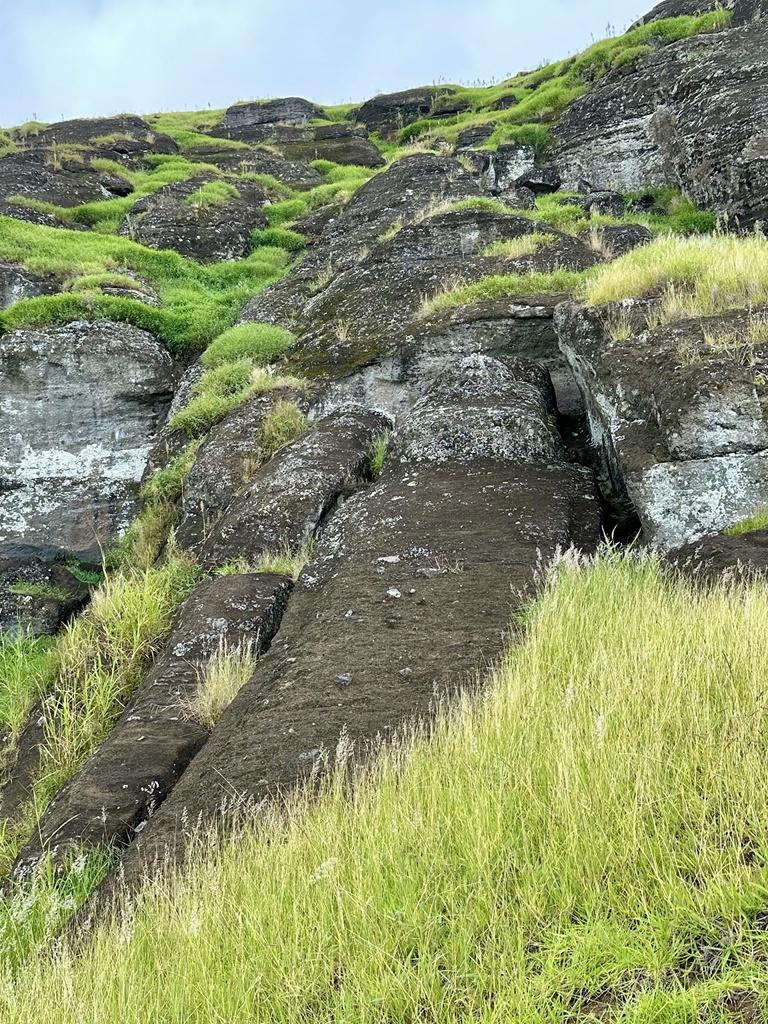
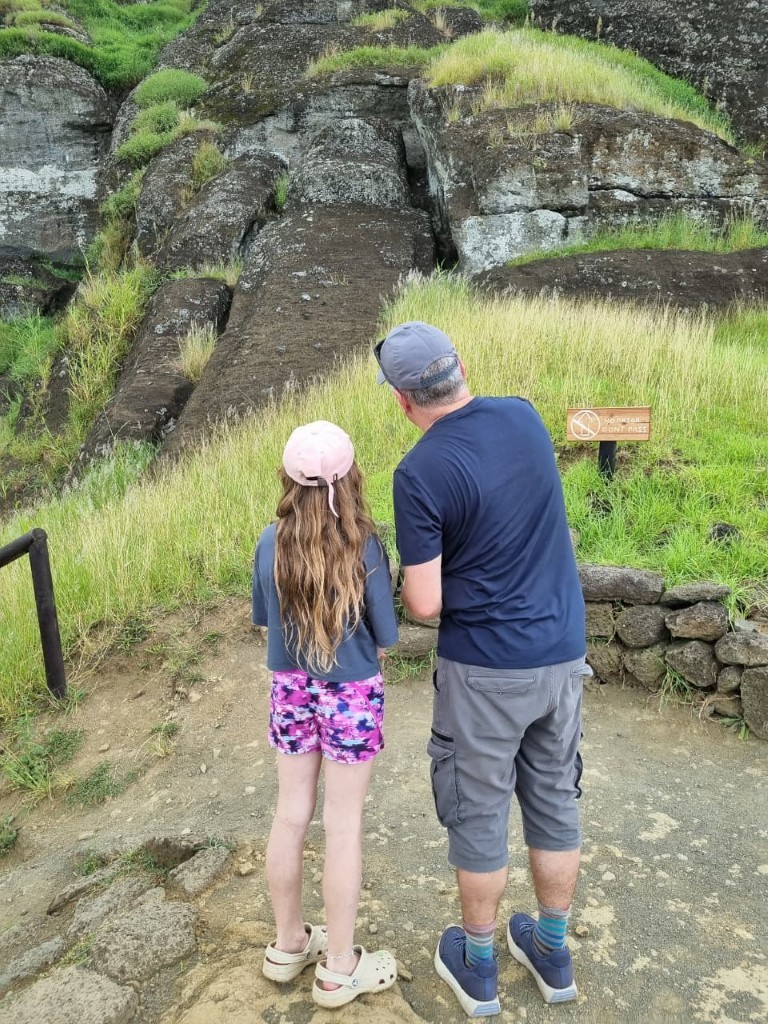
Here is another moai that was closer to completion. You can see how they started with the head and then moved on to the rest of the body. All of the moai were carved like this – on their backs, with the head done first. We can see now how small the head is compared to the body.

Ahu Tongariki is visible on the shores below.
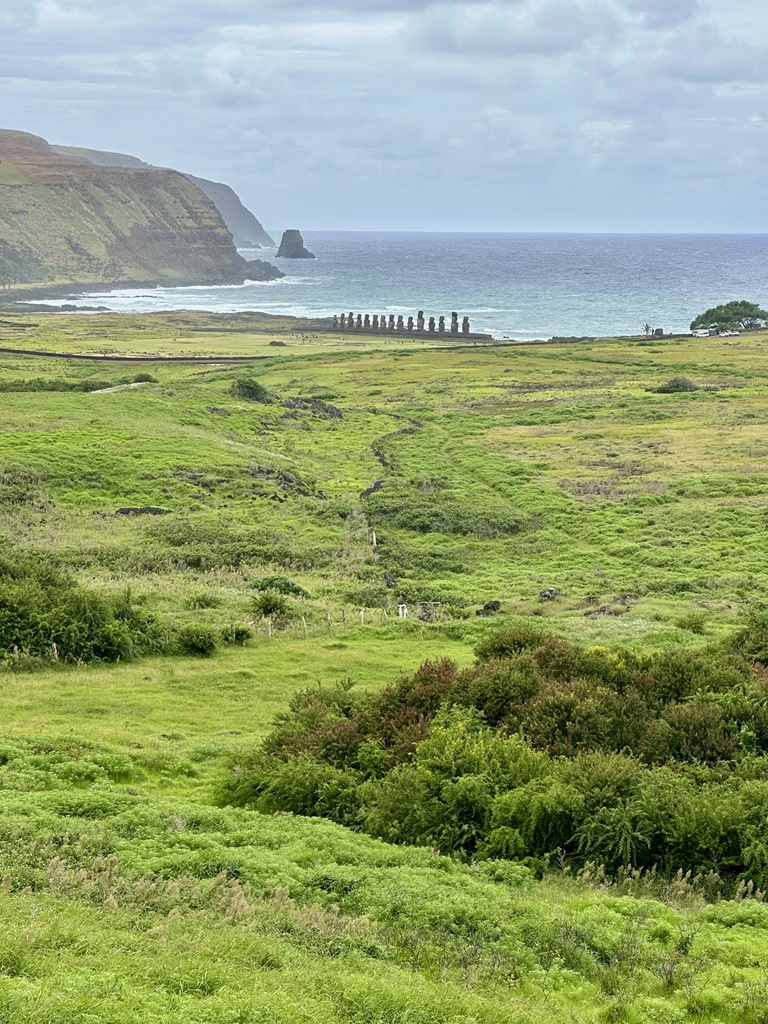
There are 397 visible moai at Rano Raraku, and it was hard not to linger just looking at all of them with wonder. This is also the only site that was found with standing moai. All of the others were knocked down during the Huri Moai period.

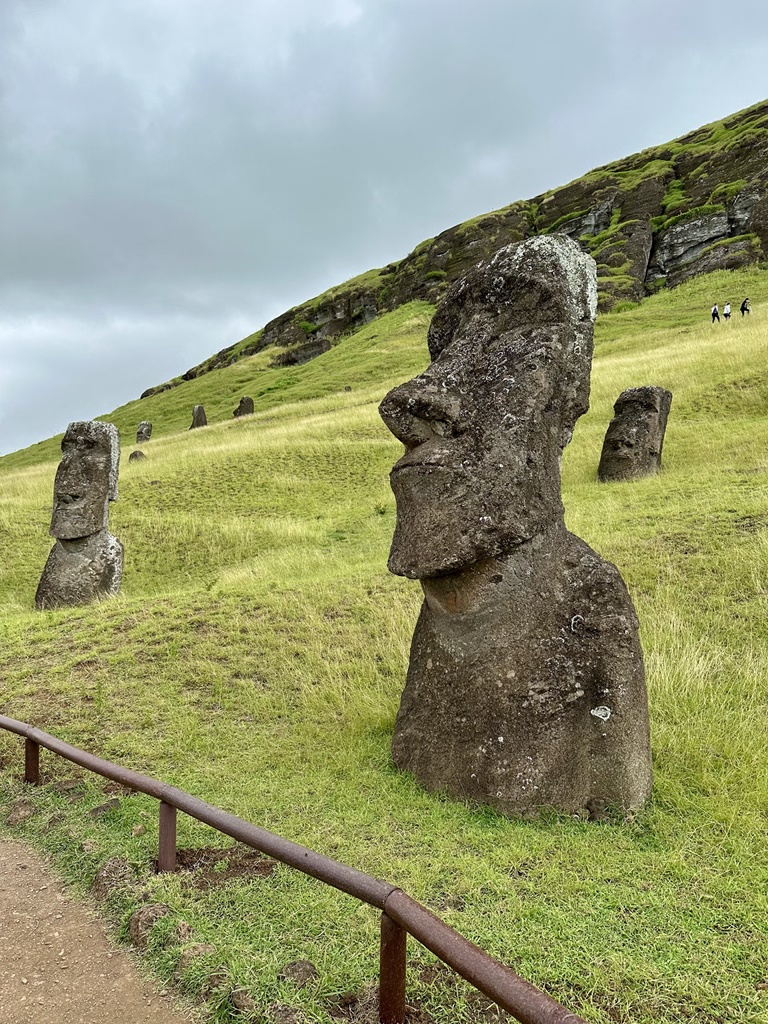

This one is Tukuturi Moai, the kneeling one.


More moo cows.
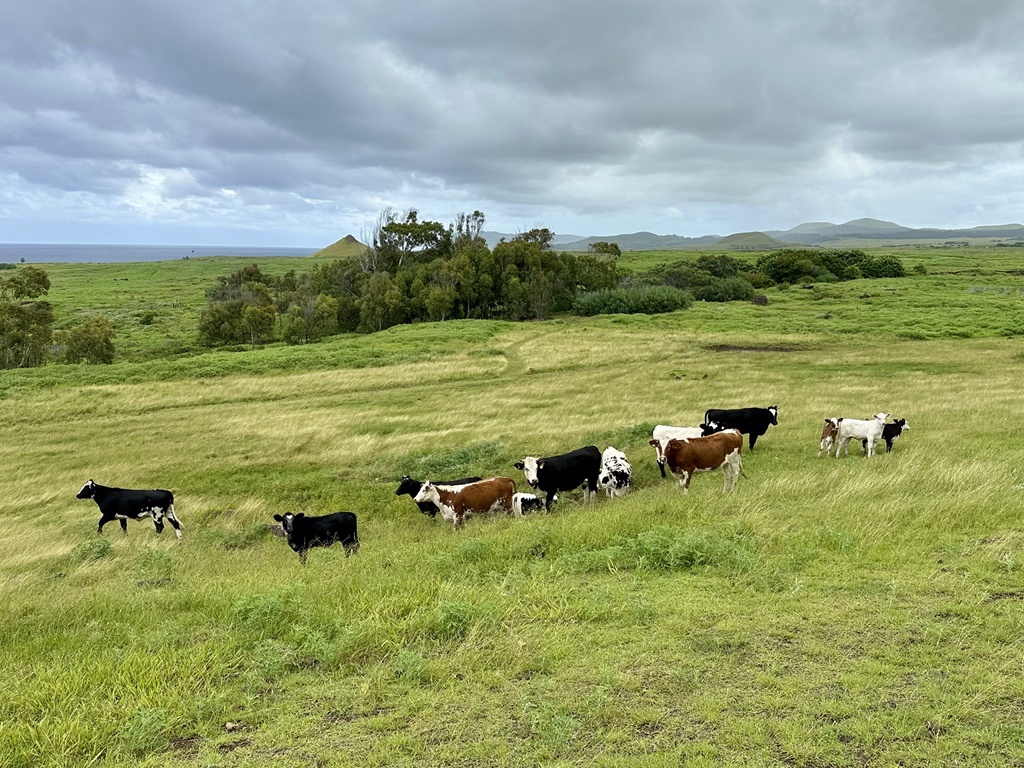
A rain shower passes to the south of us… let’s get some lunch!

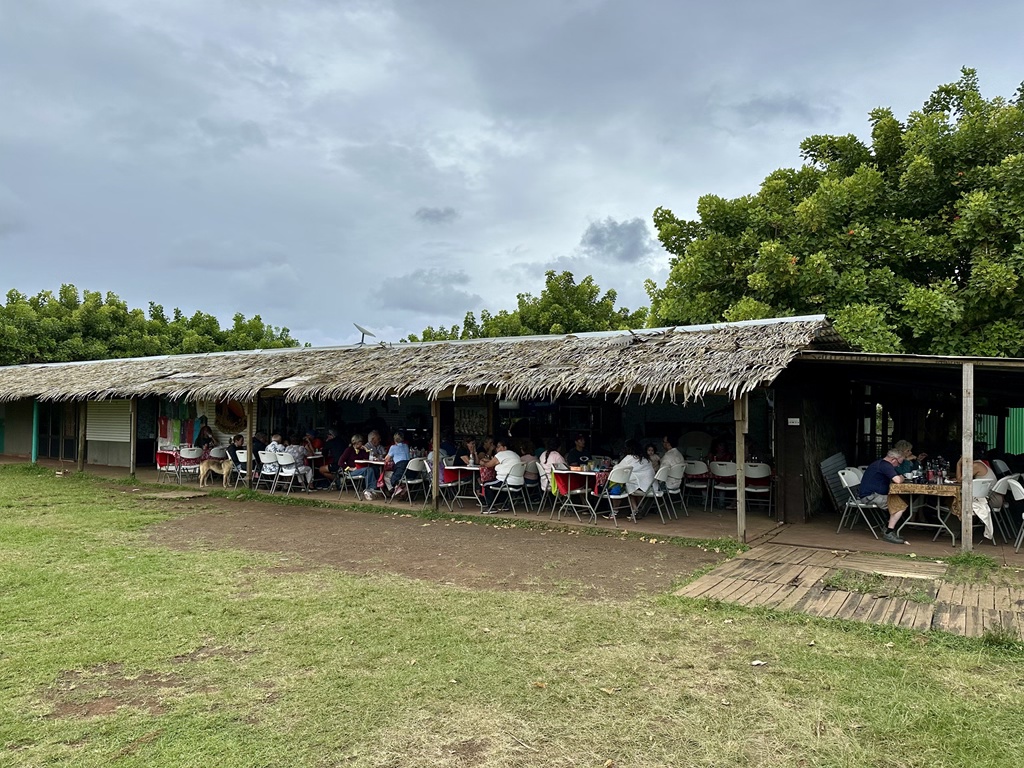
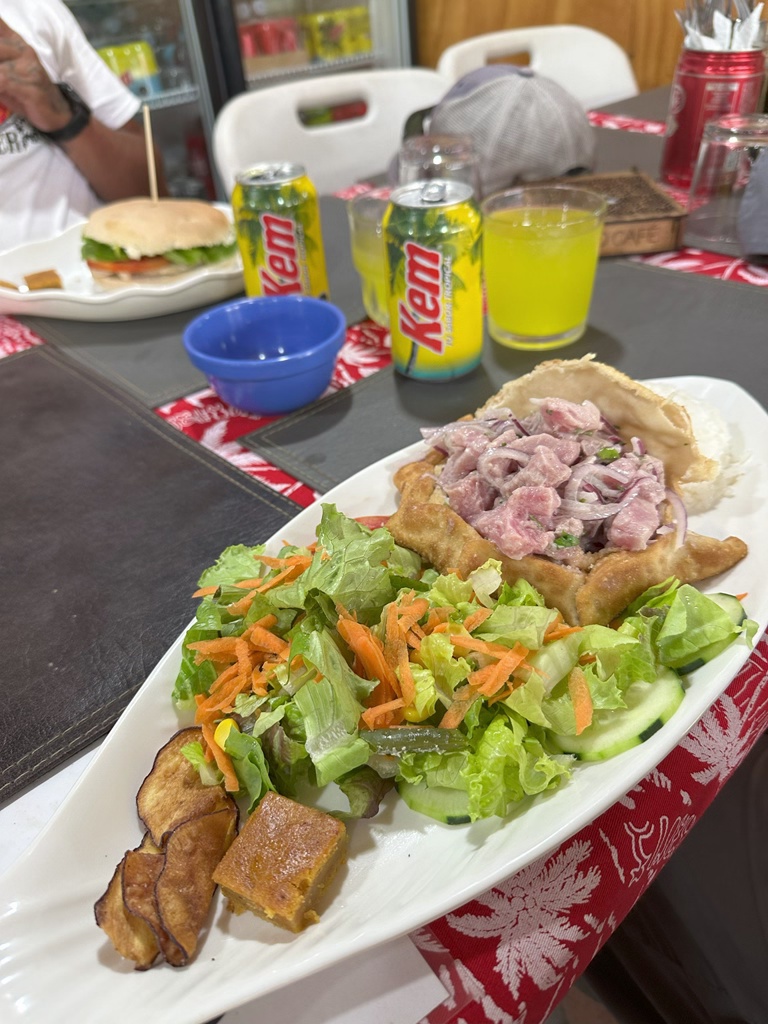
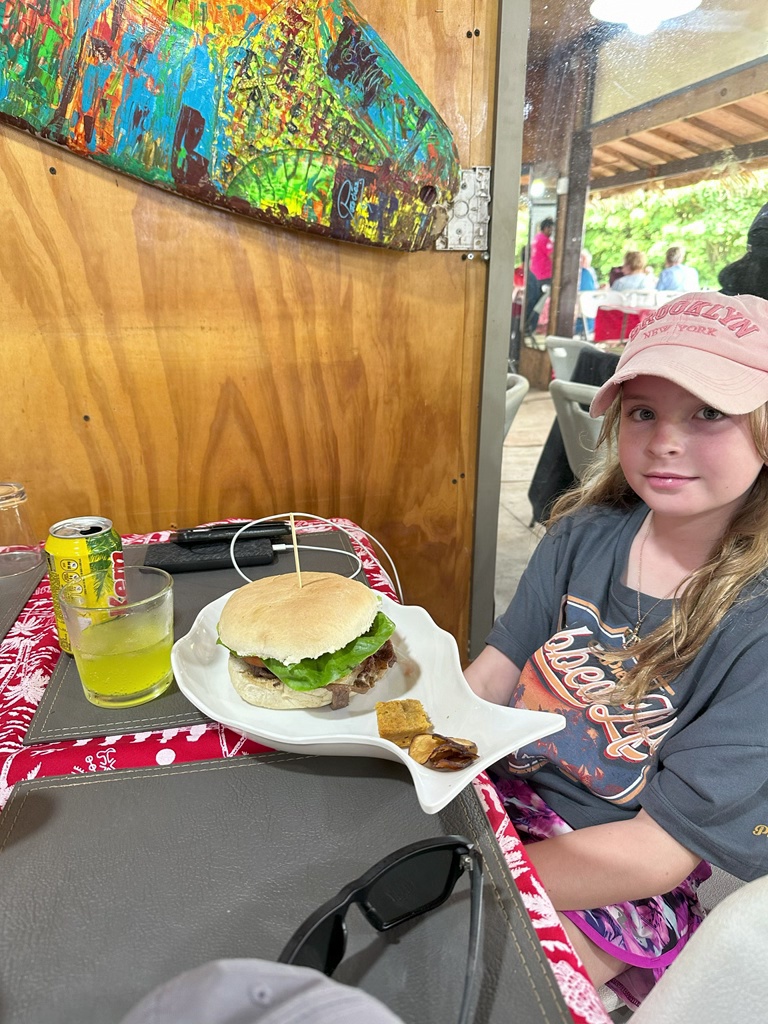
I had a ceviche platter – yum! Ellie had a huge grilled chicken sandwich, and Kem soda.
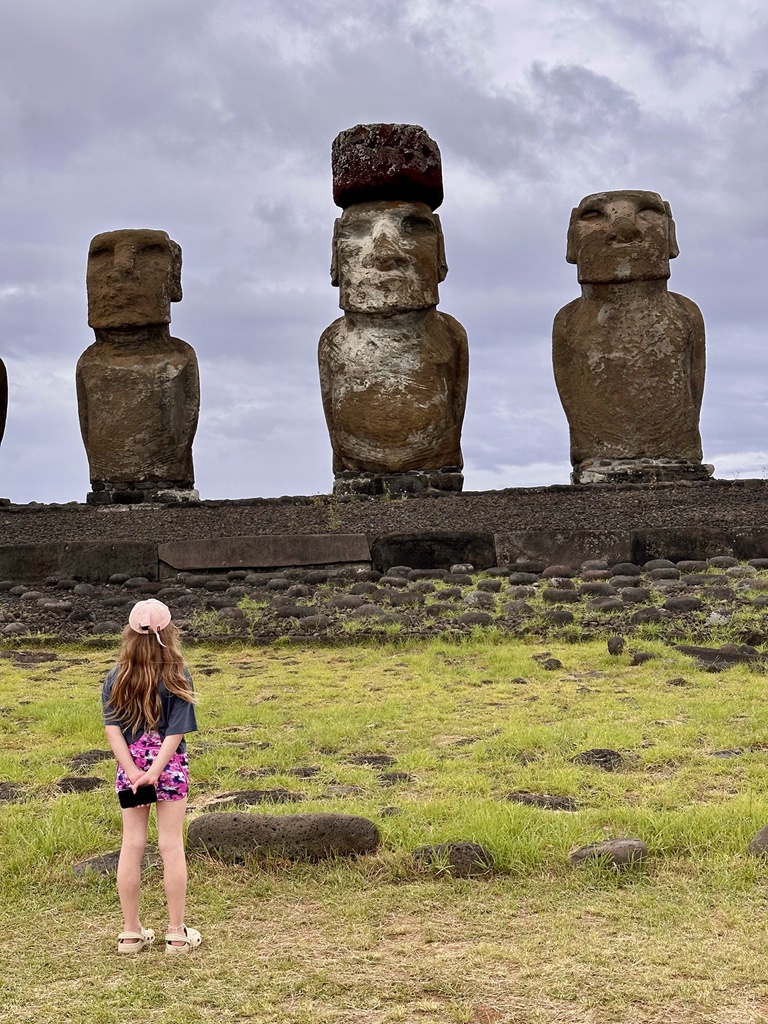
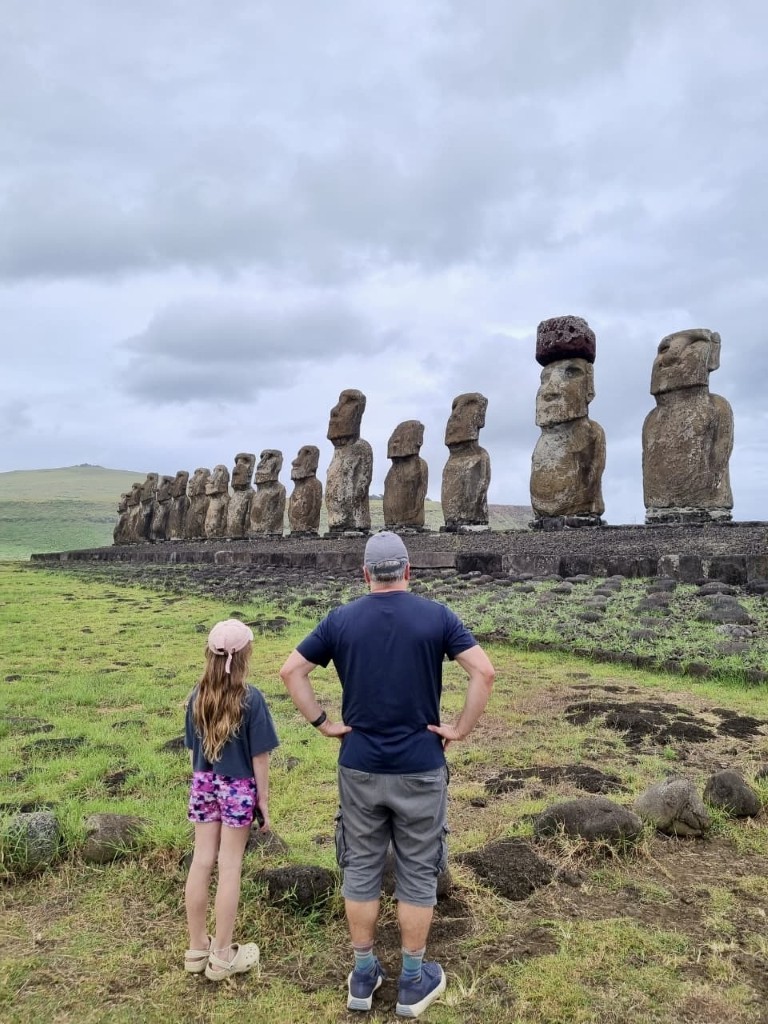
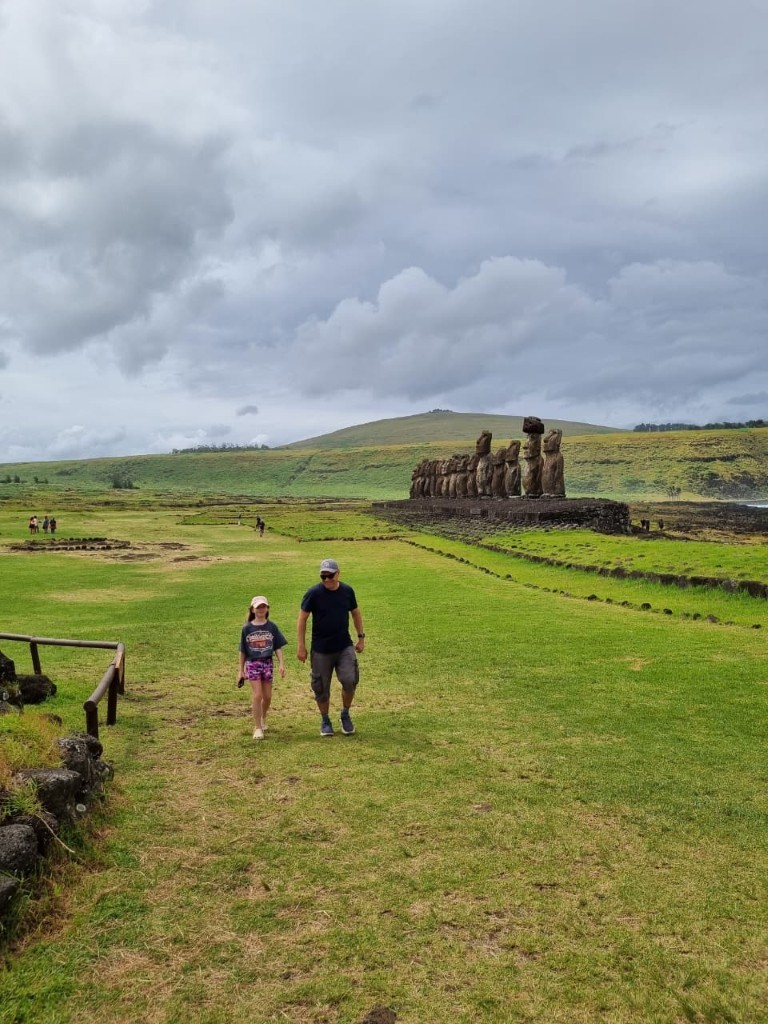
After lunch, back on the road down to Ahu Tongariki with its platform of 15 moai backdropped by the sea.


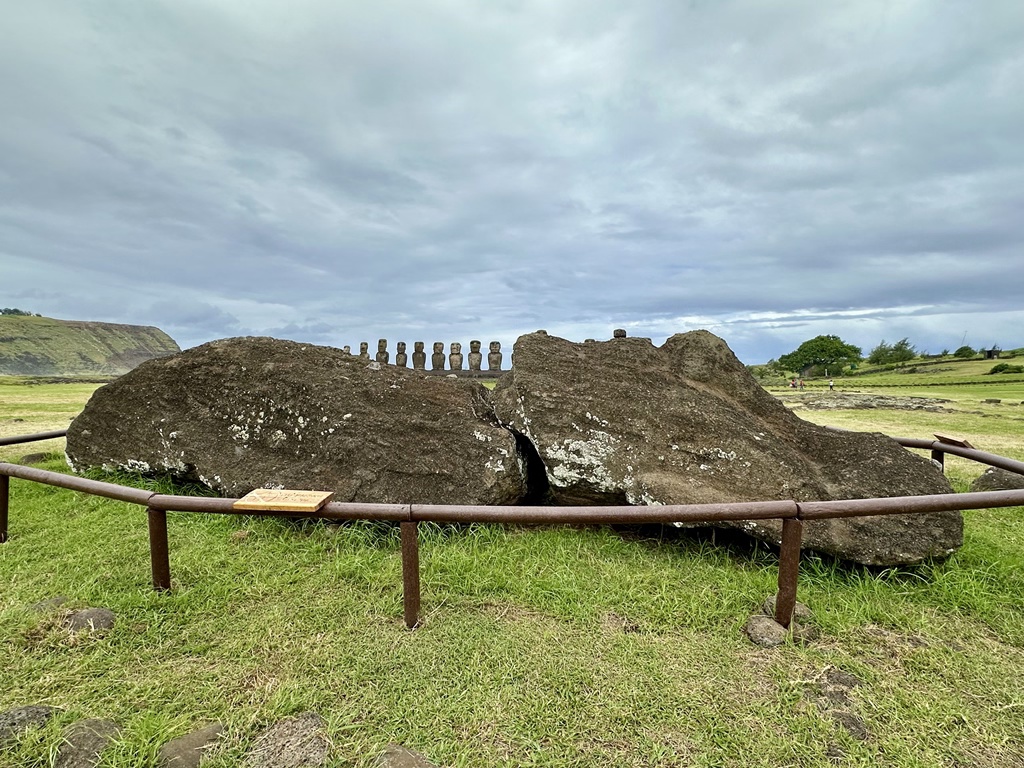
This beautiful spot, one of the most important ceremonial sites on Rapa Nui, was nearly completely destroyed by a tsunami in 1960, generated by a magnitude 9.5 earthquake in Chile. The Japanese government became a partner in restoring this site to its former glory in the early 1990s.


The “travelling moai” welcomes visitors to the site at the gate. It is known as such as it was sent to Japan for an exhibition in 1982. Here we’re trying to duplicate the profile picture of one of my friends, Marko, from his trip here in 2013.


Just imagine having to move these statues down here from the hill above using only people and ropes. The moai were moved all over the island from the quarry, walked like bowling pins.

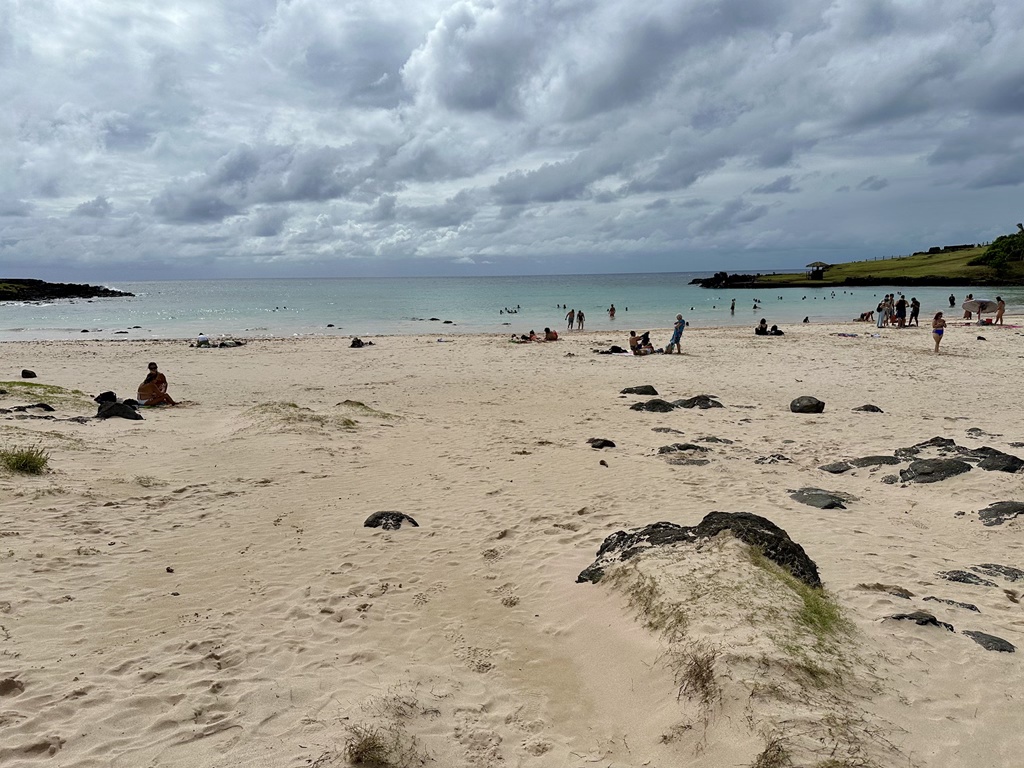
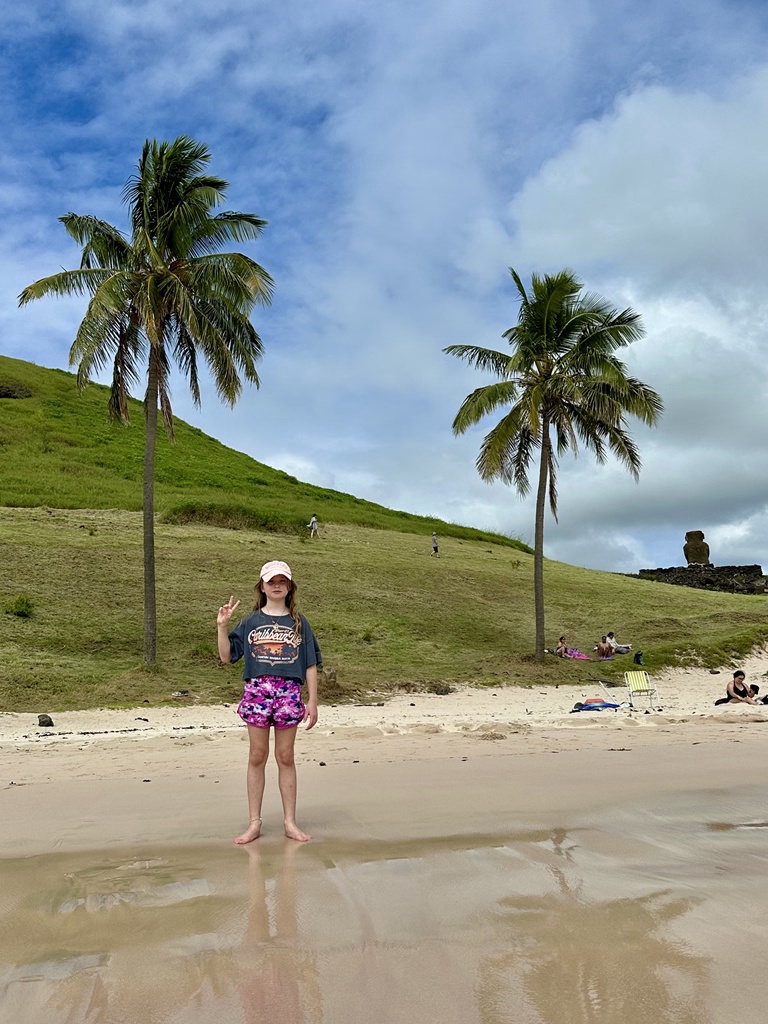
Our last stop for the day will be Anakena. Not only a gorgeous sand beach with moai keeping guard, but the birthplace of Rapa Nui culture. It was the landing site of the first settlers of the island, who travelled by canoe from one of the more central Polynesian islands around 1500 years ago. Rapa Nui is the eastern extent of Polynesia.
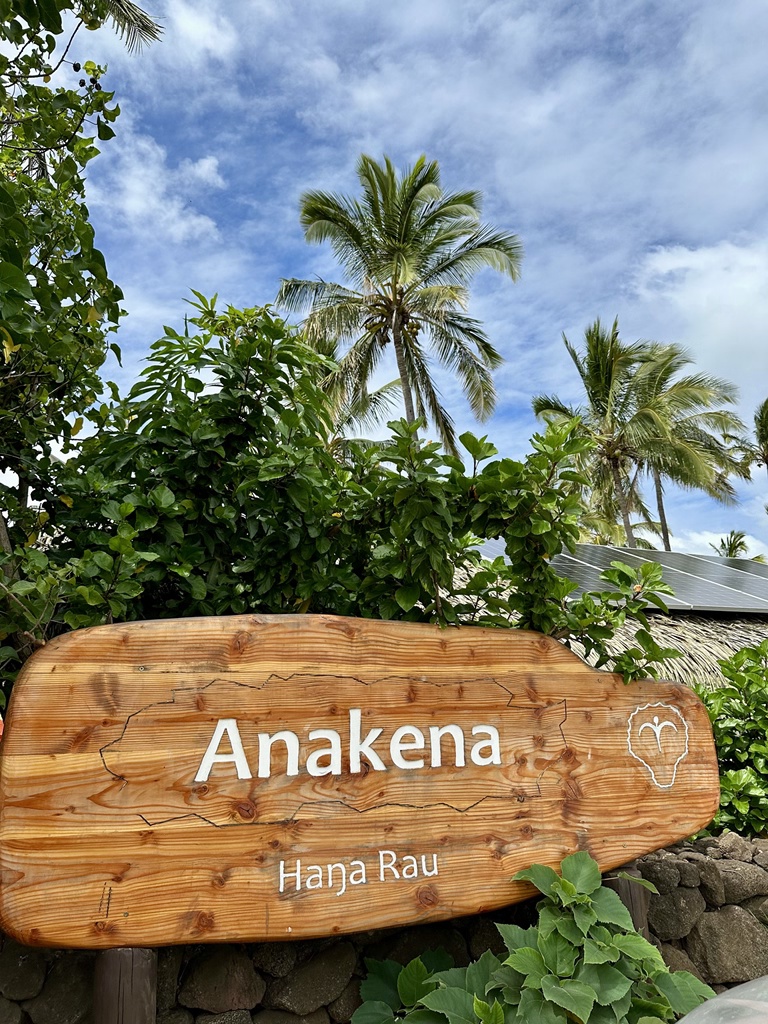
Anakena is a public site, although it’s in the park, a guide is not required, and there are several food and drink establishments. Many people were out enjoying the day, on the beach, barbecuing, or just relaxing.





Even some roosters. But no dogs here! Too far from town?

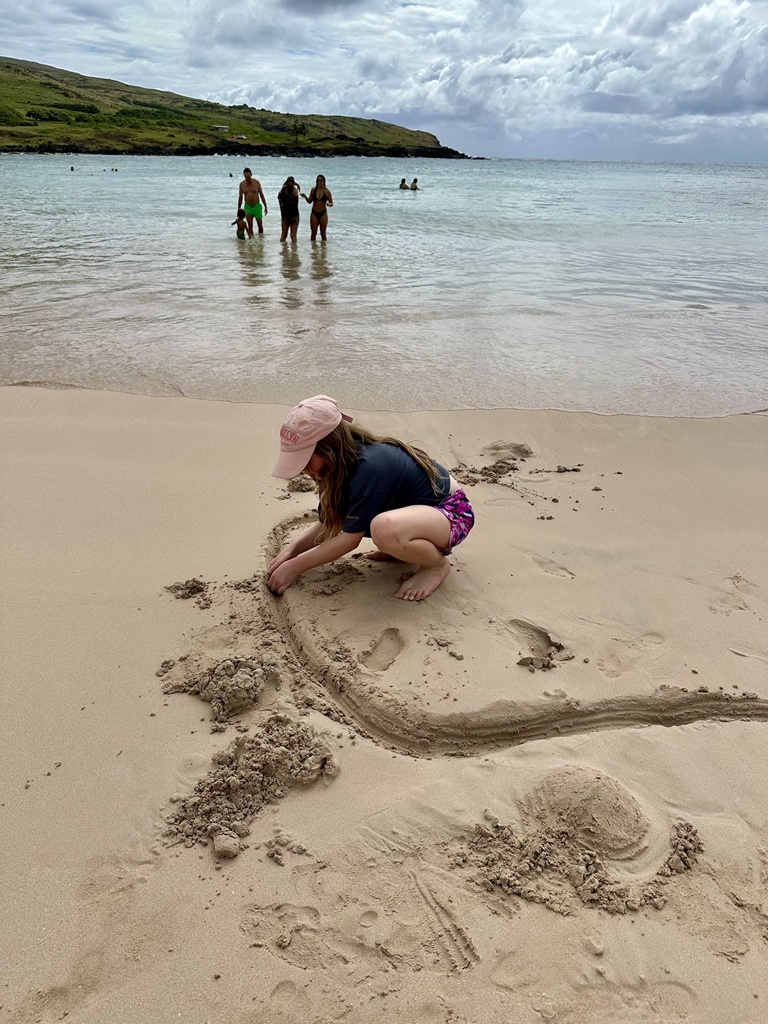
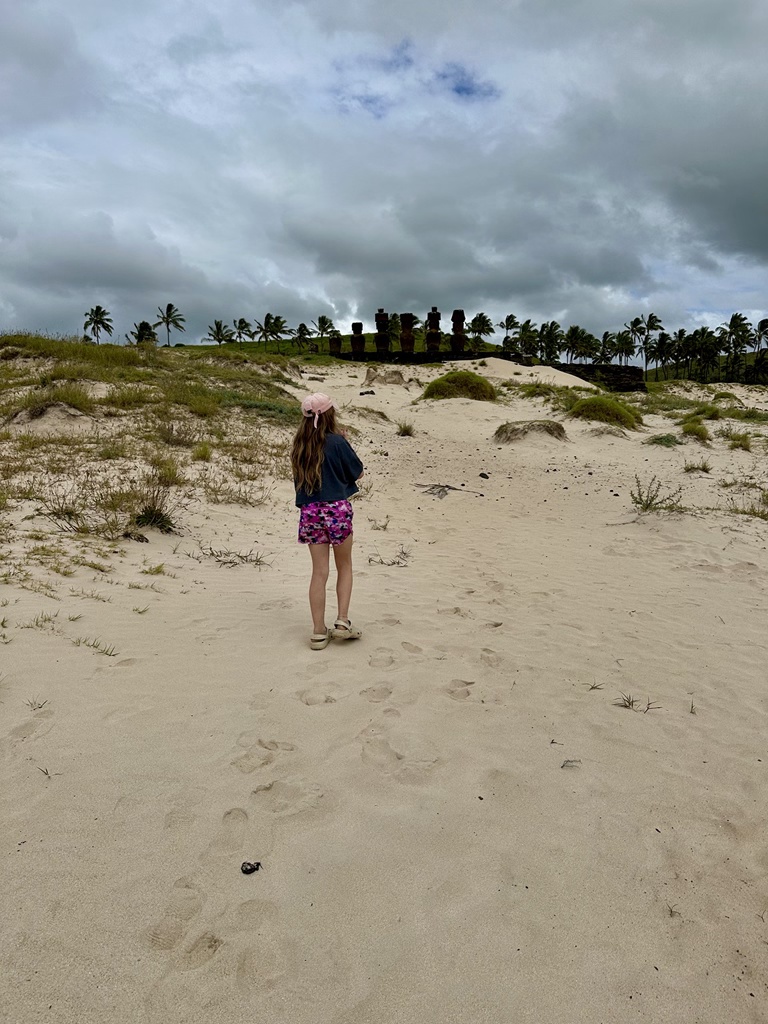
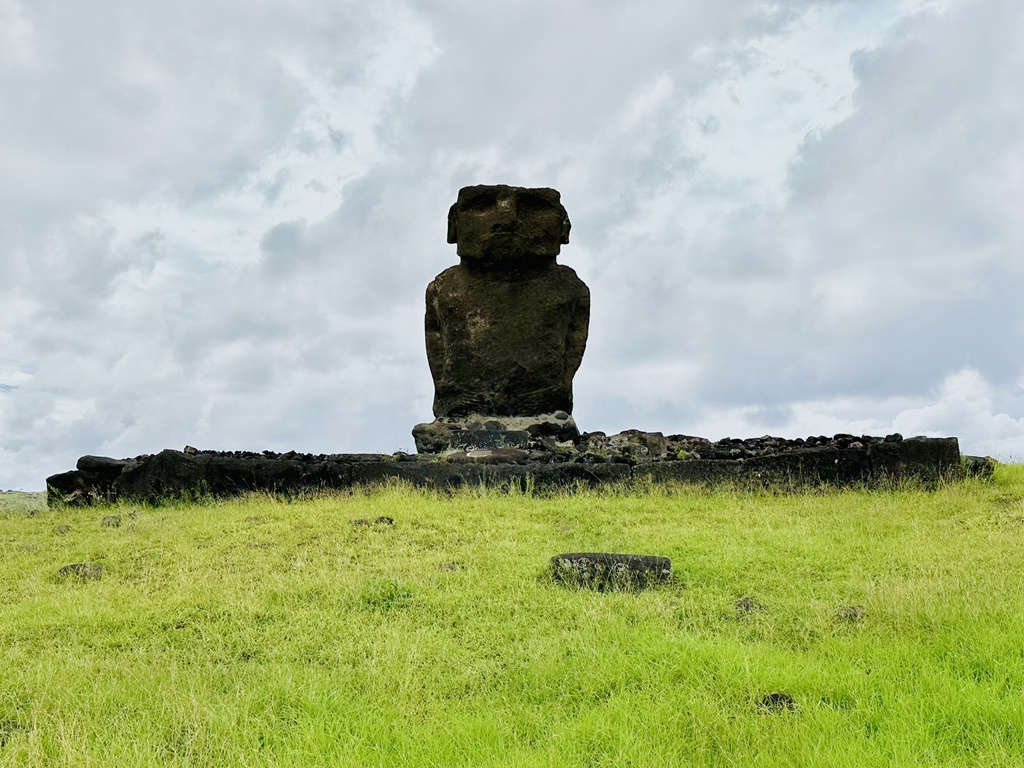


After too short of a time at Anakena, wishing we’d remembered our swimsuits to go more than knee deep in the ocean, we headed back to the hotel and took a dip in the pool.


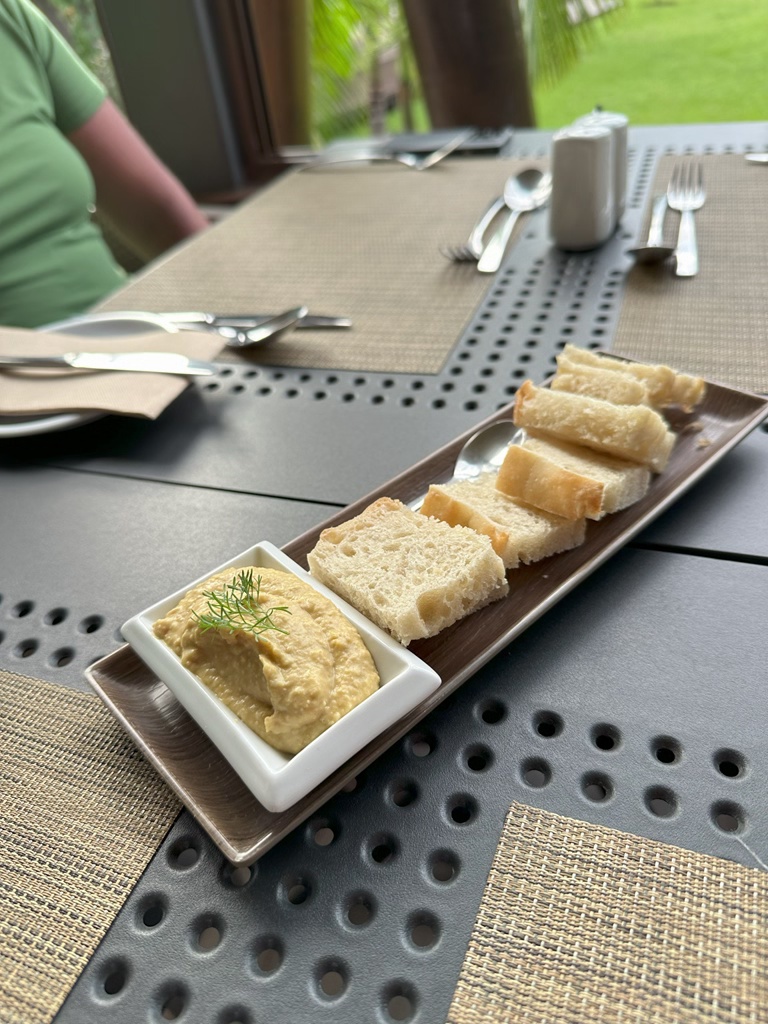
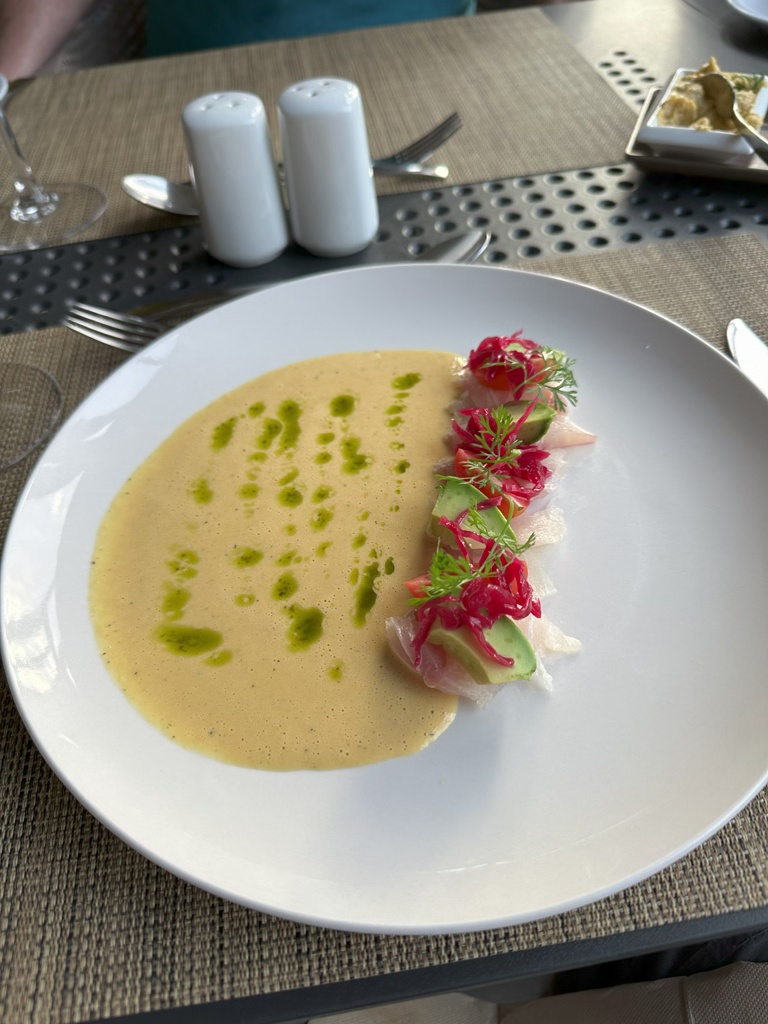
The hotel although tiny does have a dinner offering. Only one choice, but I want to try it. Squid ink pasta with shrimp. It was delicious, and I enjoyed my meal with a couple from Kenora, Ontario, who we’d met at breakfast (and also bumped into at Anakena!) The hotel staff ordered a pizza for delivery to Ellie, and we were both totally satisfied with the end of our amazing day on Rapa Nui.



 Ellie's Adventures
What an incredible visit to a magical place – dogs excluded! – were there many flowering plants? I noticed plumeria on your last photo. Again an amazing trip!
LikeLiked by 1 person
Lots of flowering plants. Almost like Jamaica.
LikeLike
It is so fantastic to get to see and imagine these places through your stories Kerry. Easter Island is quite high on my travel wish list. Thanks for sharing!
LikeLiked by 1 person
Thanks, Sarah! It’s definitely worth making the effort to get there. I will have the second instalment of the trip report for Easter Island up sometime in the next few days!
LikeLike