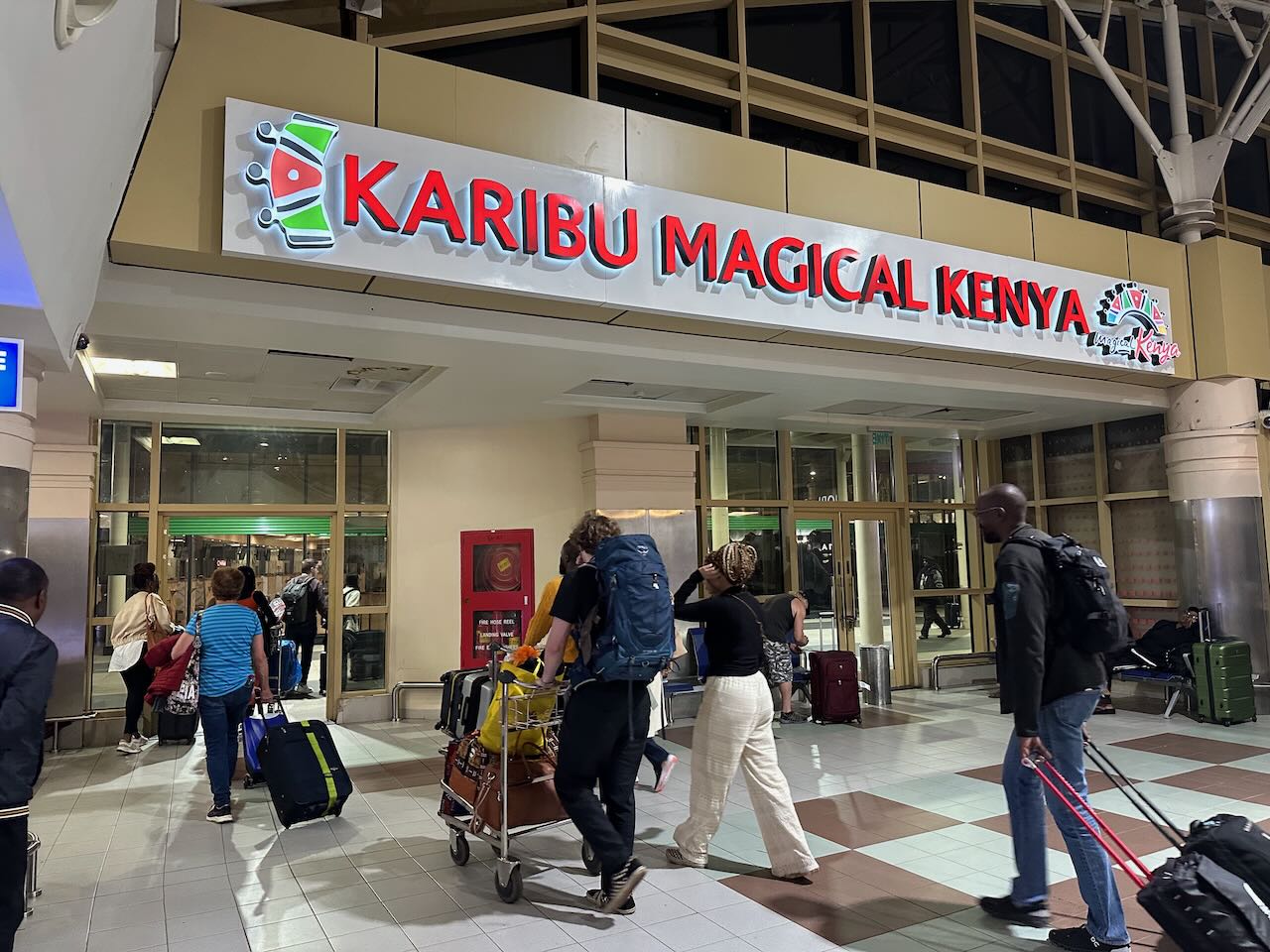
So here we are in an eerily dark, too quiet Victoria Falls Airport. Normally ours would have been the last flight of the evening at 6:00 PM, but I was surprised they already had nearly all of the lights off at 8. Ellie enjoyed zooming around the empty terminal on her scooter suitcase. We chatted with a few other passengers on our now full flight, who’d been displaced from last night’s flight from Livingstone over in Zambia. Sounds like Kenya Airways took care of them at least and made all the arrangements for them to get across the border, and so now everyone’s on their way to Nairobi.
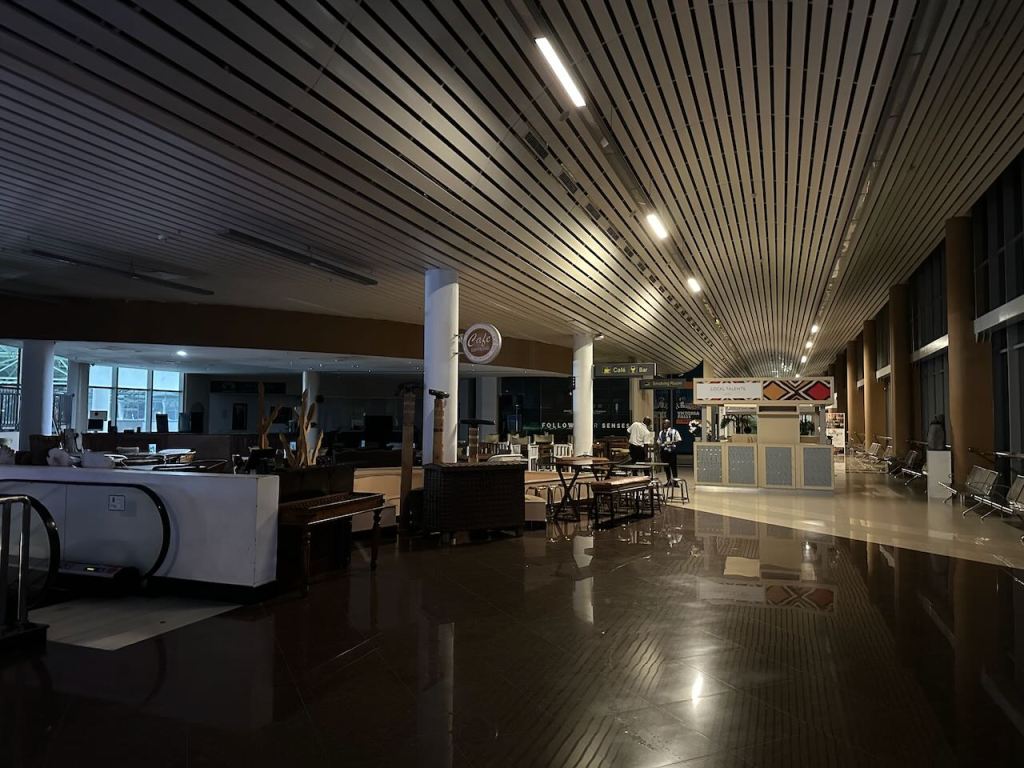
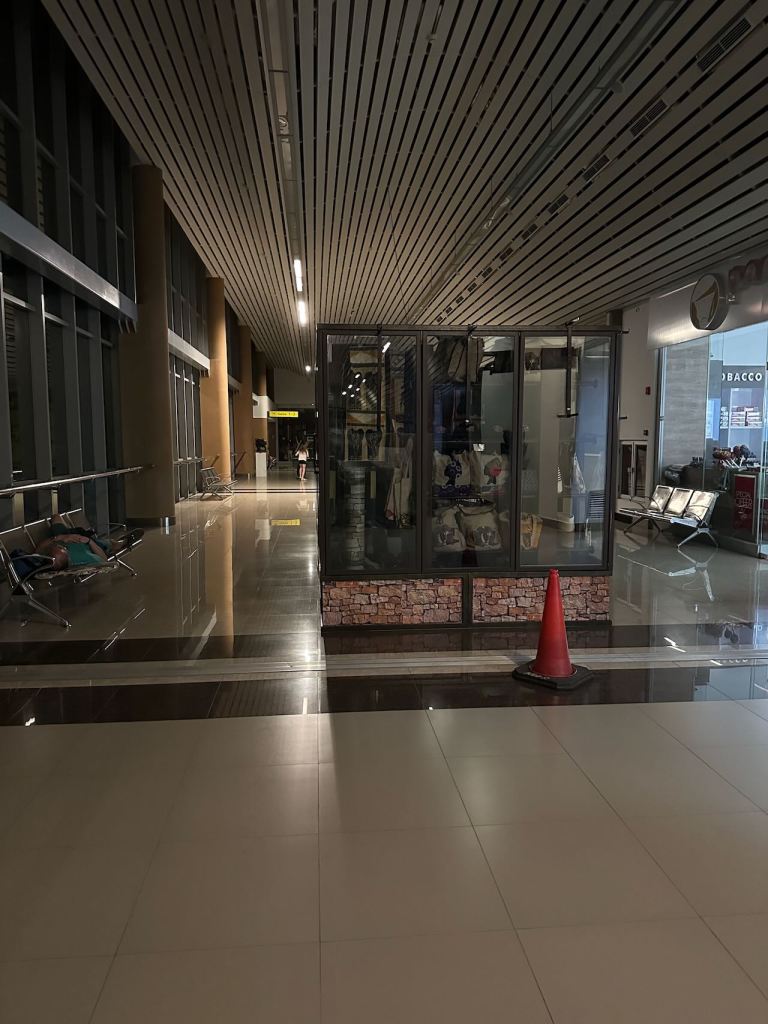
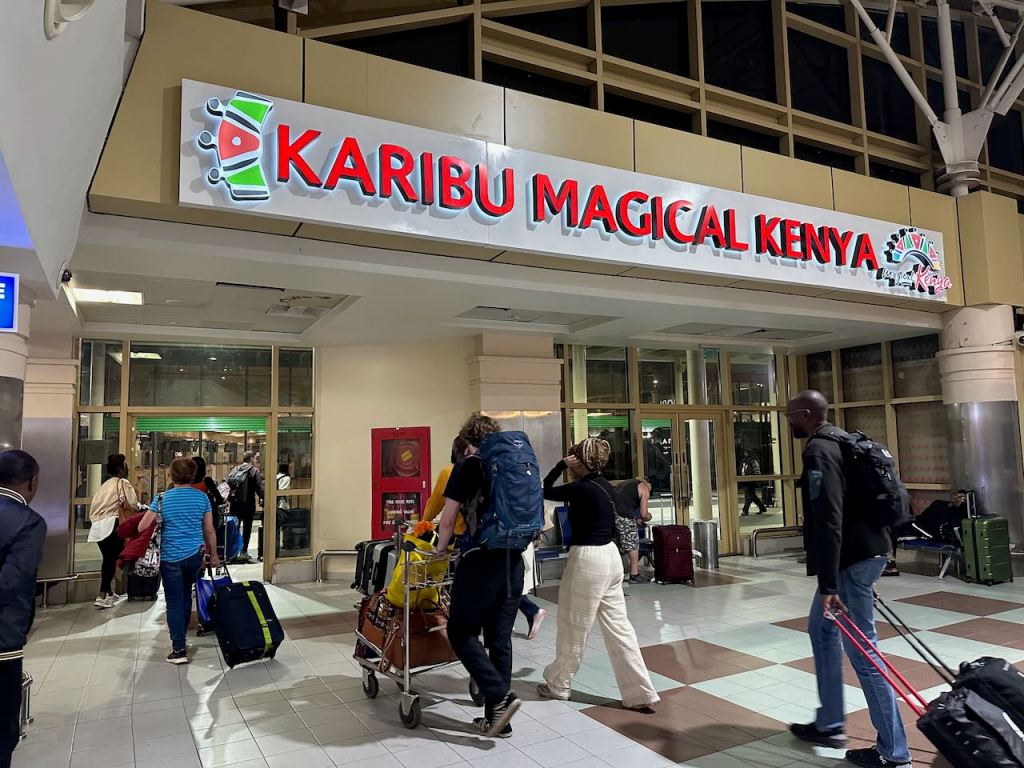
The flight was completely uneventful and there weren’t any views since it was dark. Passport control and luggage pickup in Nairobi was fairly quick and we were walking out of the airport at around 3:00 AM.
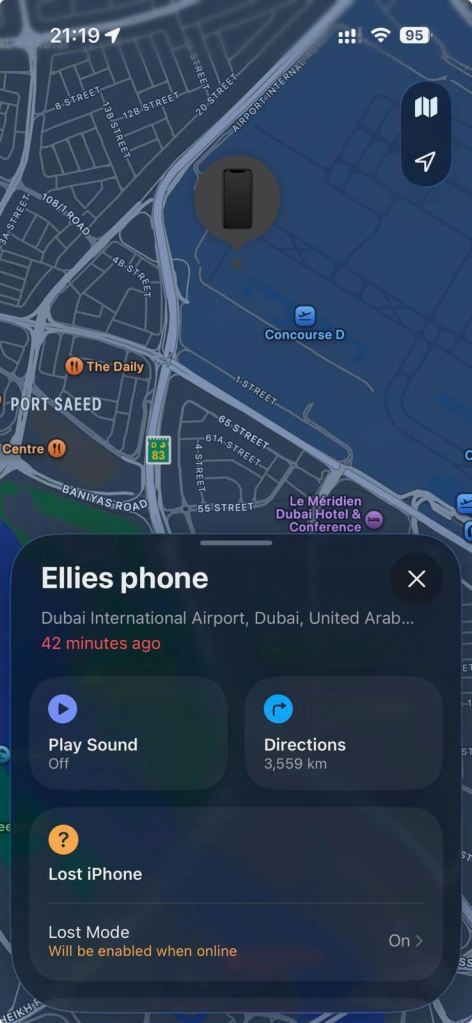
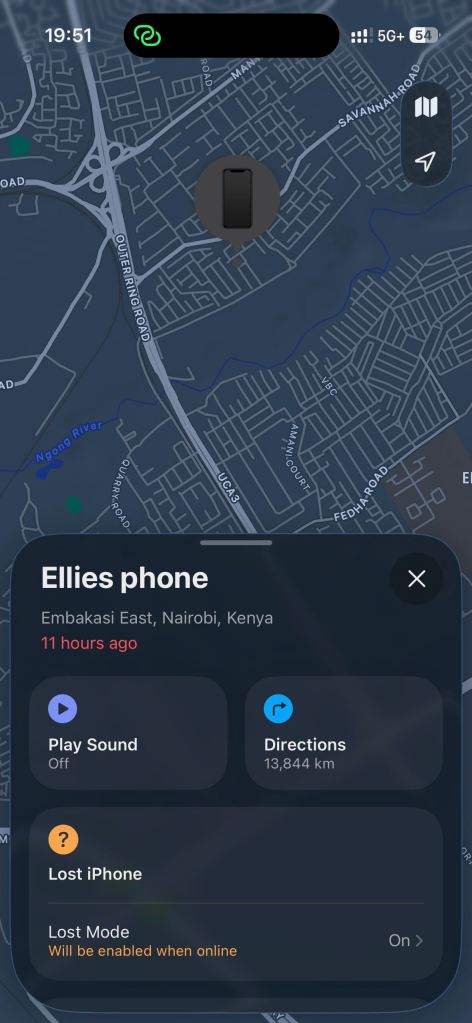
Unfortunately, Ellie realized in the car on the way to our accommodation that she’d forgotten her phone in the seat pocket on the plane. Sadface. At least it’s showing up on “Find My” so hopefully we’ll be able to arrange a retrieval tomorrow (today?)
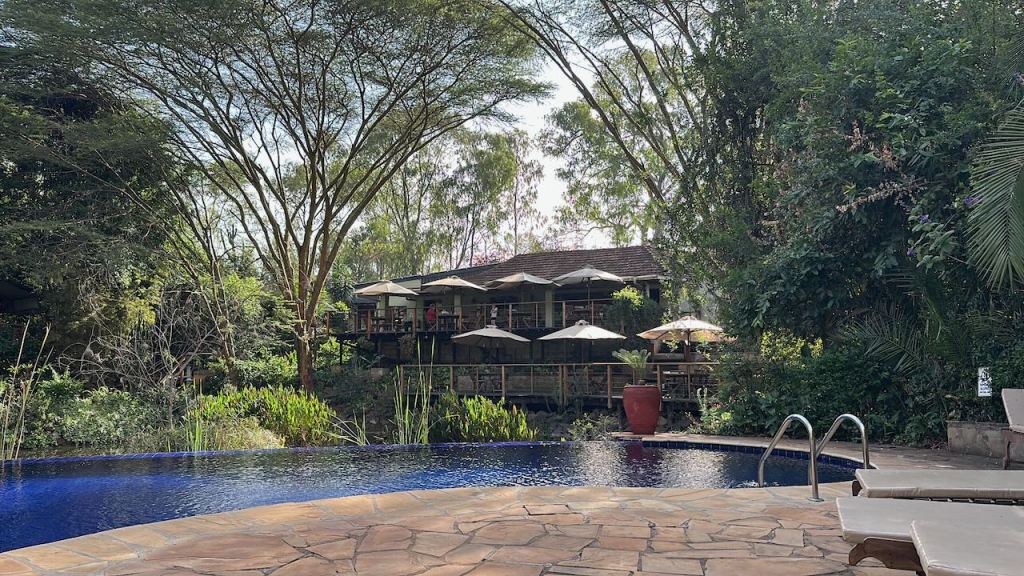
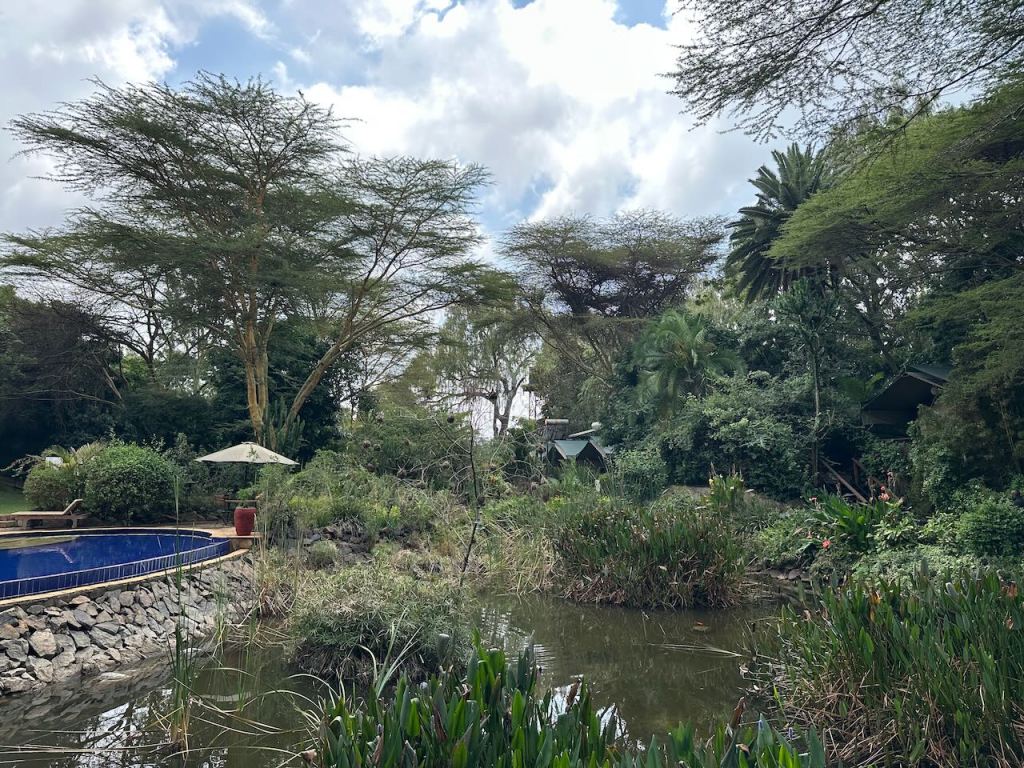
We stayed in the Wildebeest Eco Camp which is a safari style camp more or less in suburban Nairobi. The grounds were lush, and it was a quiet place except when we wanted to continue sleeping at 8 AM the first morning.
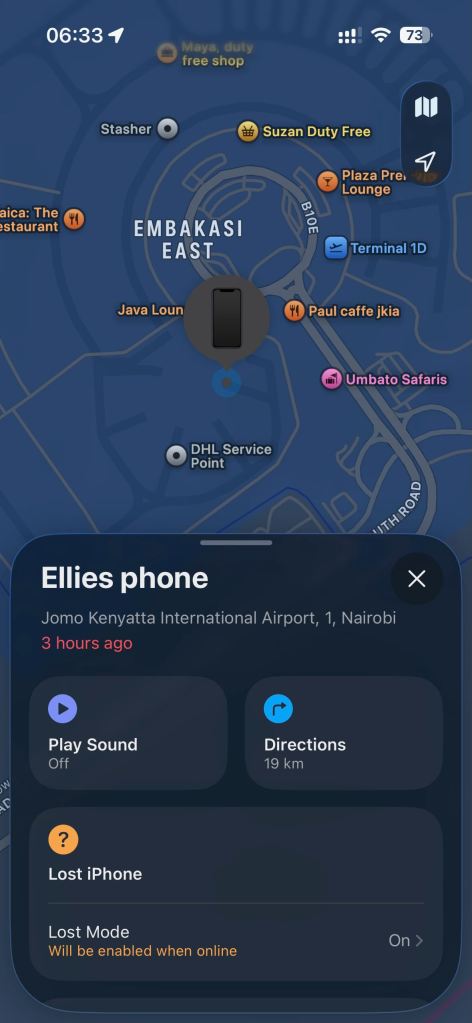
Ellie’s phone is still at the airport, it looks like its still on the plane based on its position. Kenya Airways was quite responsive and connected me with someone from their security team who called me on WhatsApp while going on to the plane to search for it at our seats. Couldn’t find it. He had to go as the next flight was boarding. Hmmm. Well, we can try again later.
Doing a day safari in Nairobi National Park, very close to our camp, was one of the very appealing options for our short stay, but with the already scheduled late arrival (which became far, far later) on our first night, and the prospect of having to get up at 4:30 and then be up all day for a flight at midnight the second day we decided to cancel that as it would have just been too tiring. So we did something else, which was very unique: A walking tour of Africa’s largest and most impoverished slums, Kibera.
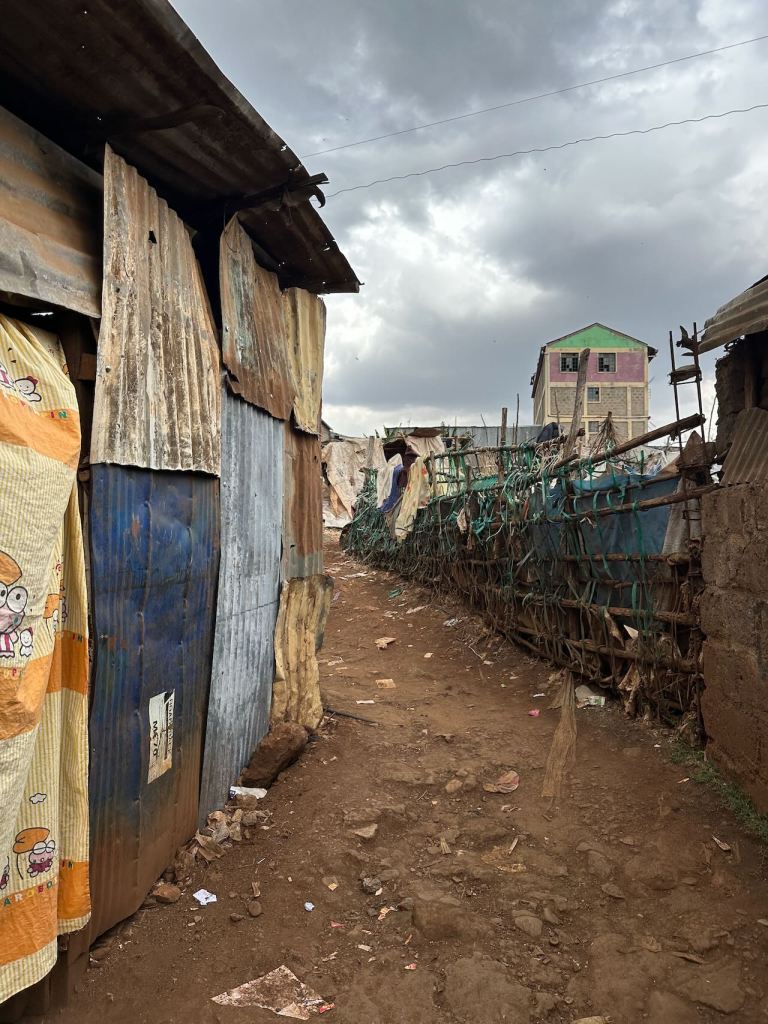
It took me a while to figure out how to present this, as it’s not meant to be sensational at all, but a real look into the life of roughly 1 million people that live in this crammed, filthy corner of Nairobi. The tour was conducted by a local in partnership with a community nonprofit organization.
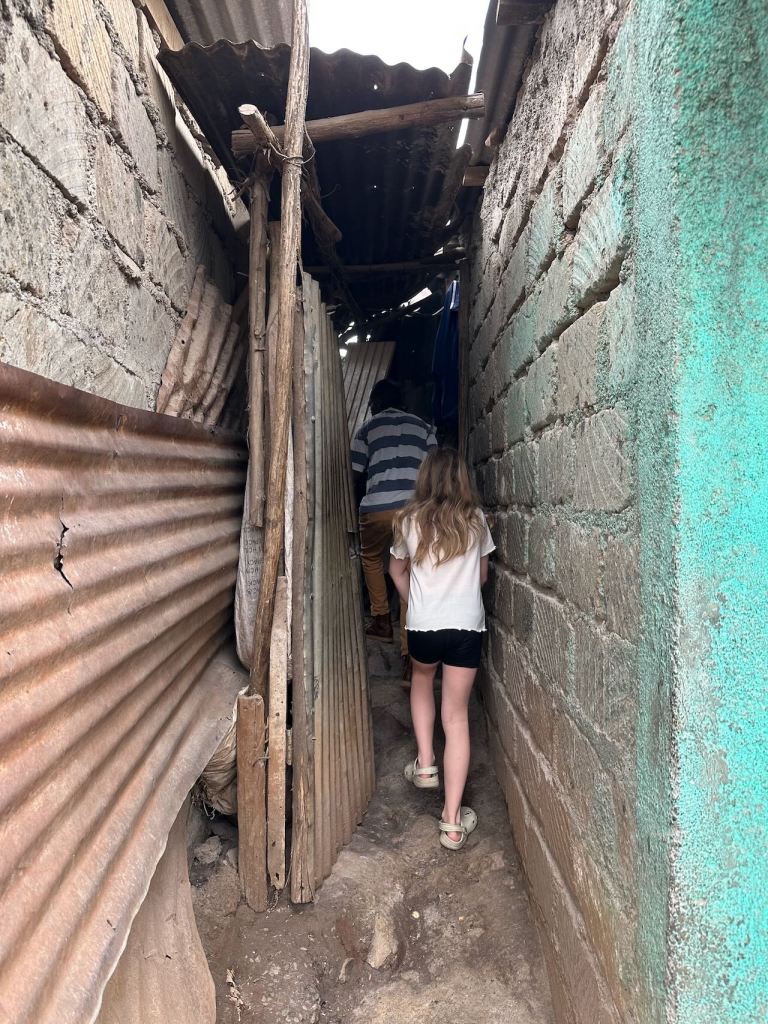
So here we go down one of the very narrow “streets” in Kibera after being dropped off on one of the few actual roadways.
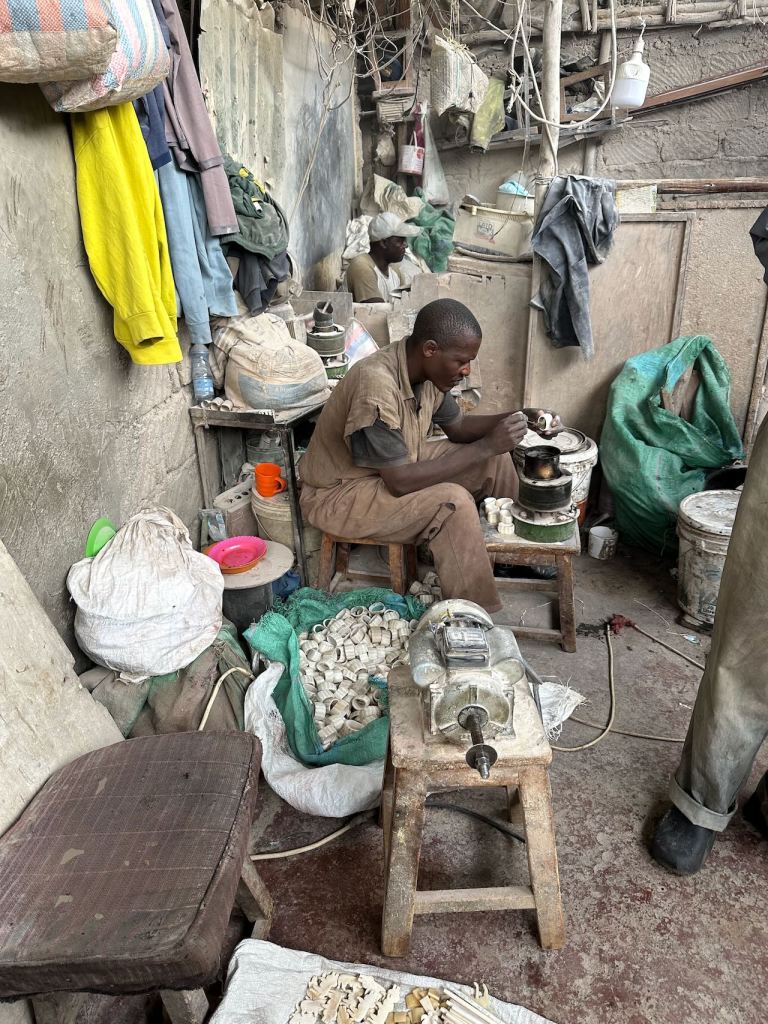
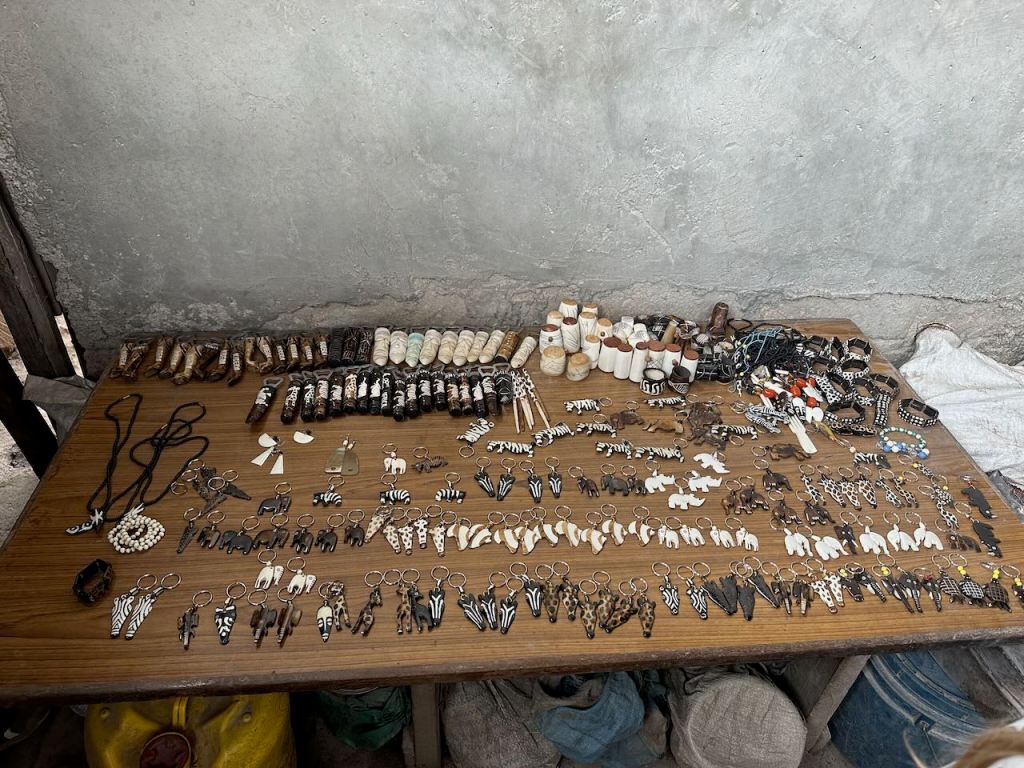
We visited a workshop where men were making souvenirs out of discarded pieces of bone, showing us the process of converting the raw bone into something beautiful like what was laid out on the table.
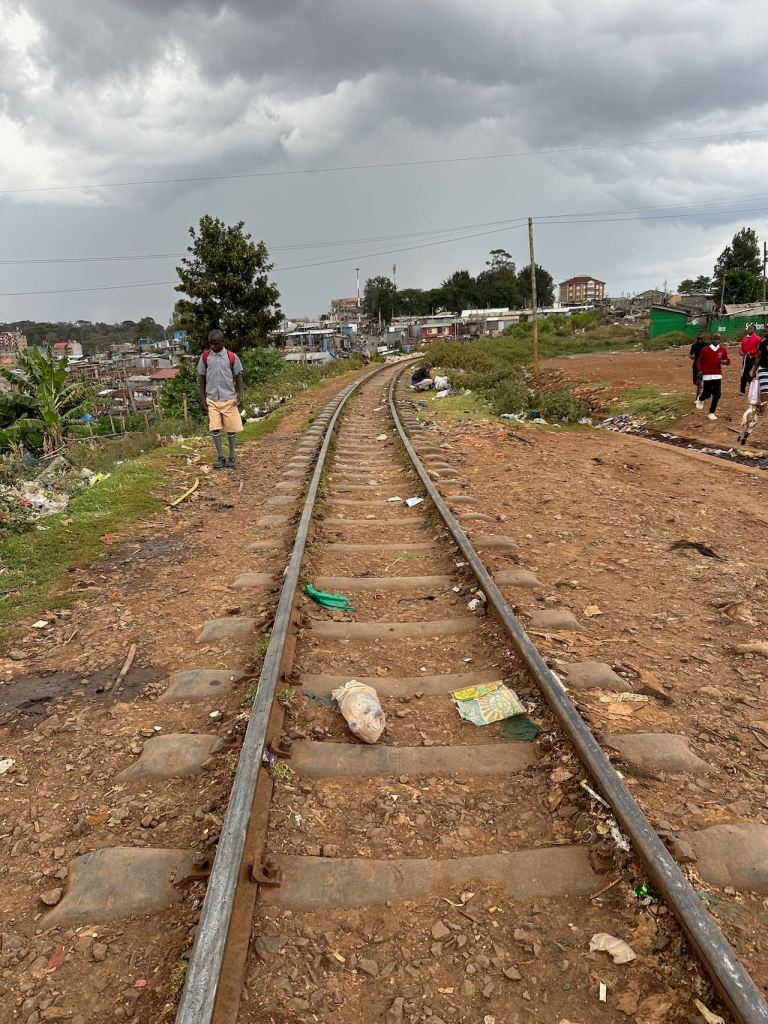
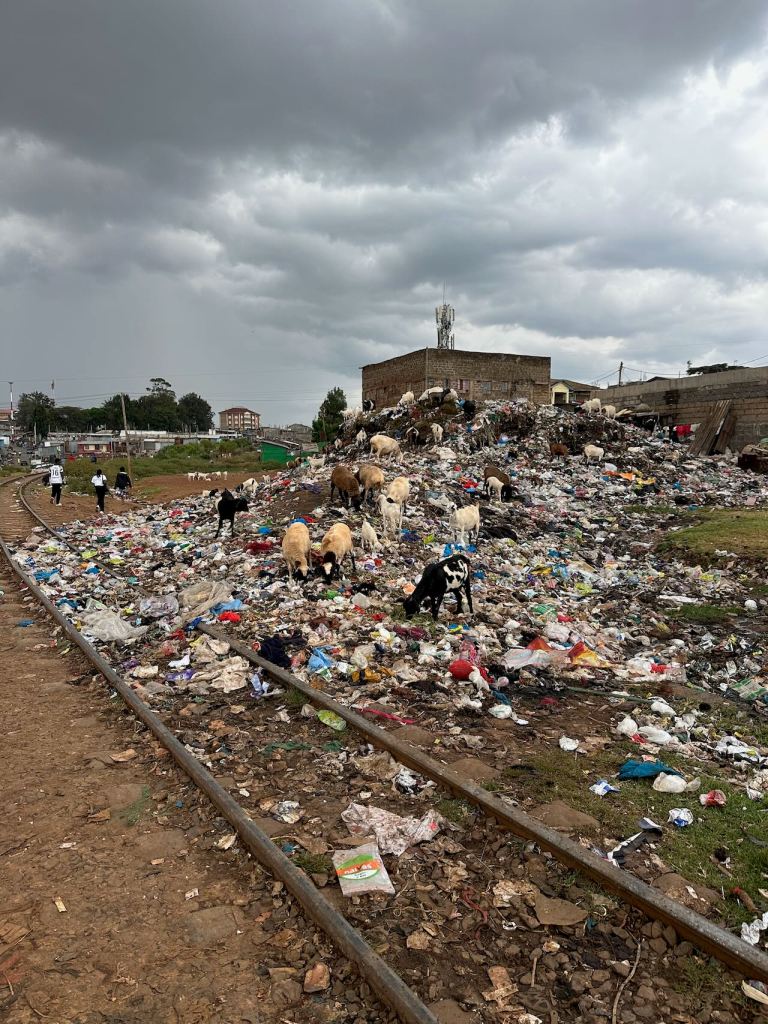
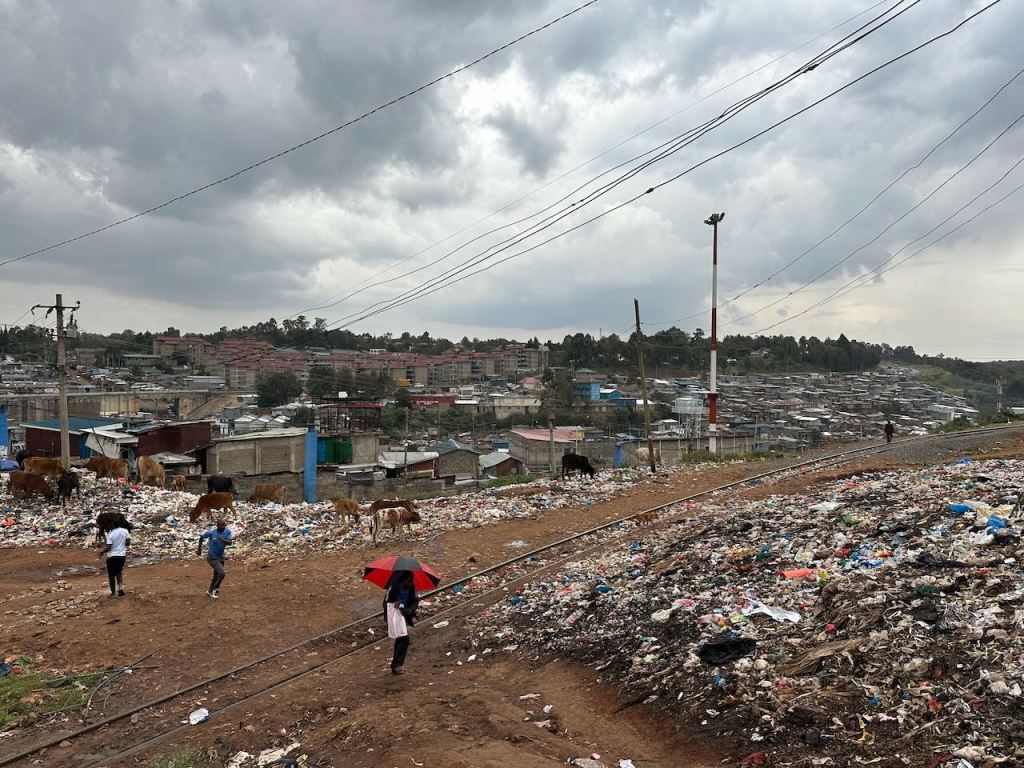
There are no utilities here. So trash gets simply tossed in a heap beside the railway tracks, getting burned down once in a while when it gets too high. Livestock grazes for food scraps.
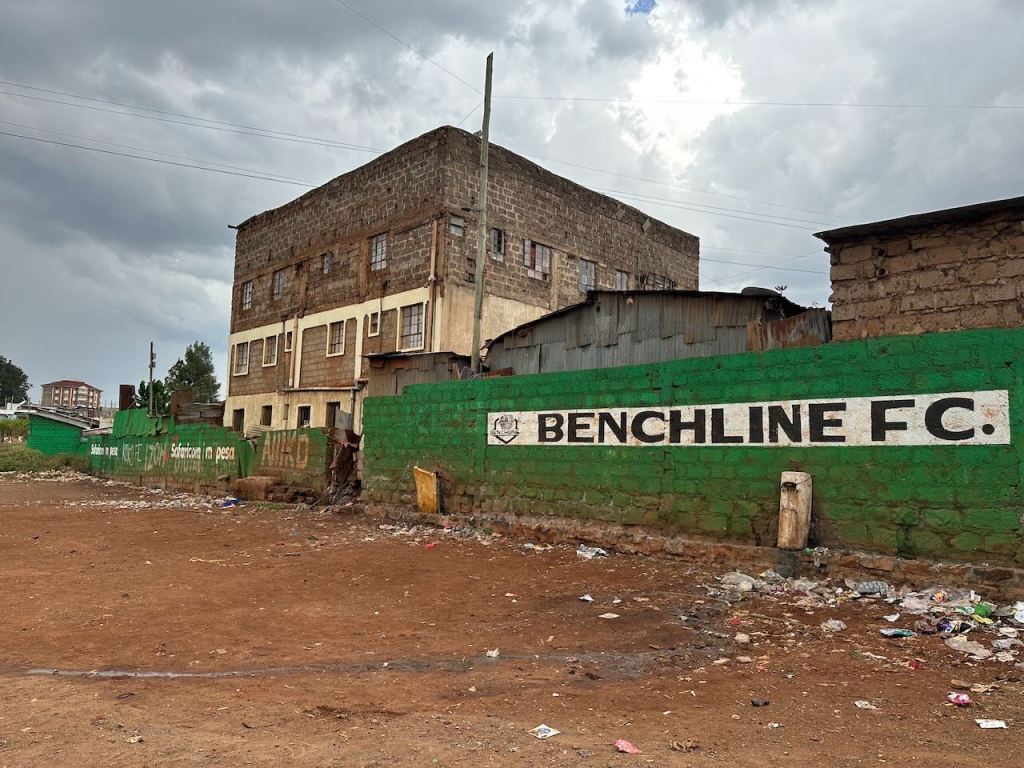
The football pitch.
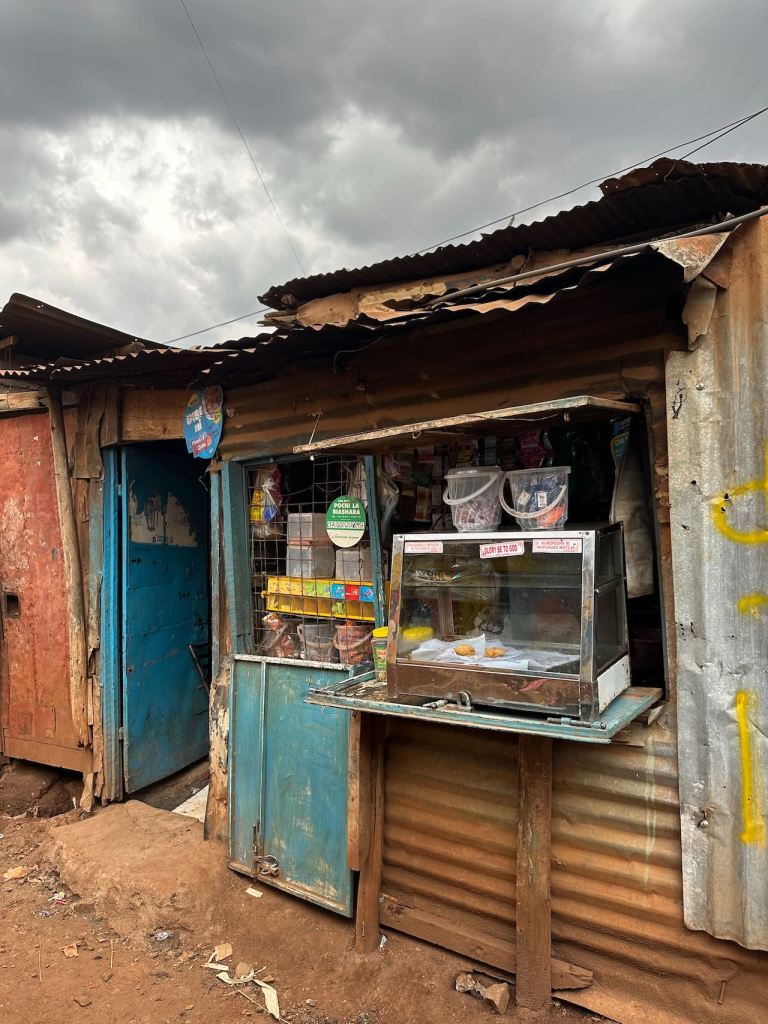
We passed by many street food outlets; some of which had interesting looking snacks but I didn’t want to end the trip popping azithromycin so steered clear of all of it.
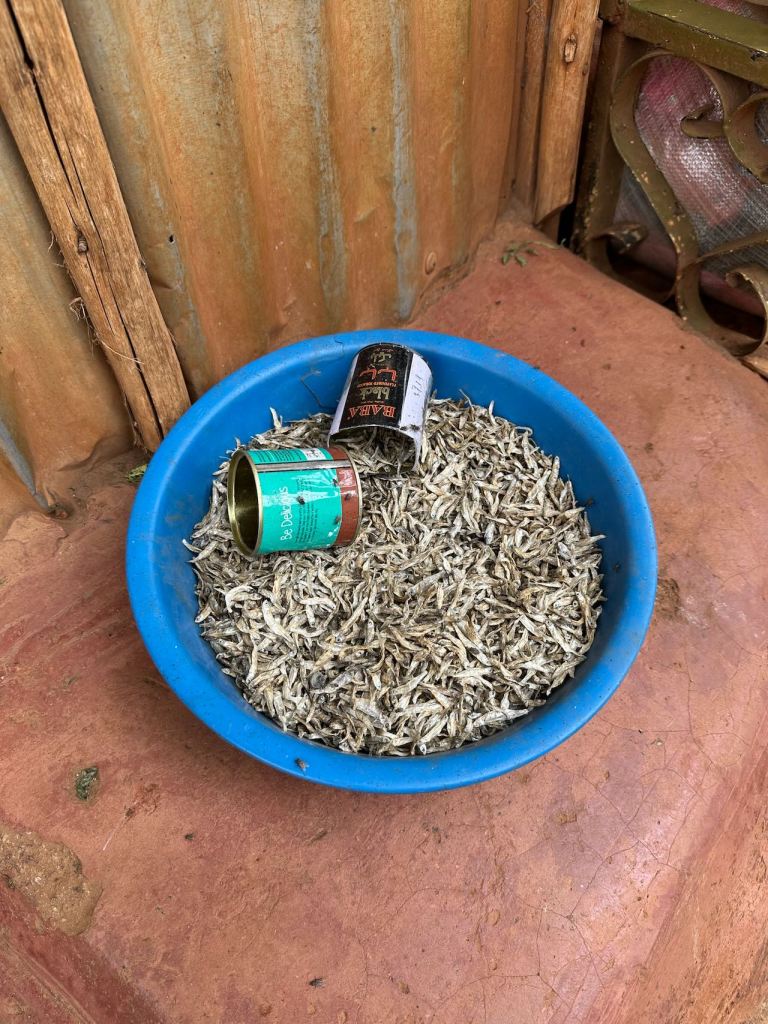
One of the common foods was omena – a tiny silver fish which is a staple of protein in the slum.
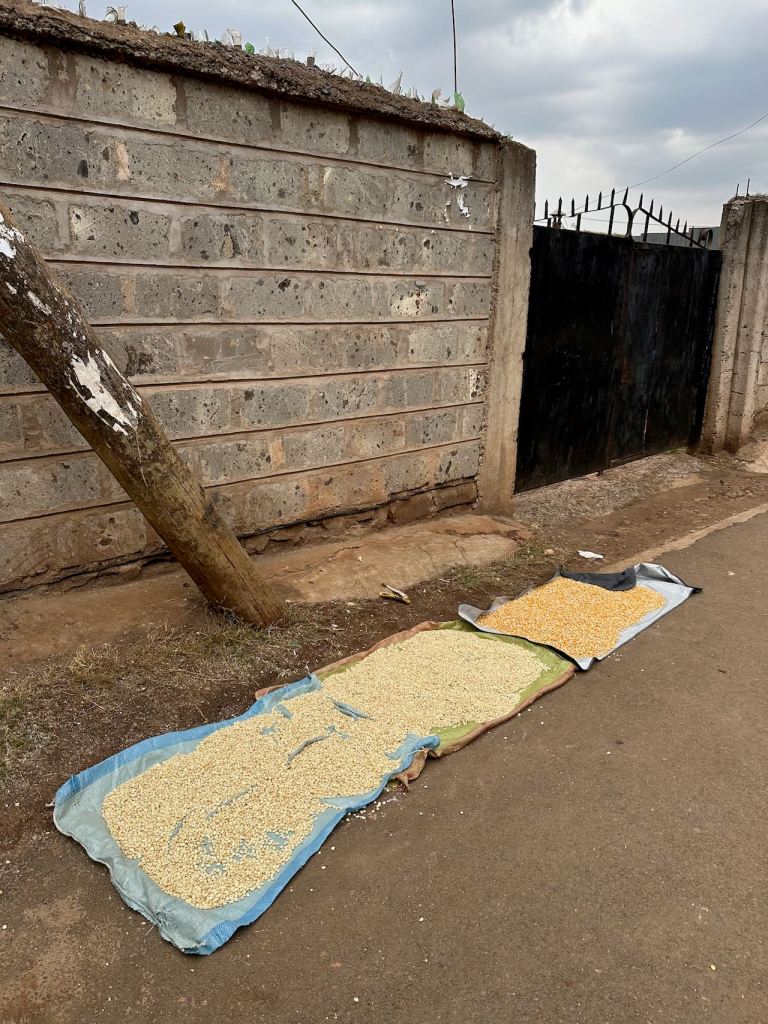
And maize.
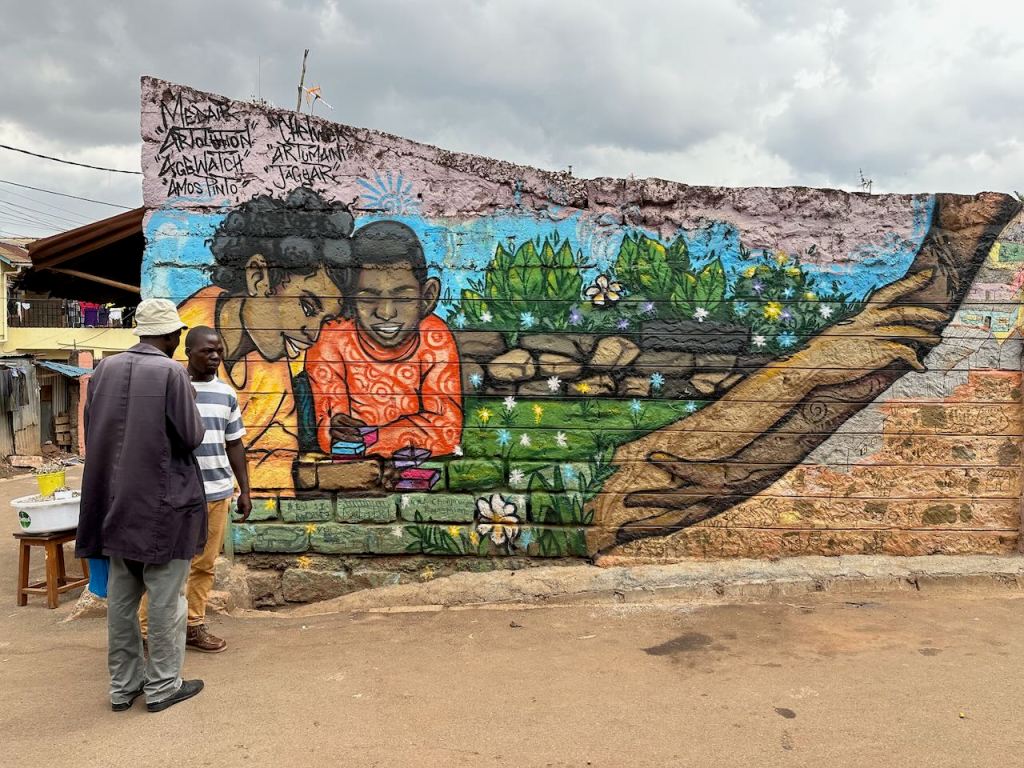
There’s still colour in the slum. Very nice to see it.
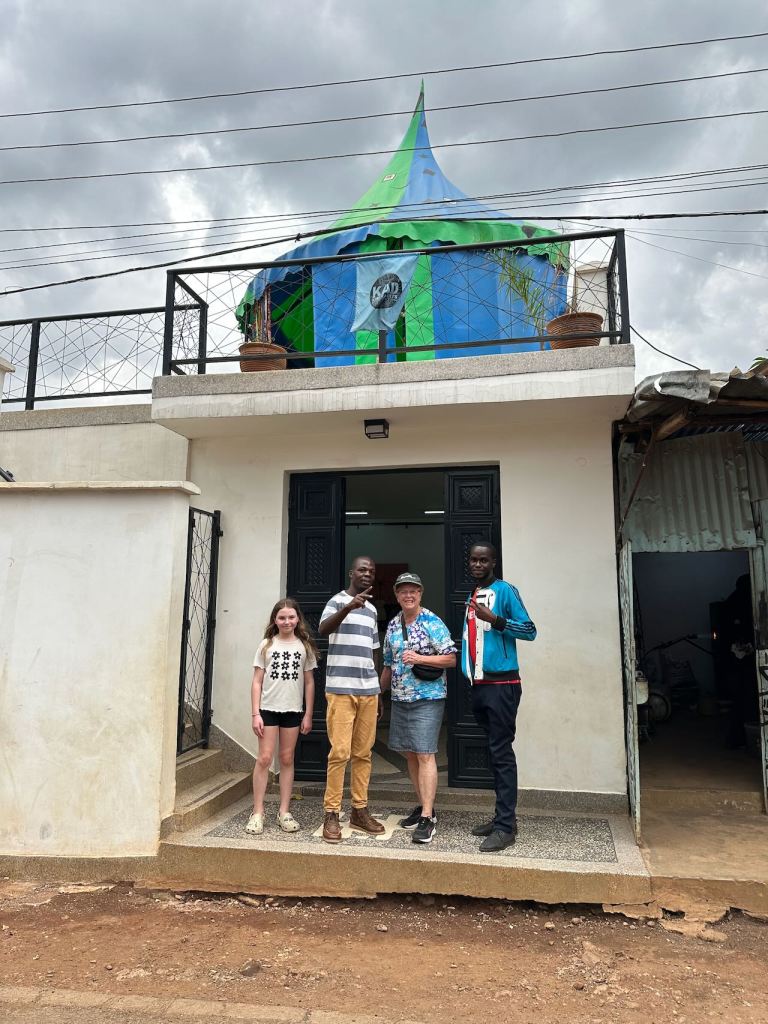
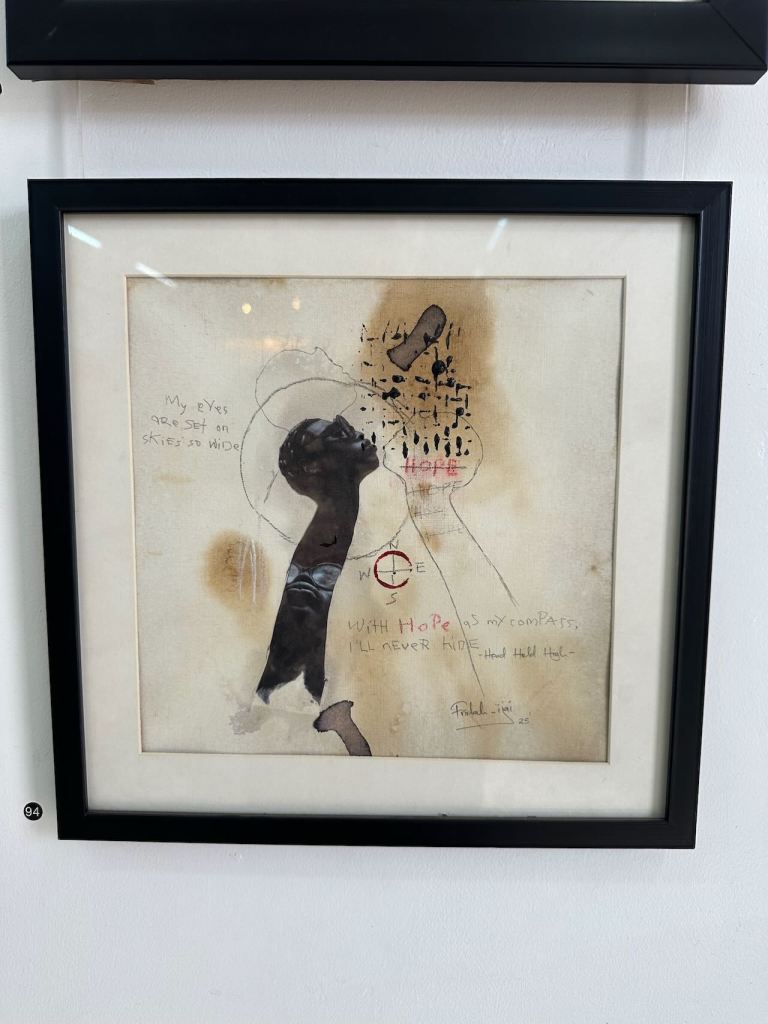
We visited an art gallery. Here’s Granny and Ellie with our tour guides.
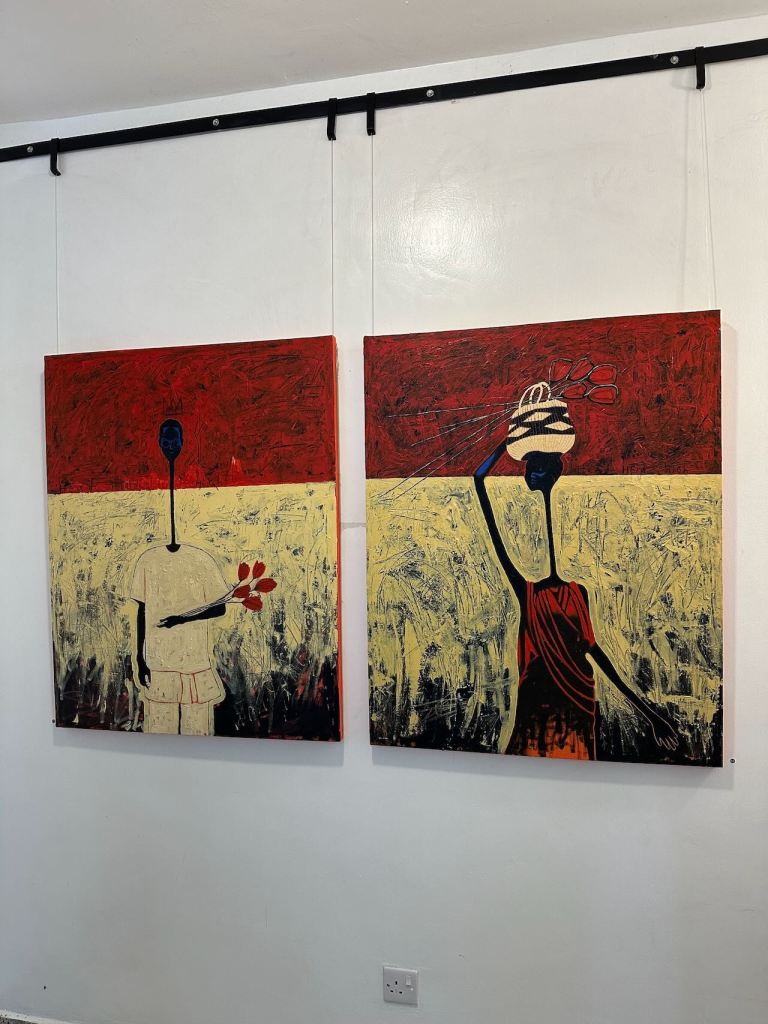
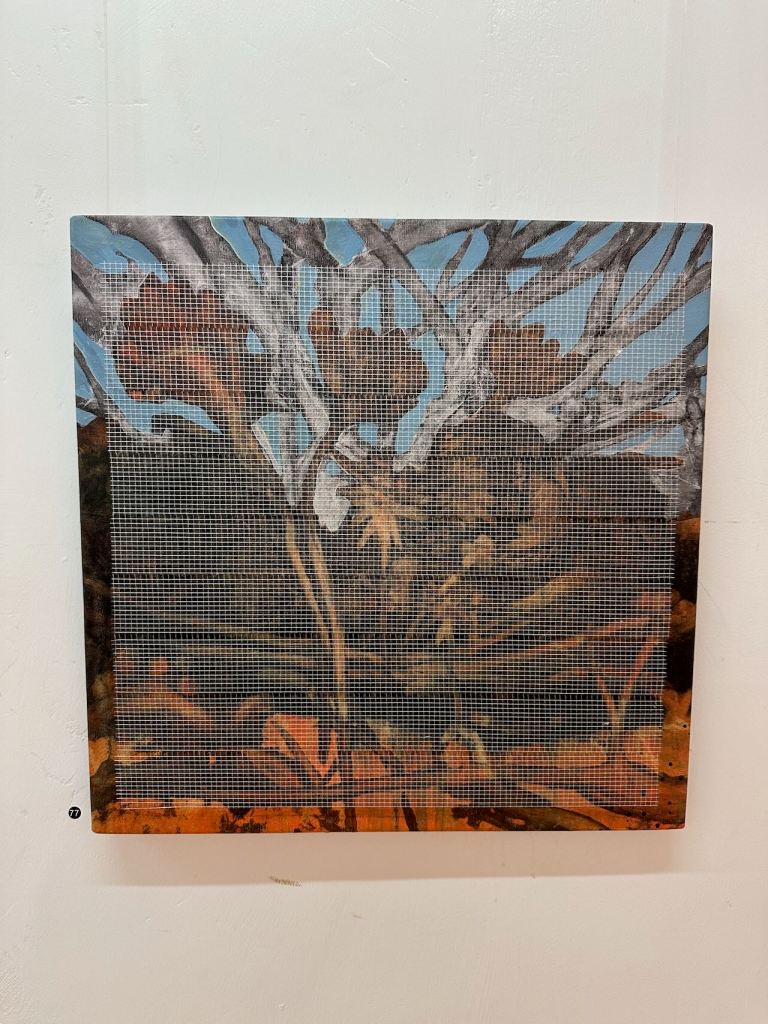
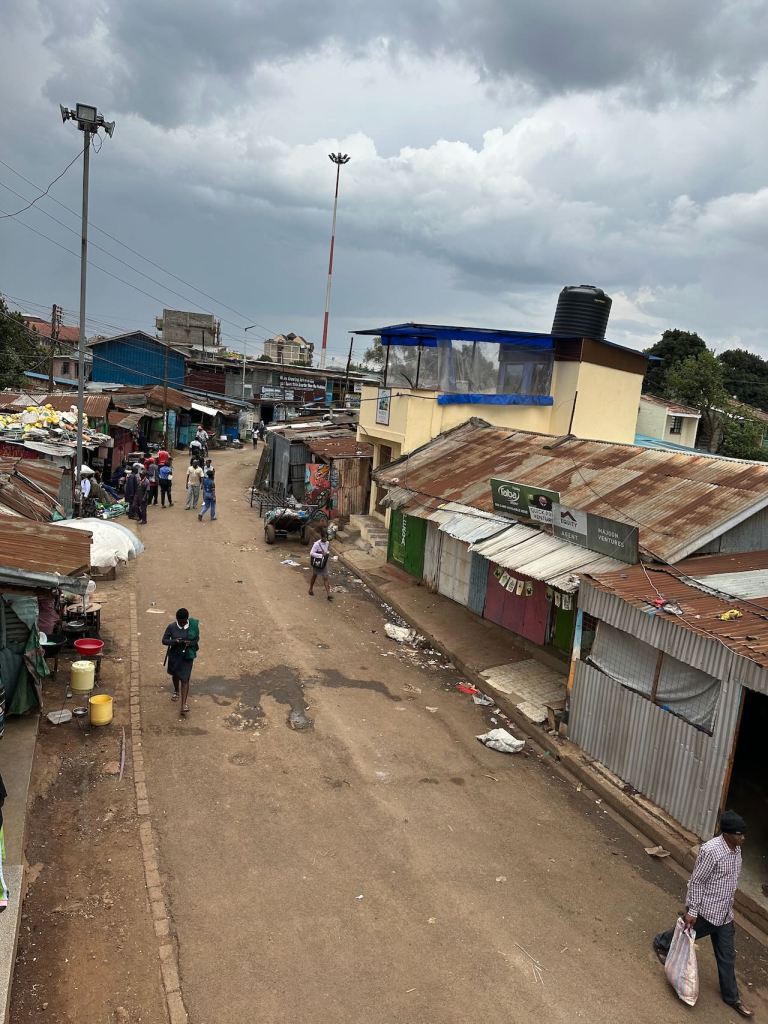
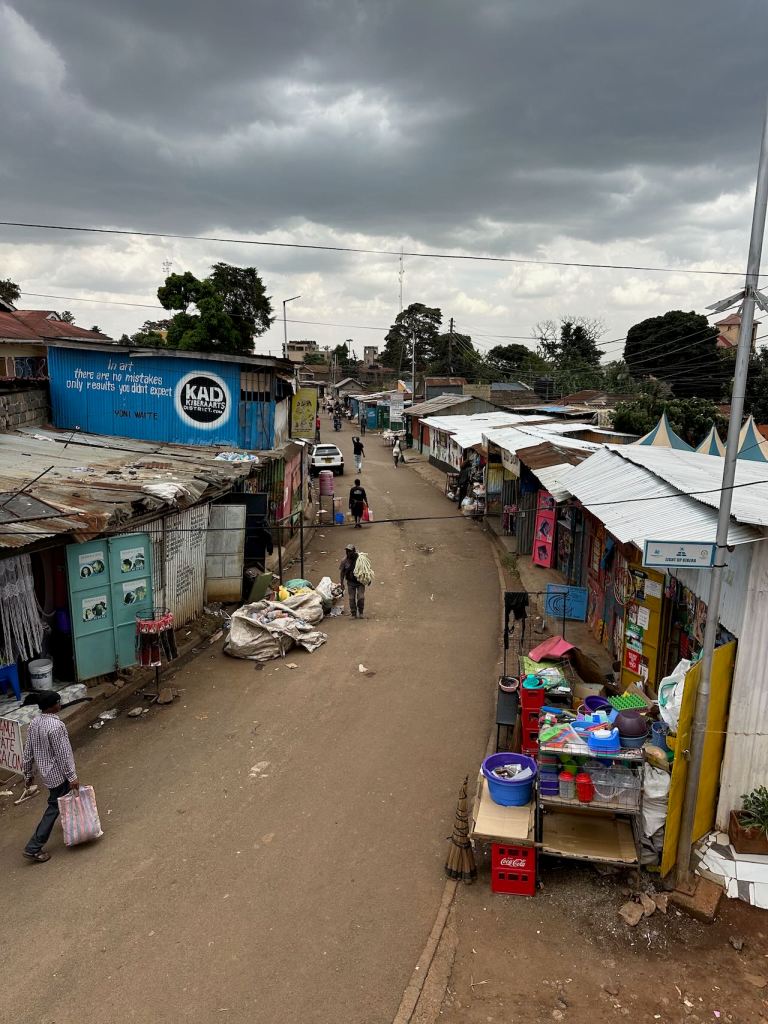
A view from the top of the art gallery. We heard the train going by while we were up there! I’d love to see that!
Missed the train. Just cows in the trash heap now.
Not just bottles, but everything gets collected for recycling here as it can provide a decent income for whoever can transport it to a recycling depot.
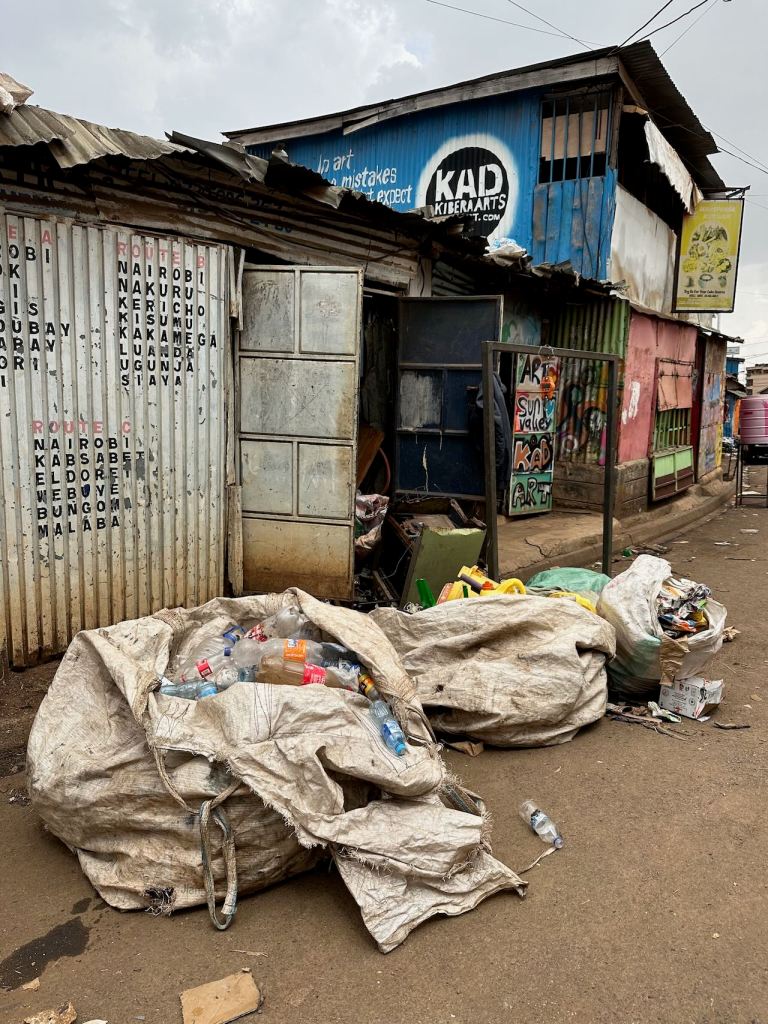
More colourful shops.
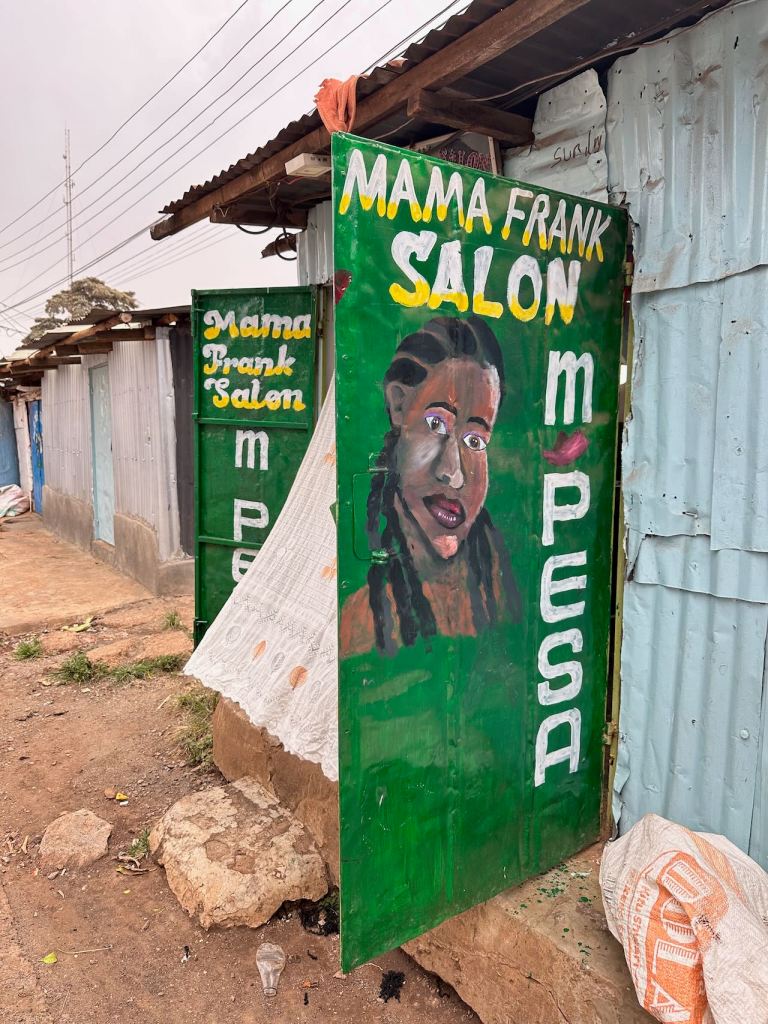
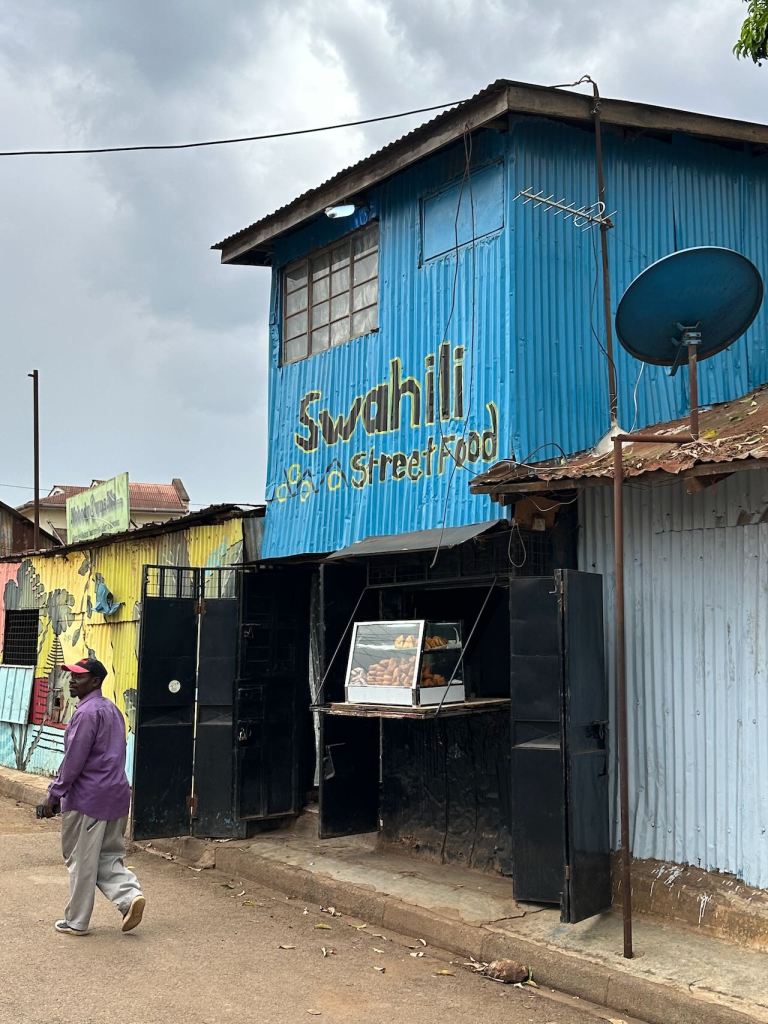
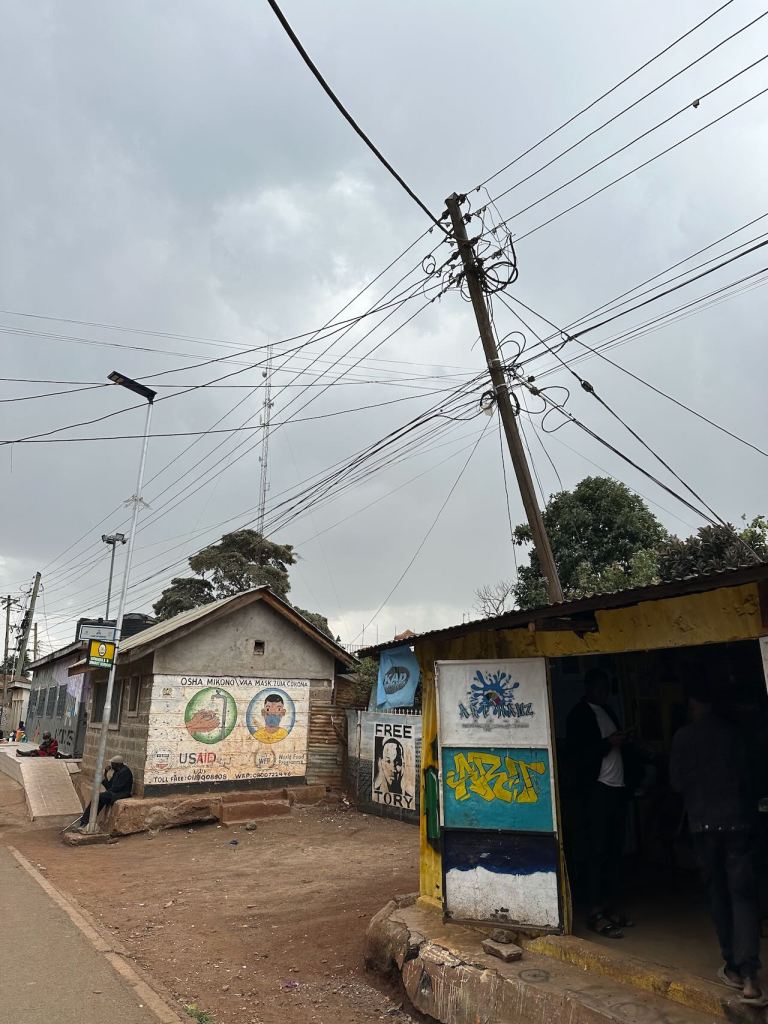
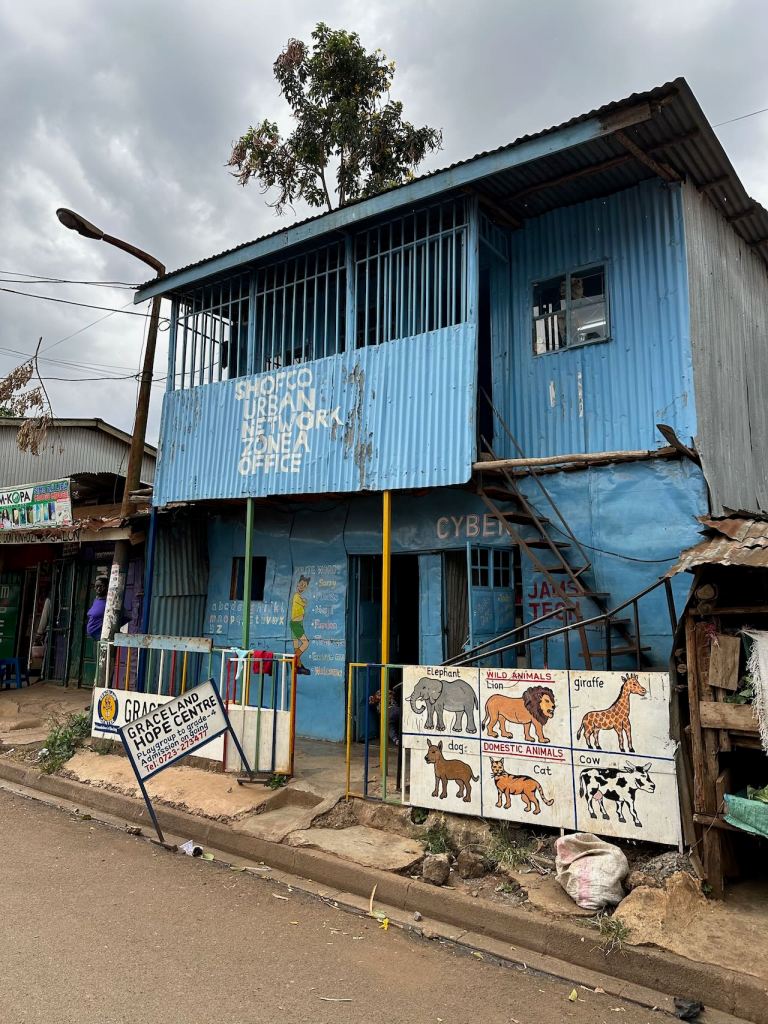
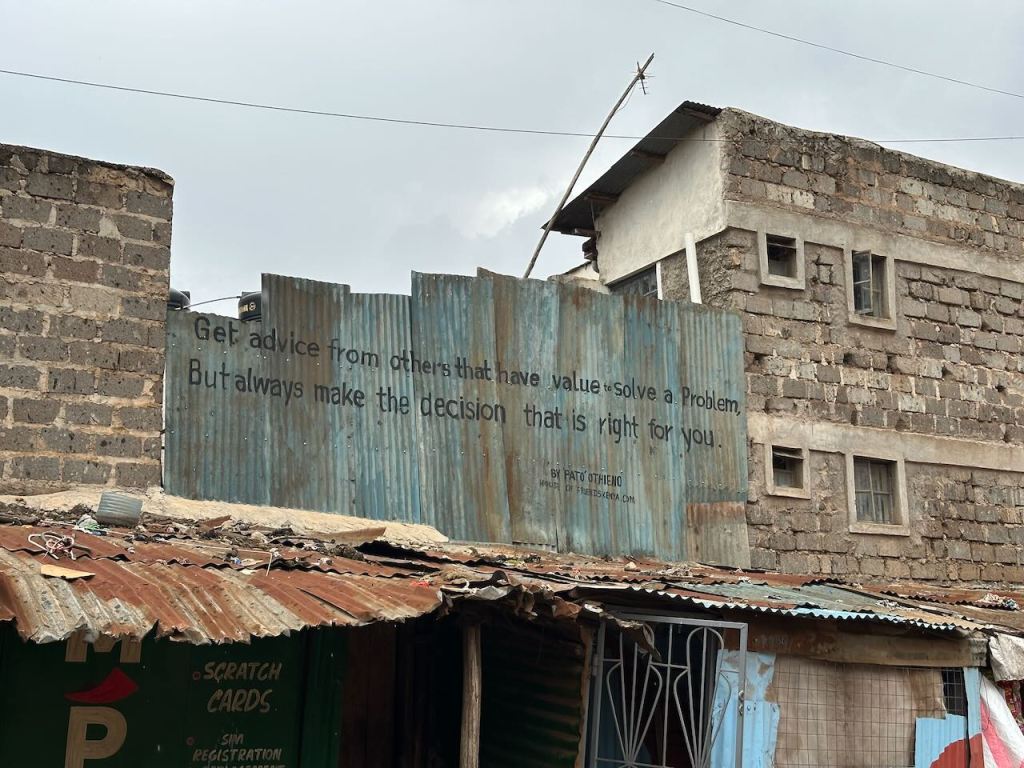
Now, we’re going into the poor part of Kibera. Yeah, that’s right – we were in the “nice” part up until now.
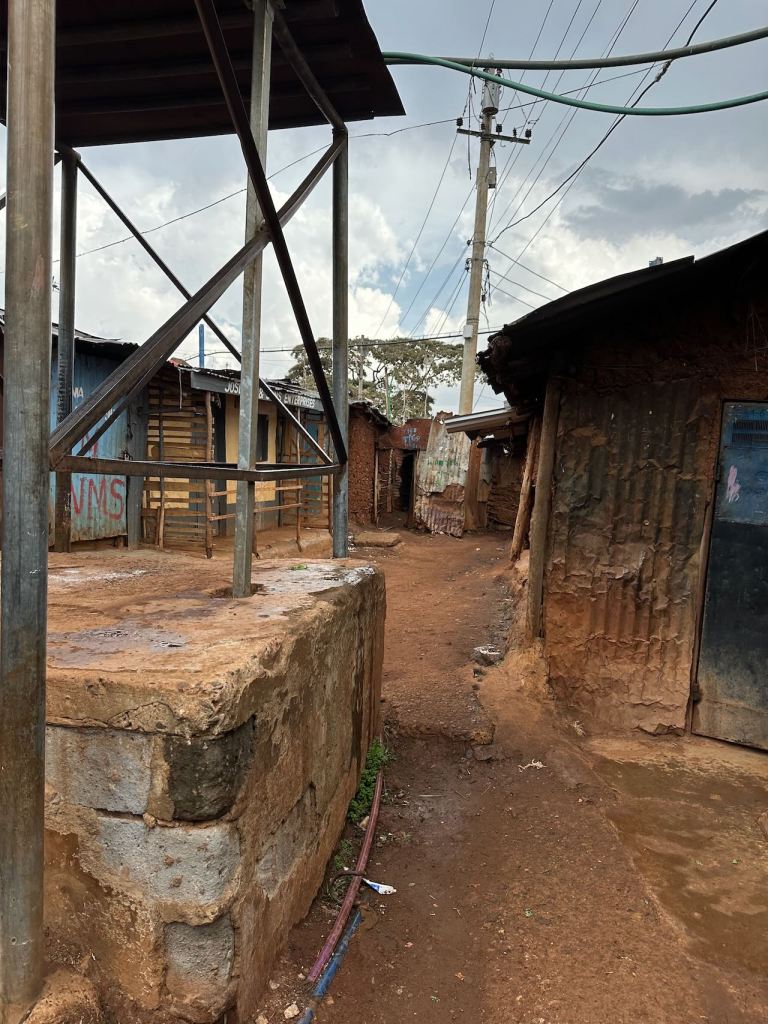
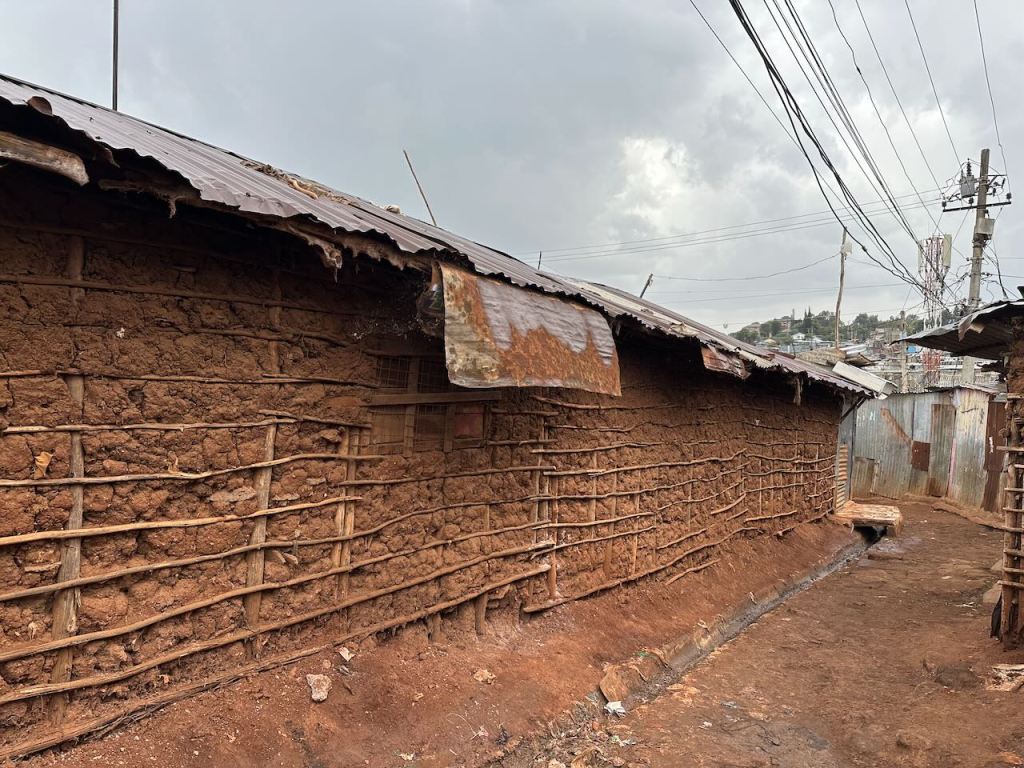
Over here, most of the dwellings are made of mud and sticks.
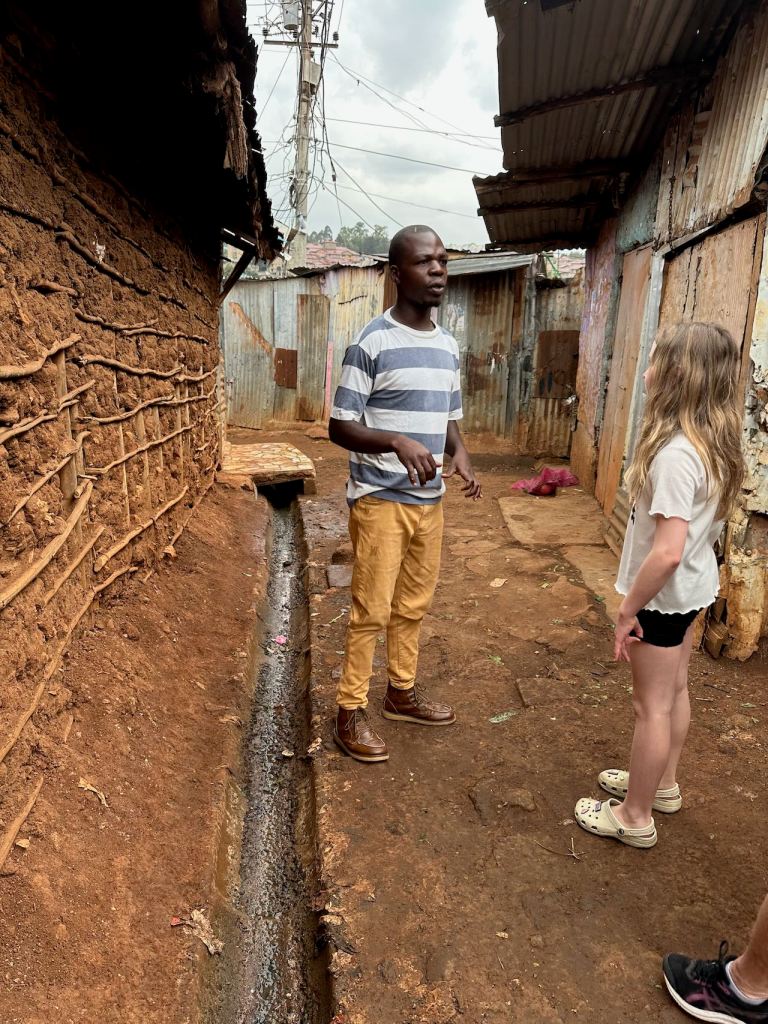
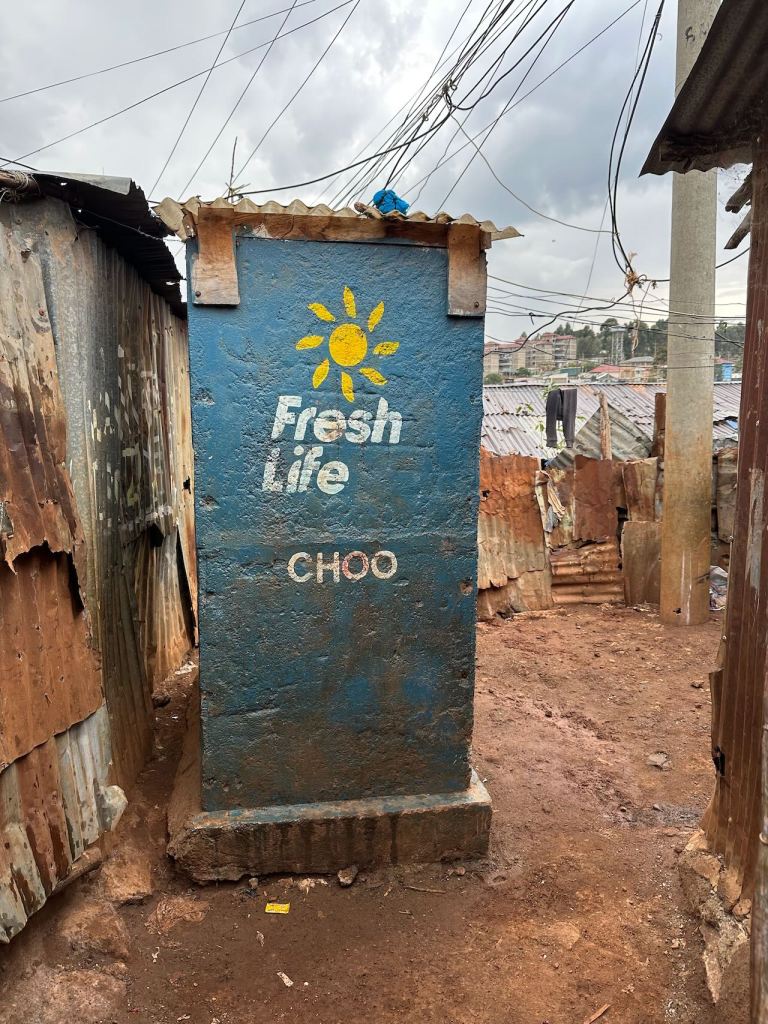
No plumbing here. If you can afford it, you can use a pay outhouse like this one. Or just do your business in the gutter, or behind a decrepit wall.
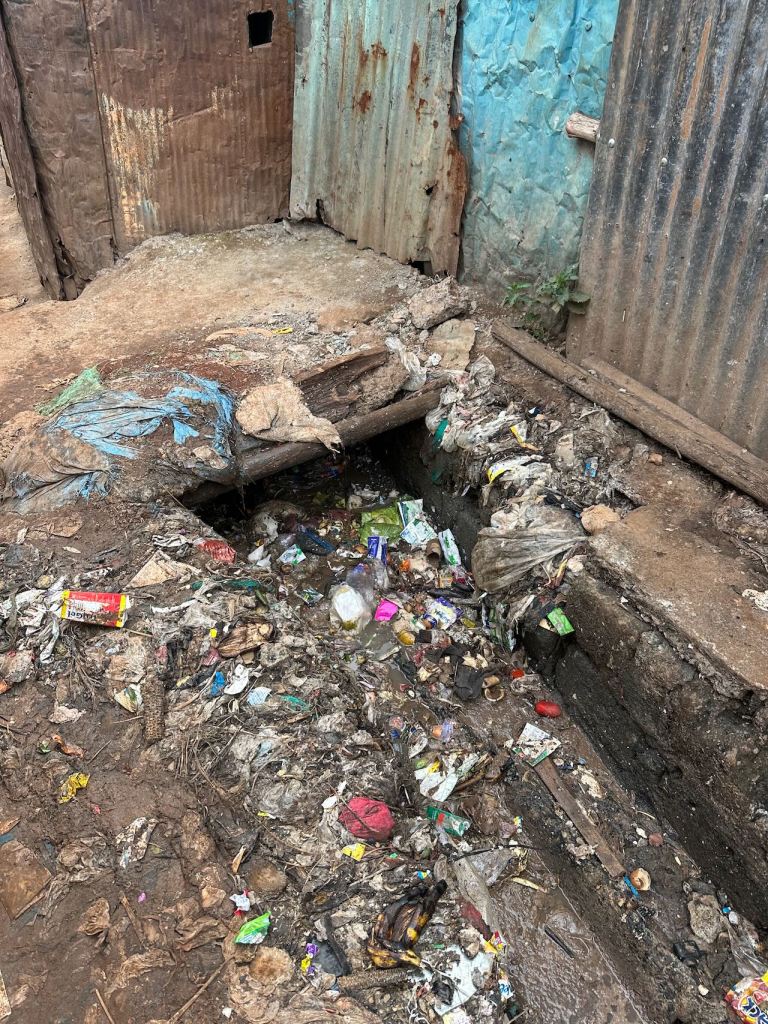
A typical “street side” gutter. We saw dead rats just laying around, and yes, it smelled horrible. You didn’t want to touch anything at all.
A produce stand in a side street.
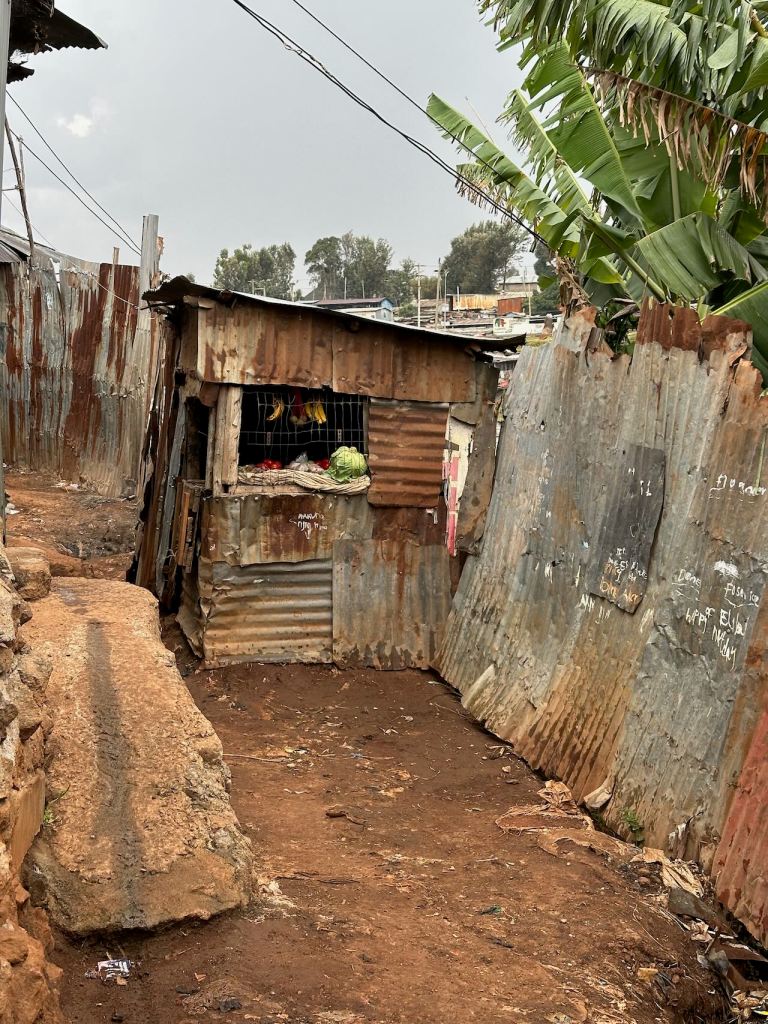
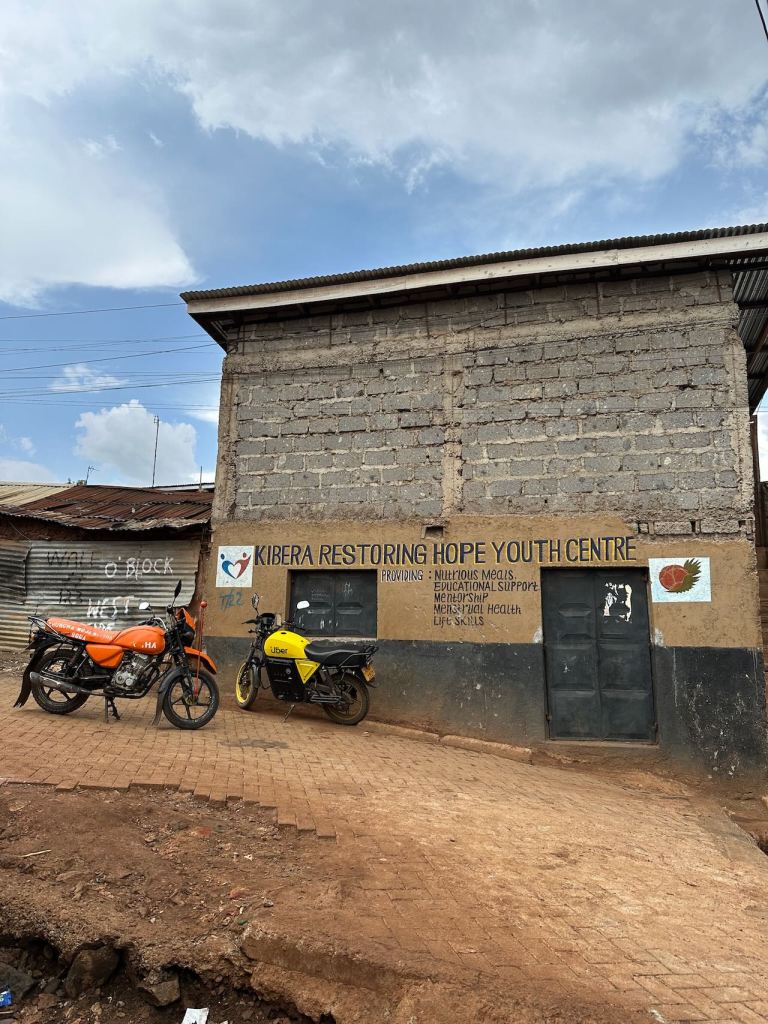
Signs of hope were actually quite plentiful, but for up to a million people living in squalor, not nearly enough.
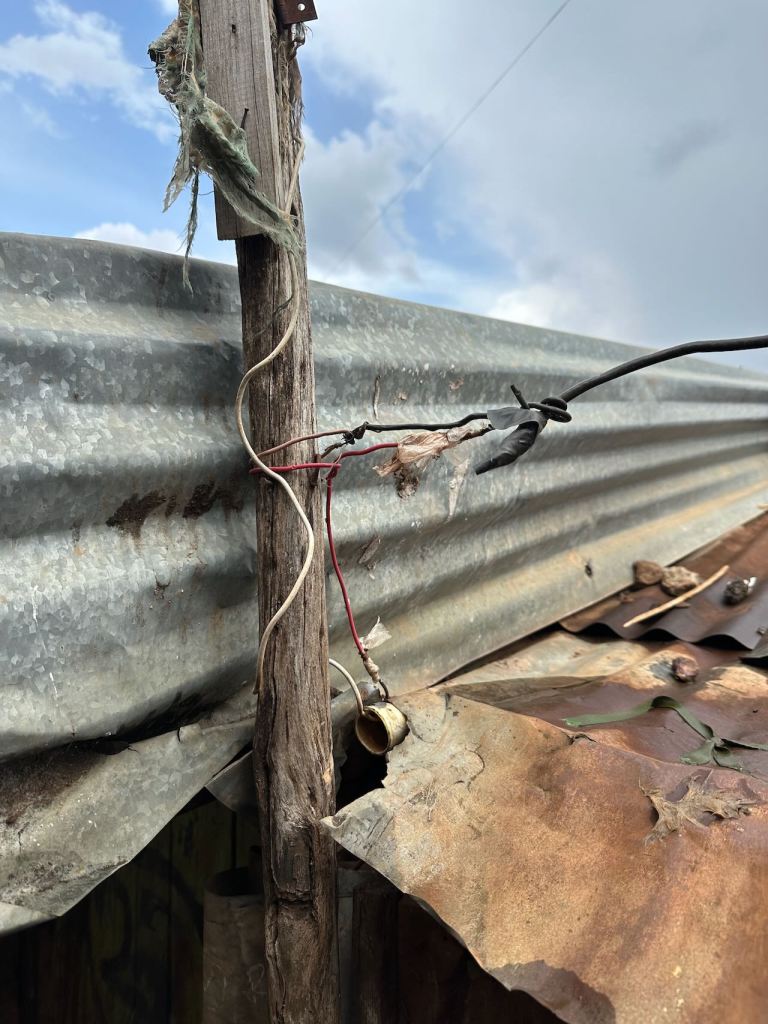
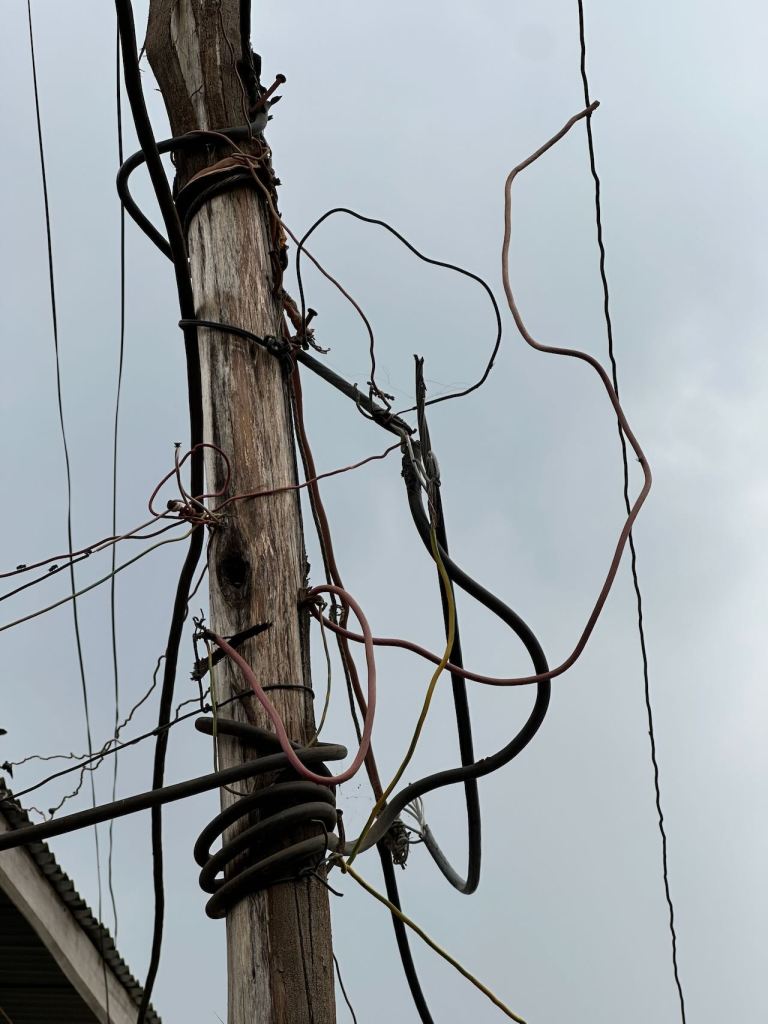
Since there’s no utilities in here, “electricians” tap power off the main lines and splice them together like this. Fires are common.
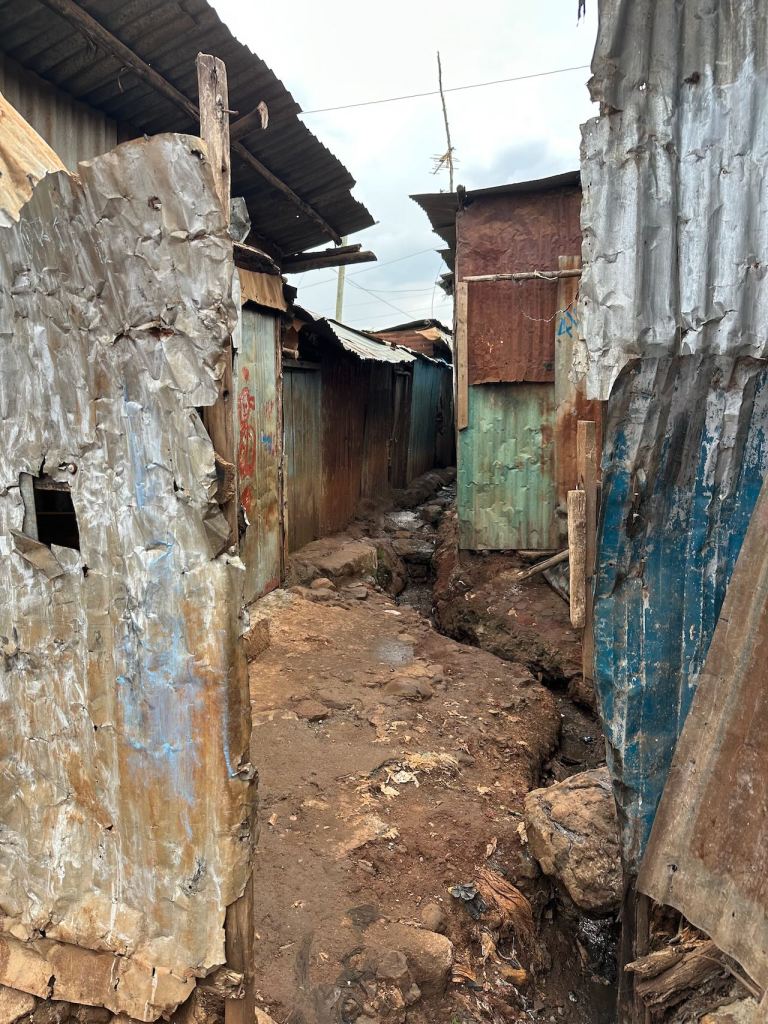
A typical street in the informal area.
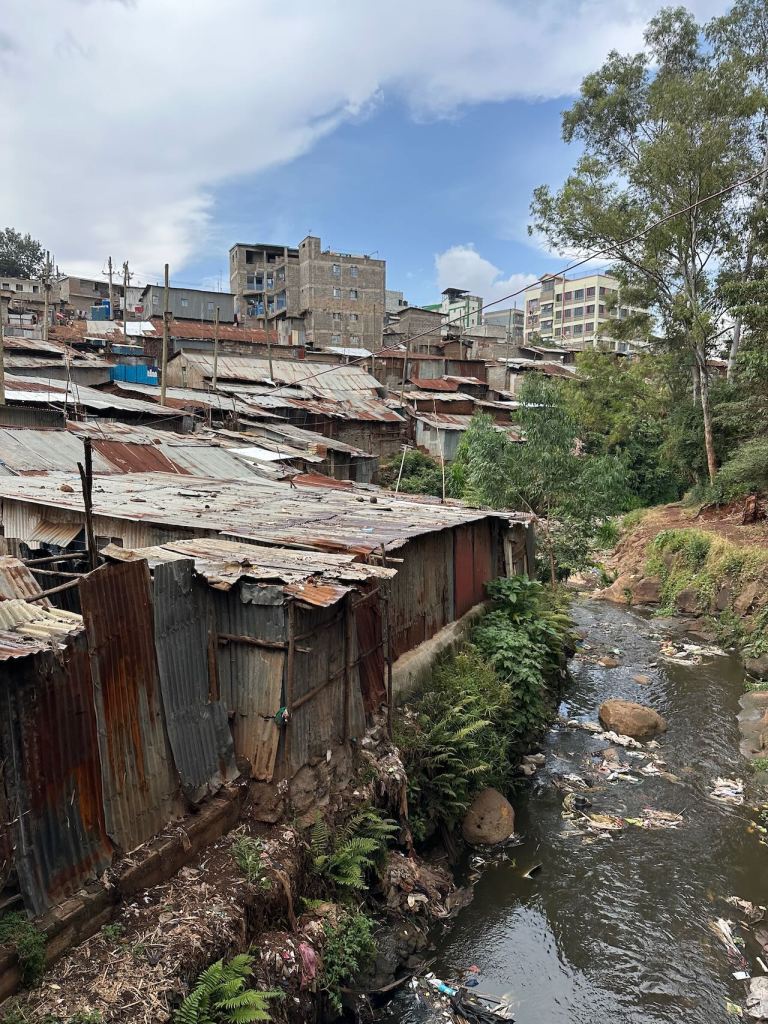
Down at the bottom by the creek, our guide Vincent explained that the properties were quite cheap down here. This is because every time it rains heavily, all that stuff from up hill that we’ve seen washes down more or less directly into these shacks.
Vincent took us to his home which was closer to the top of the hill. It had corrugated zinc walls, not mud, and although tiny, it was quite tidy inside. Vincent explained that some people do just stay in the slum, even if they had the means to move out, because everything is a lot cheaper here.
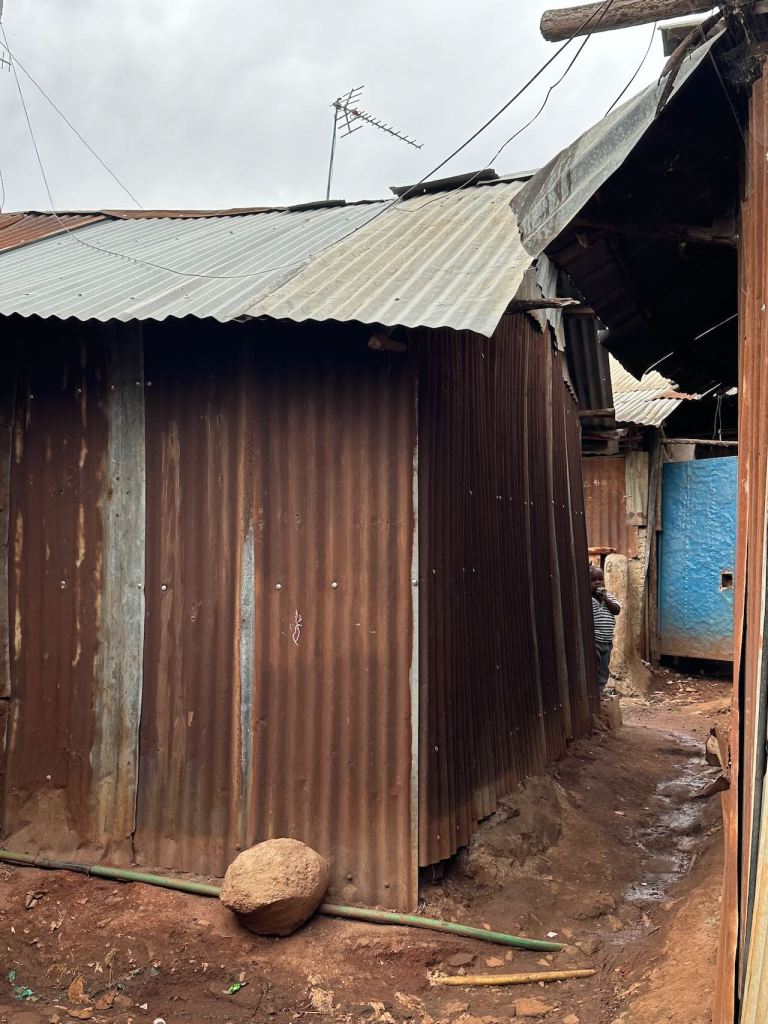
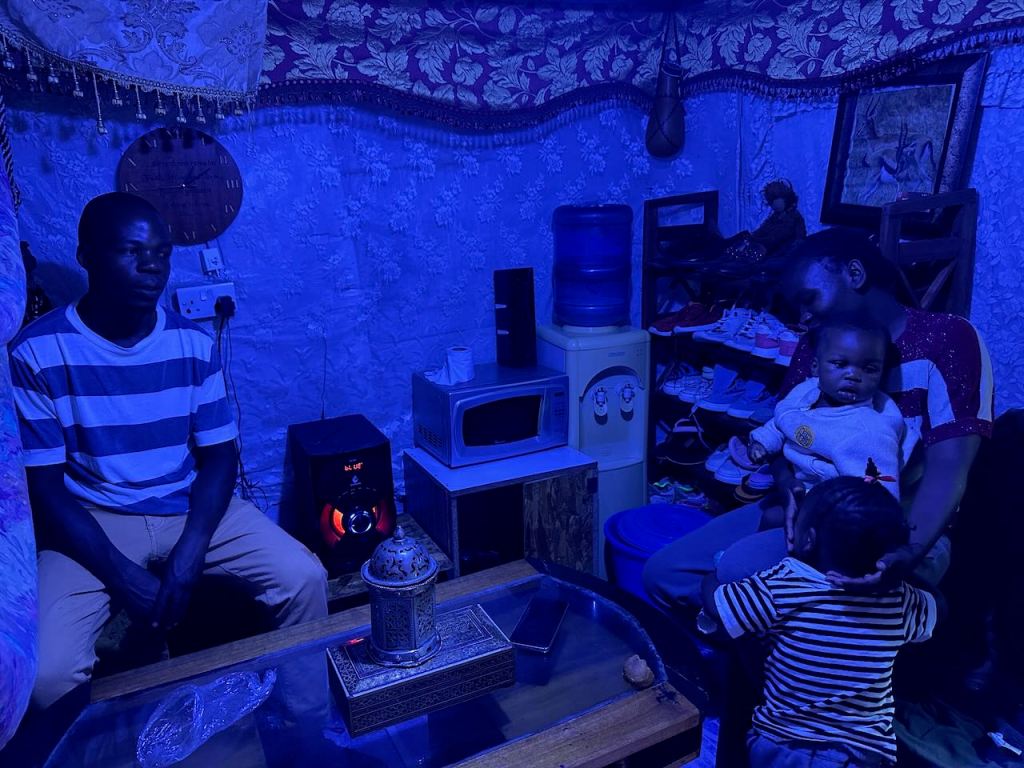
His wife and two kids were home. The main room, nearly the entirety of which is in the photo, was about 75% of the home. There was a bed off to the side behind a curtain and a “kitchen” in the corner.
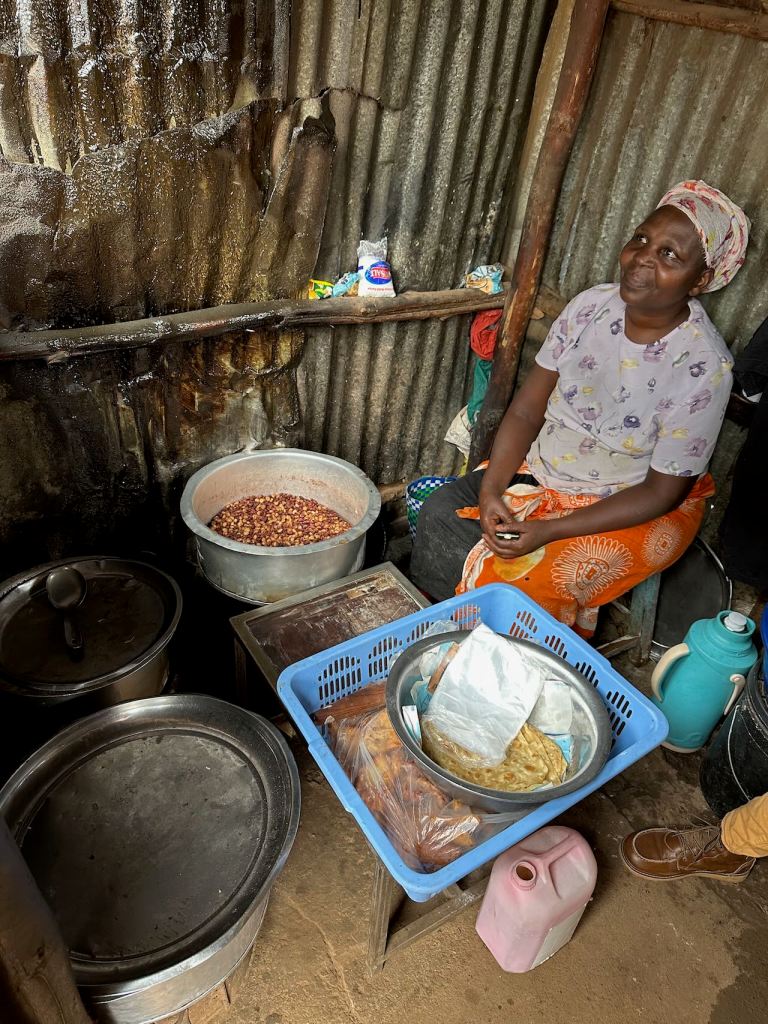
Vincent also took us over to his mother’s food stall a few corners away. I am very grateful that we weren’t offered any samples due to the reason already mentioned.
More electrical works.
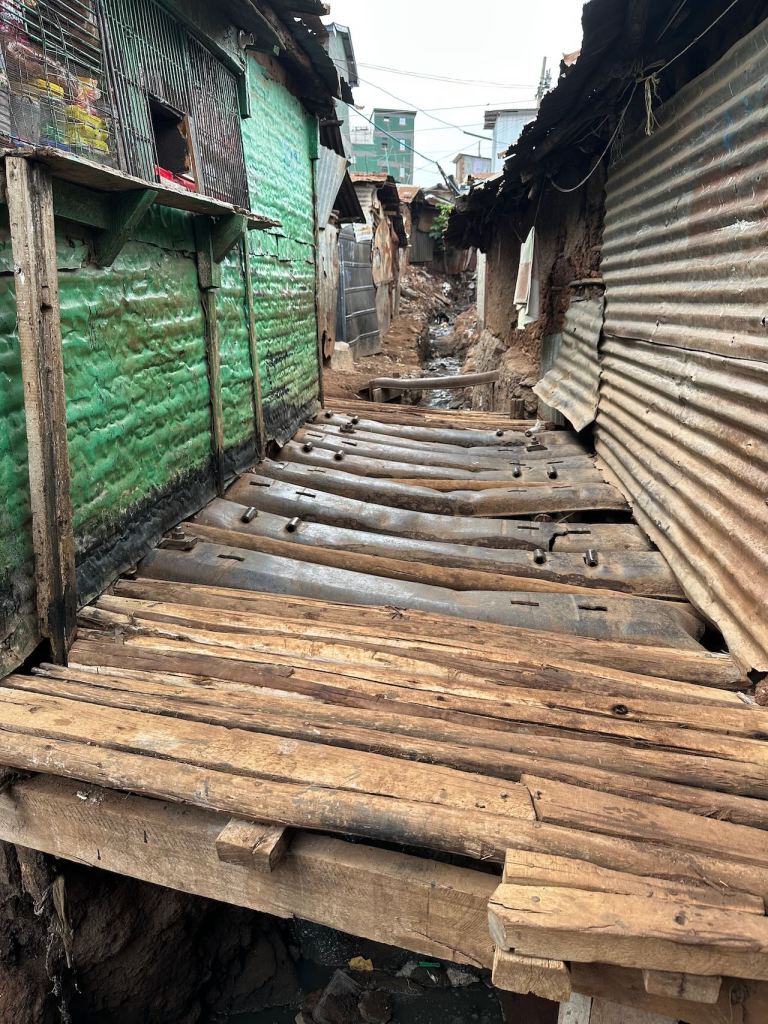
Here is a gutter that’s been decked over to cover a drop in elevation. We did walk over this bridge made of scrap wood, old steel railway ties, and mystery materials. Thankfully none of us fell through but it was a bit precarious getting off at the end.
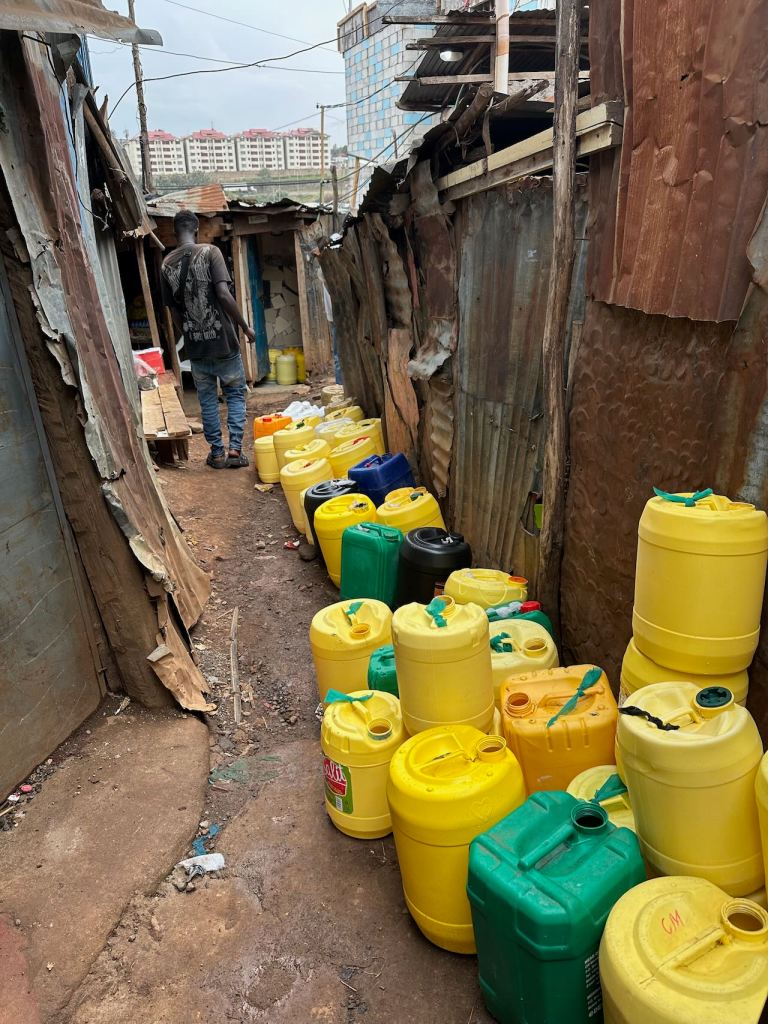
The community has a sort of co-op arrangement to supply water from a forested hill a couple of kilometres away to the slum. There are designated points for water, and most people carry several of these jugs back to their homes every day. Yes, you have to pay for each jug that you fill up.
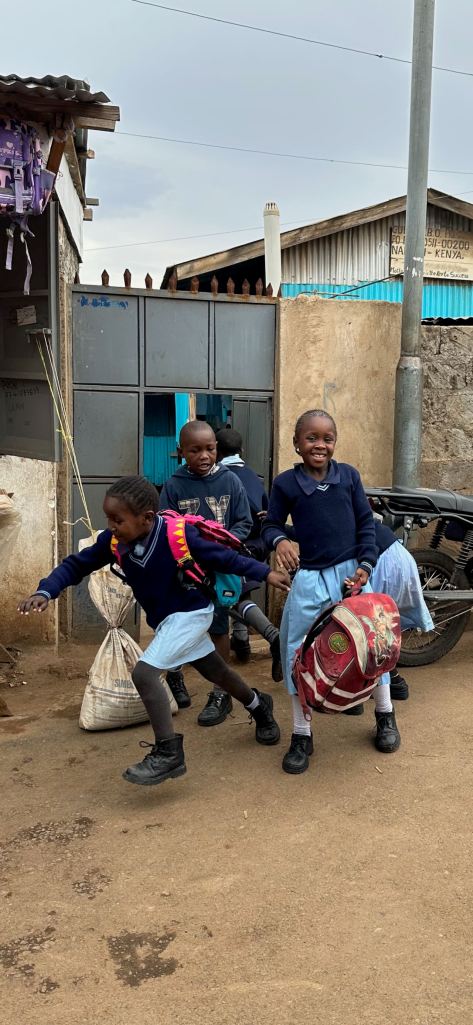
It was after school time now and we saw a lot of happy kids roaming the streets. A lot of them were very curious about Ellie with her fair skin and features, and she got a lot of high fives.
Our last stop was sure to be a highlight of the trip – the school that is funded by the non profit organization that does the tours.
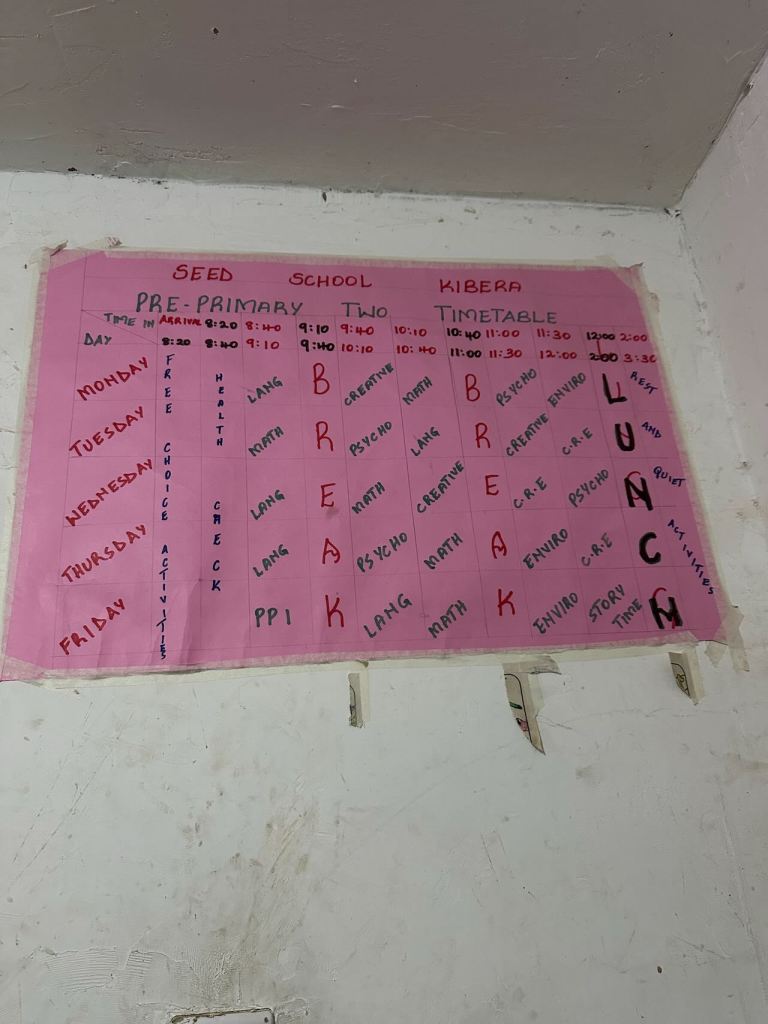
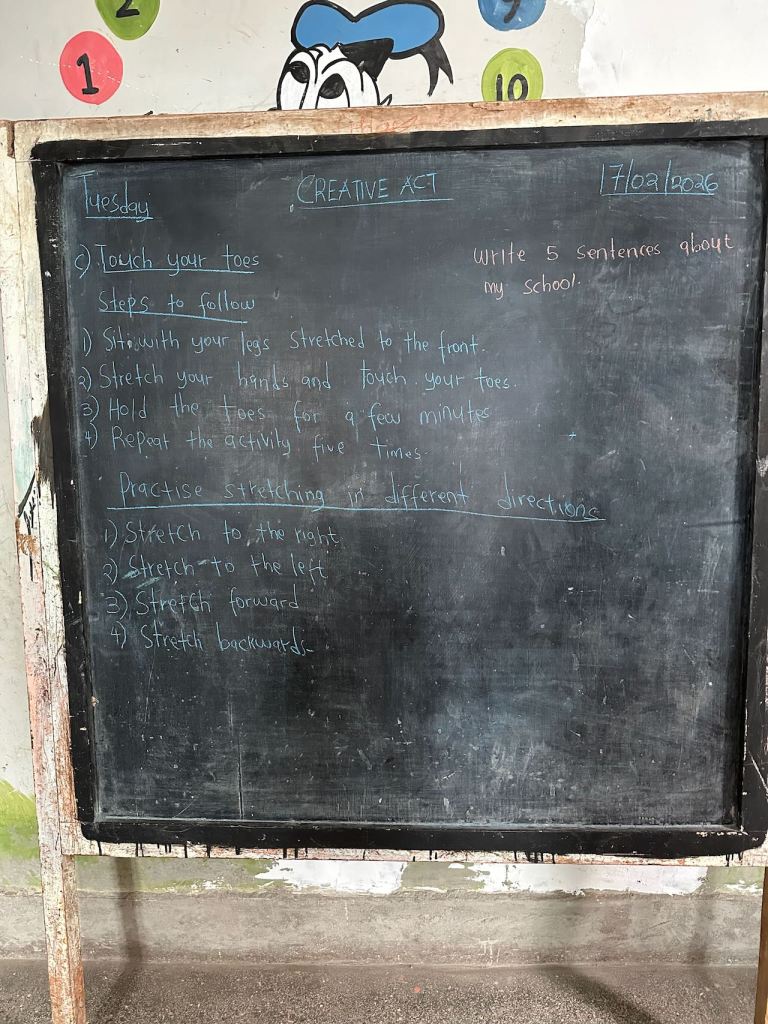
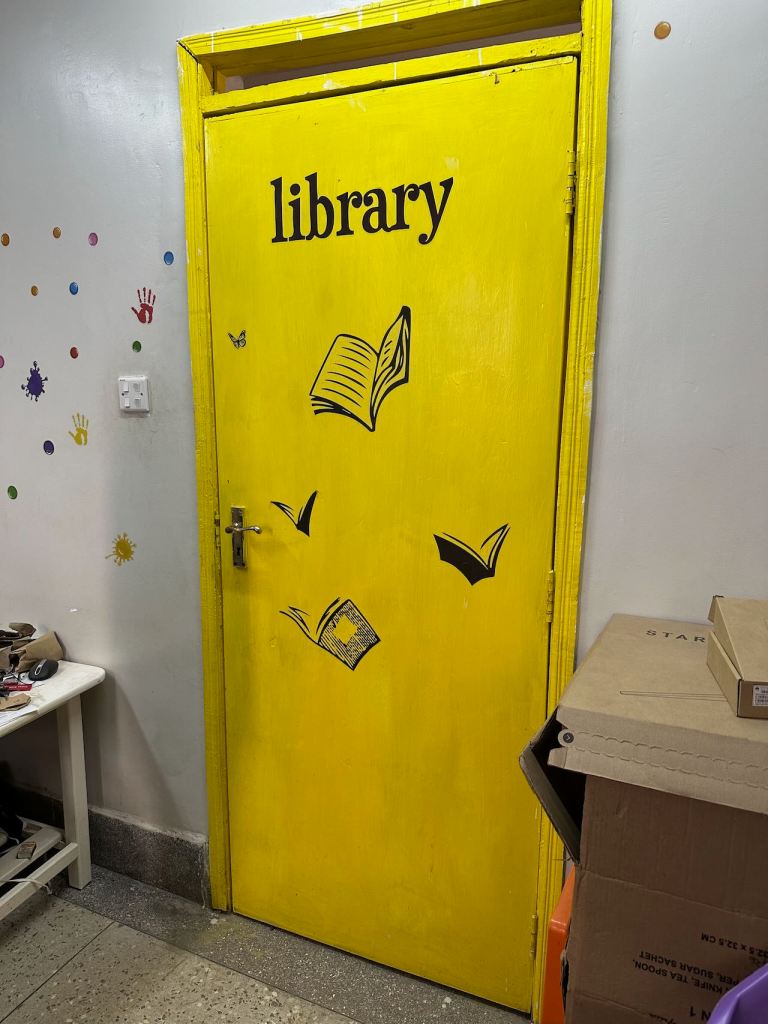
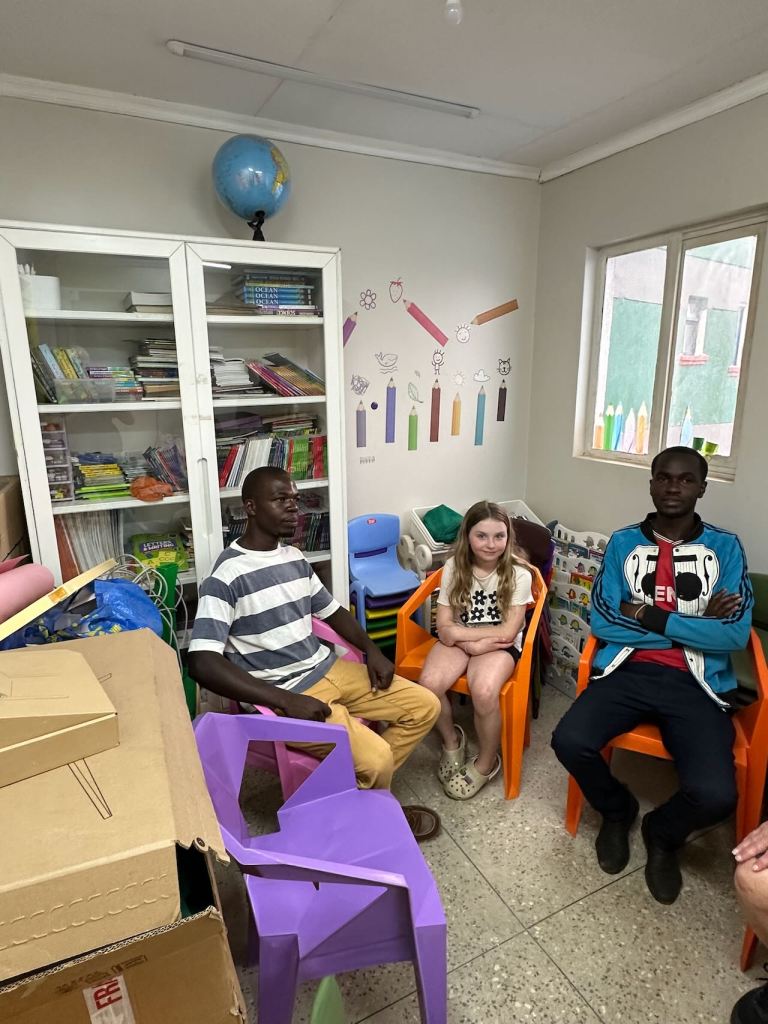
It was a Kindergarten to Grade 6 school, with just over 200 kids. The classrooms were tiny, but tidy.
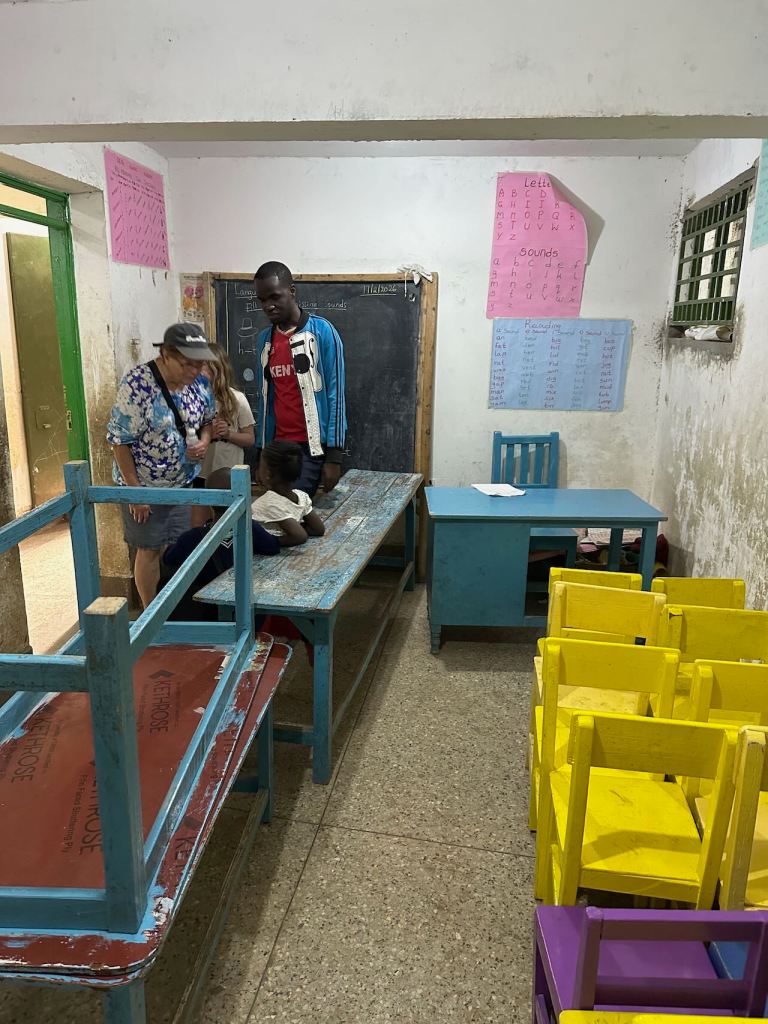
Everything was in English.
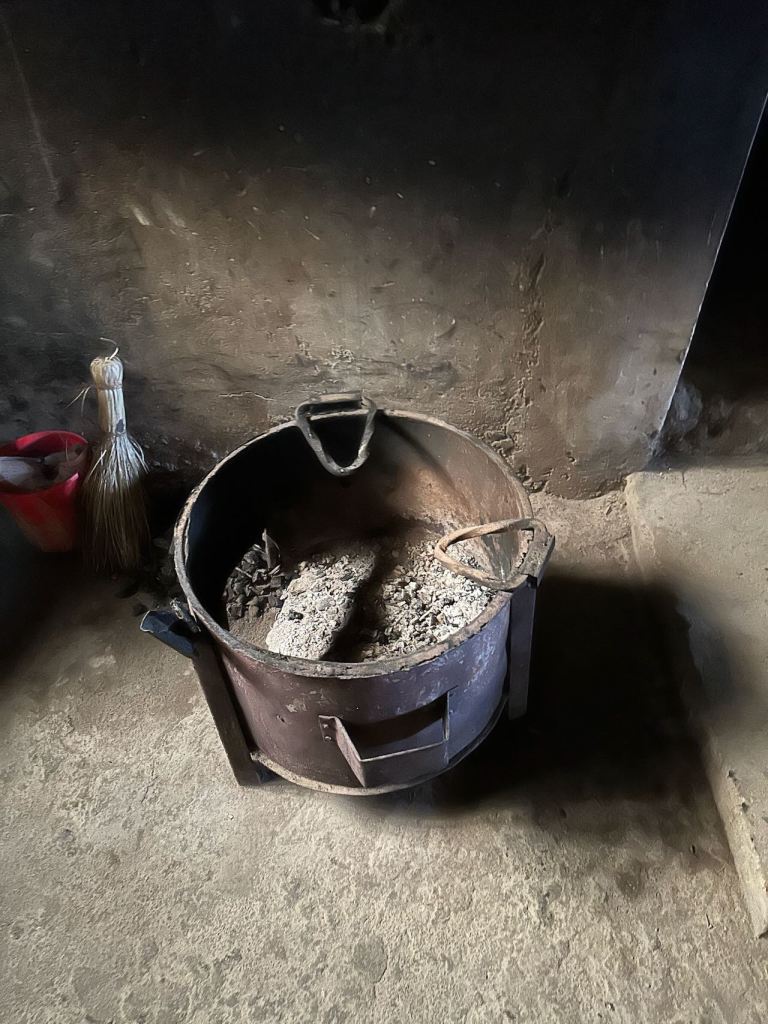
This is a firebox in the “school kitchen” – a non descript room in a stairwell at the back of the building.
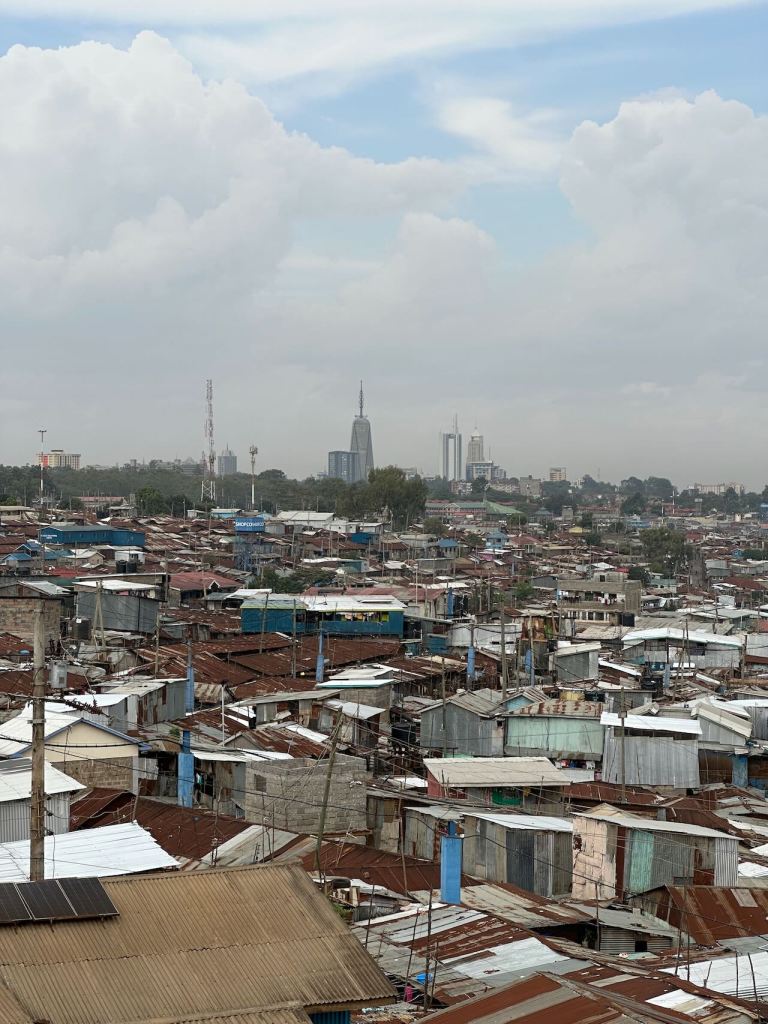
The modern buildings of central Nairobi aren’t that far away. How these people must look at that and dream.
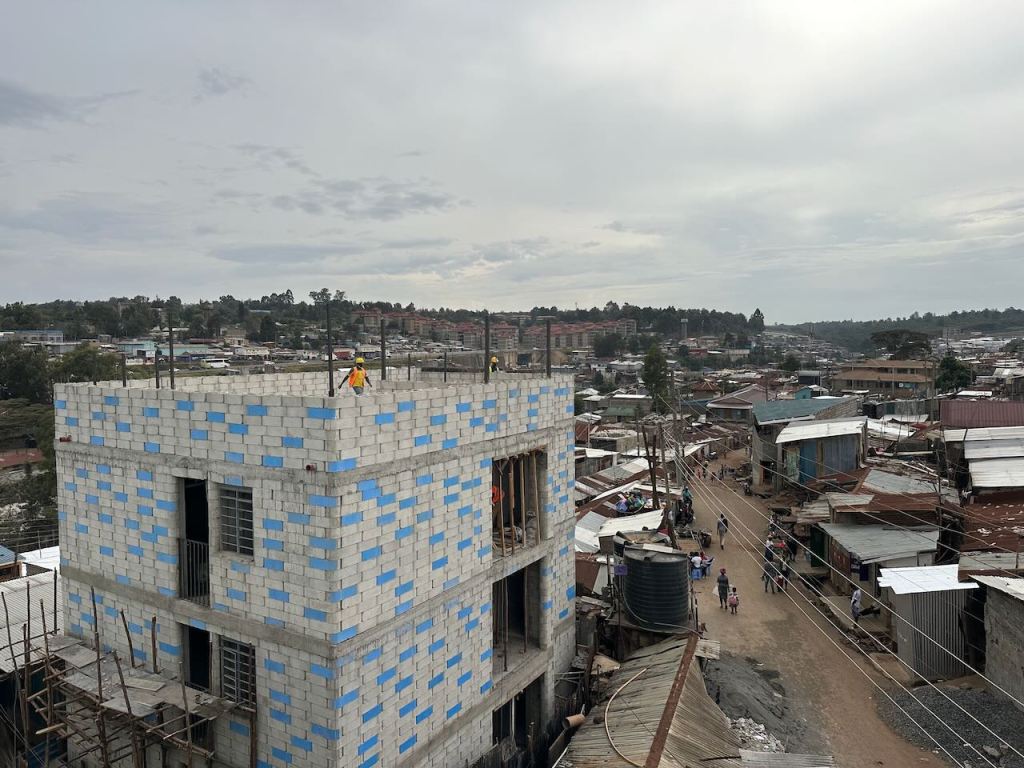
There were a few spots of new, proper construction around, founded by foreign organizations mostly. The dwellings within the slums have serious issues with building collapses especially after heavy rainfall events.
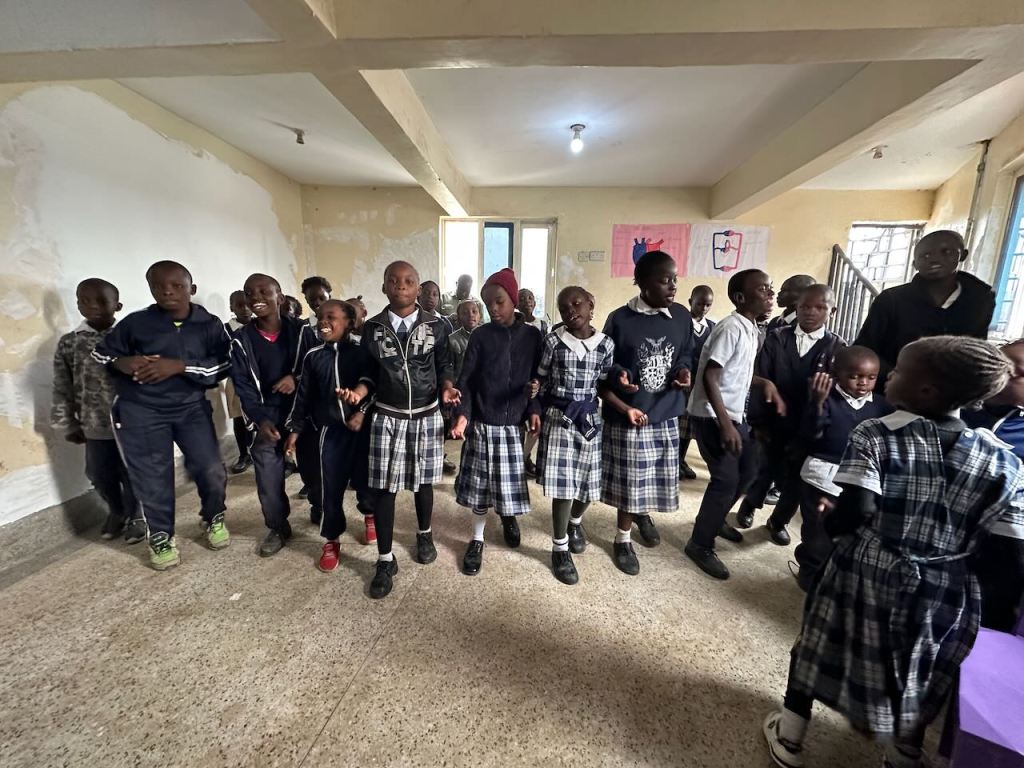
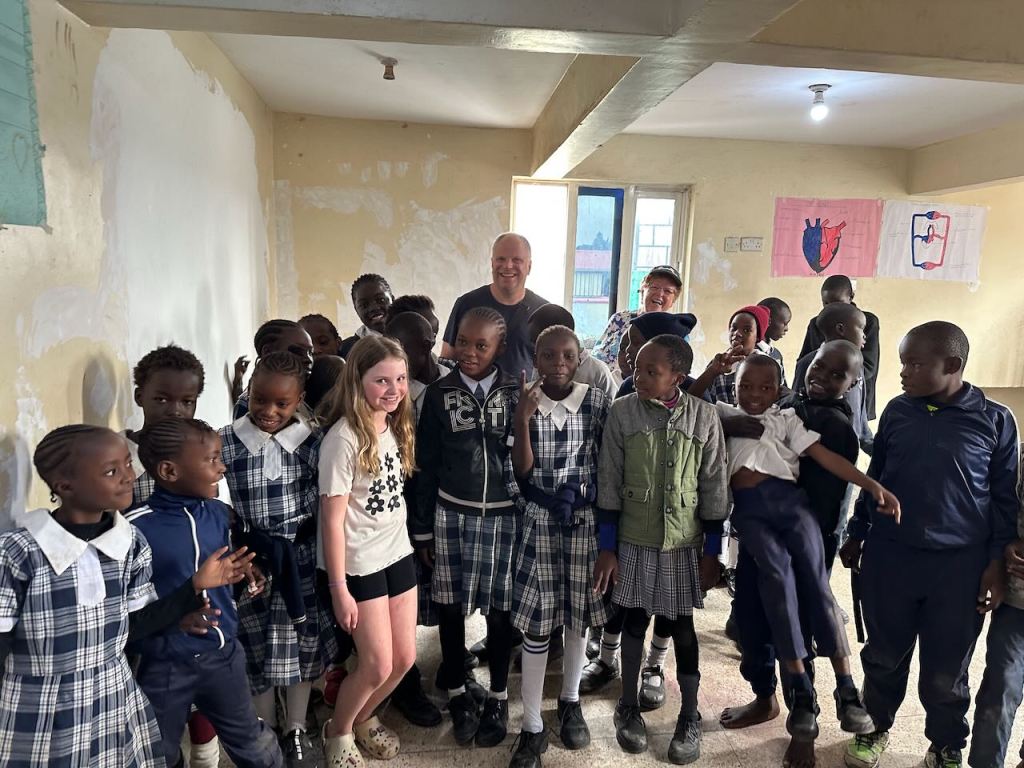
We had a great tour of the school, top to bottom, meeting some of the teachers, and finished up the visit with a musical/dance performance by some of the children. And we were invited to join them. It was really cool and heartwarming to see these kids who have next to nothing, dressed up neatly for school and just having fun being kids!!
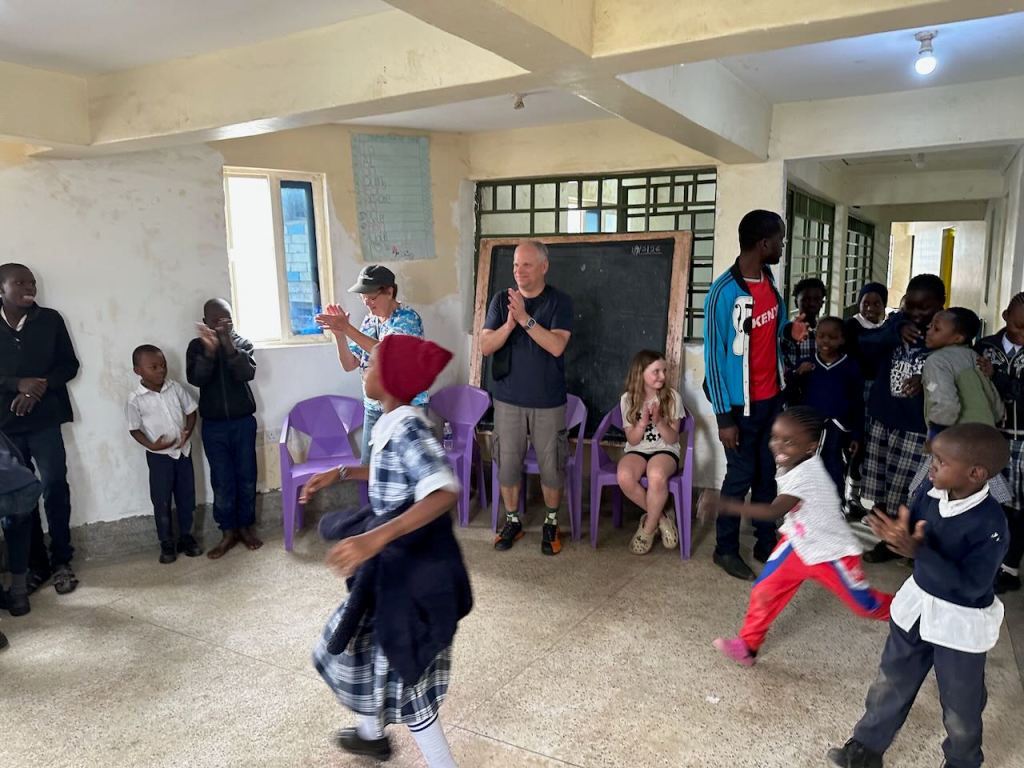
Please let me know if you ever visit Nairobi so I can connect you with Aouki Padox, the director of this foundation (who is also the driver!)
Sisi Ni Mashujaa means “We are Heroes” in Swahili. These folks certainly are.
After that, the one other thing I wanted to do was visit Carnivore, a well known meat joint in Nairobi. The charcoal grill was likely the biggest I’ve ever seen.
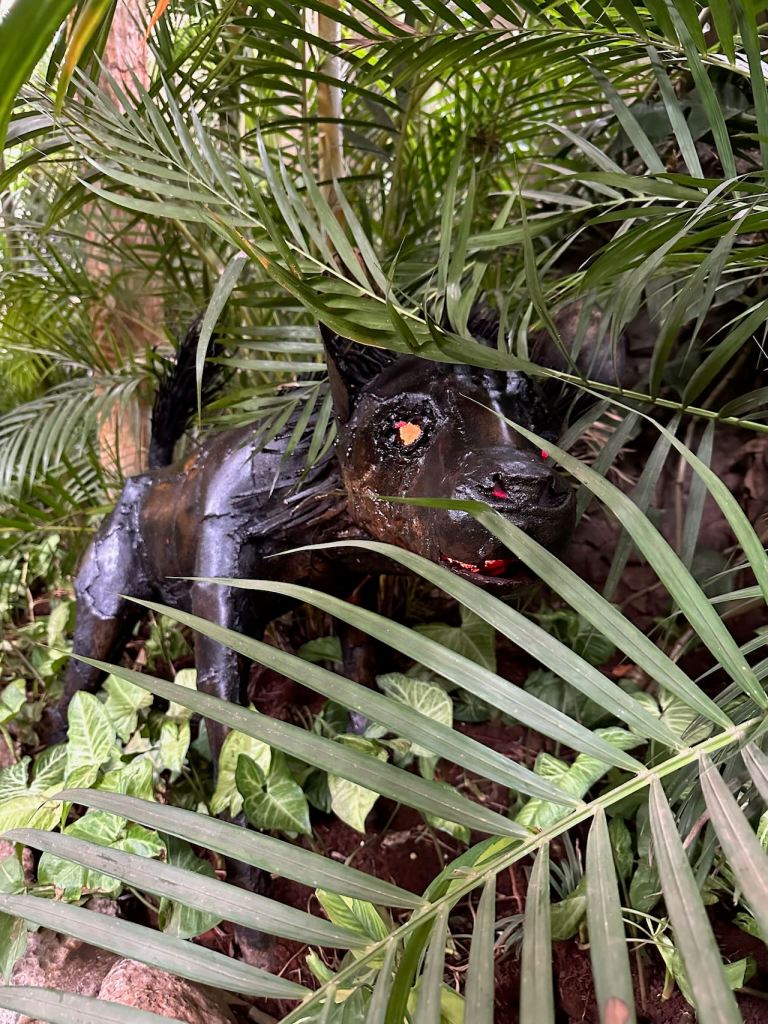
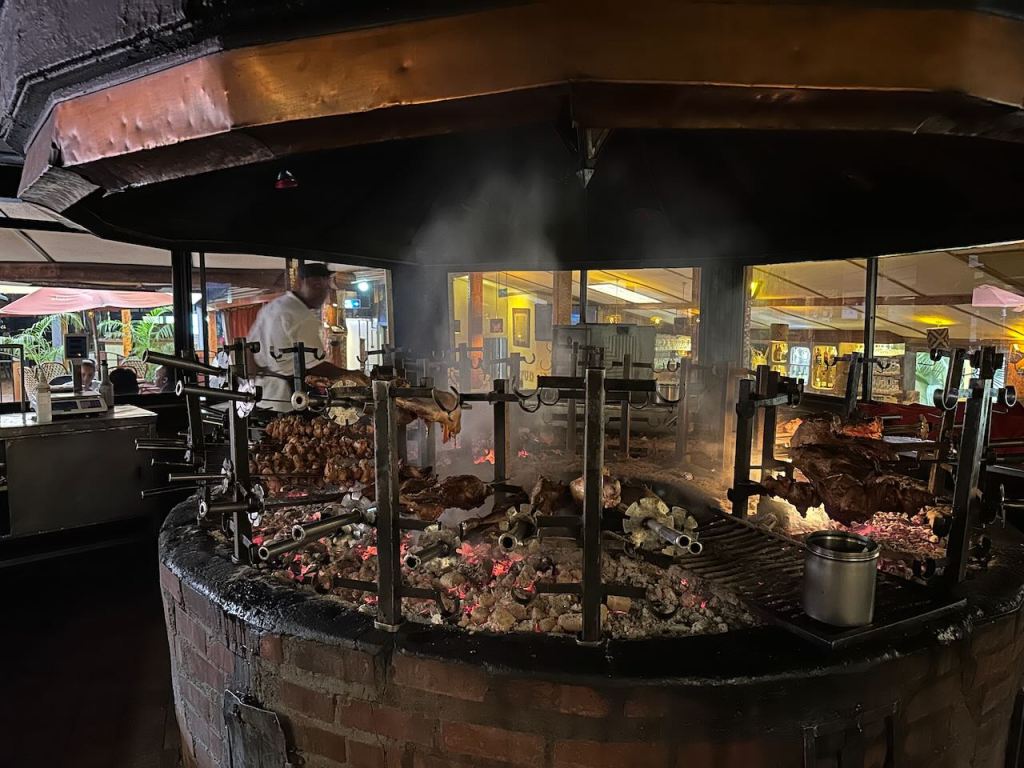
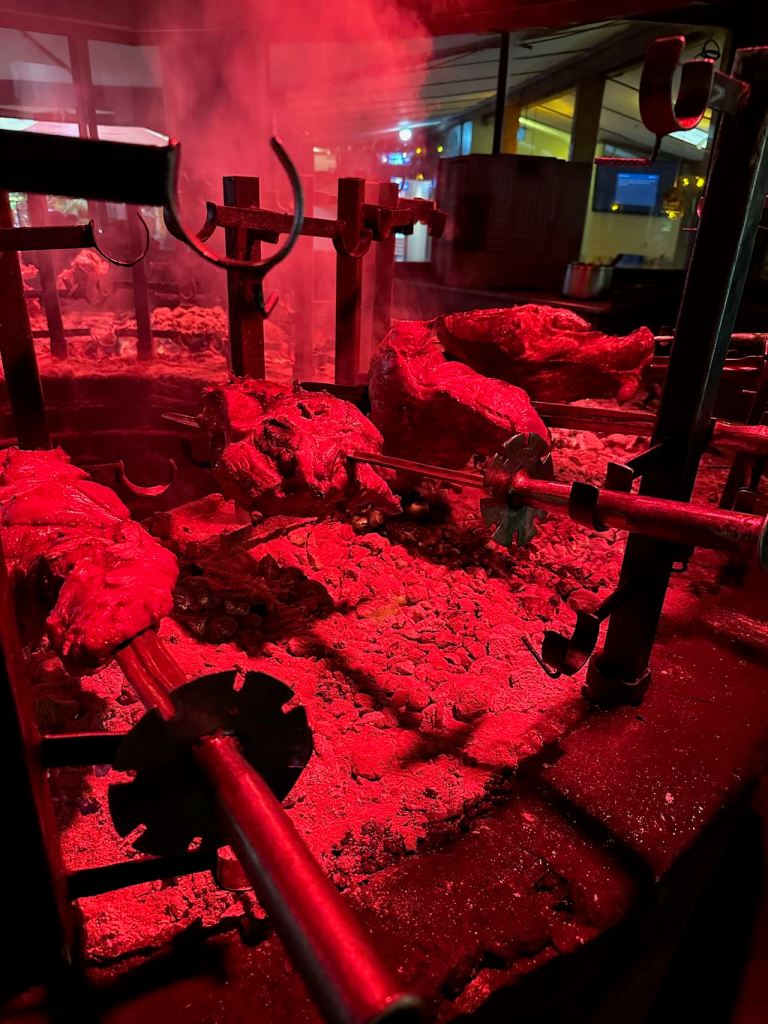
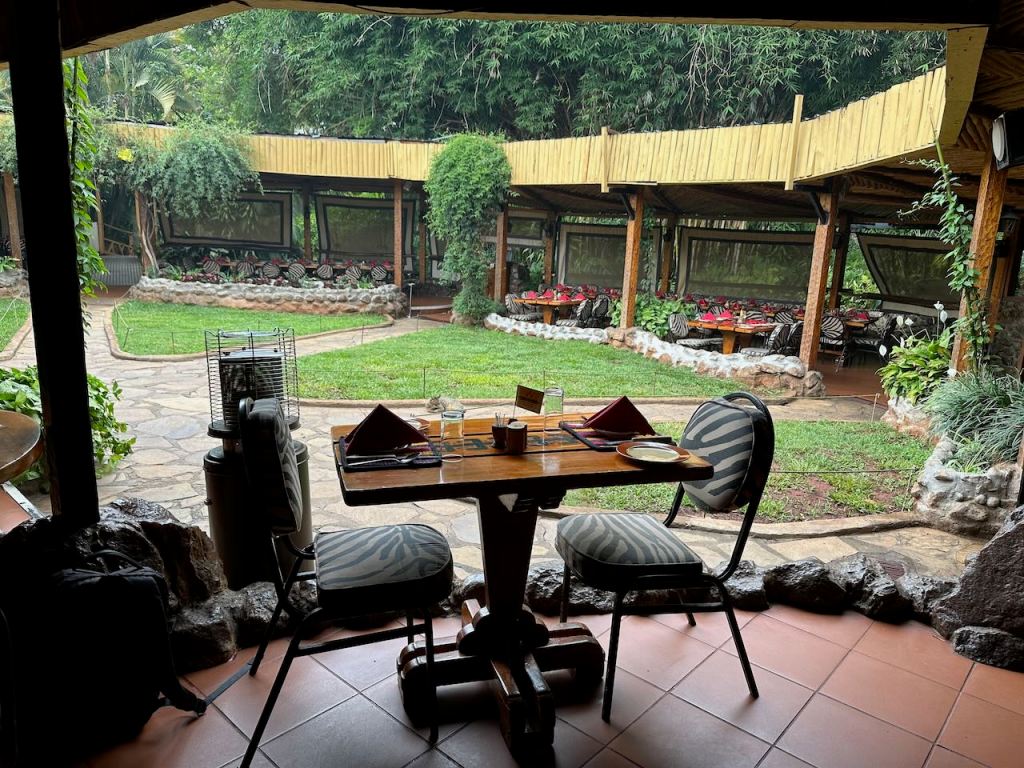
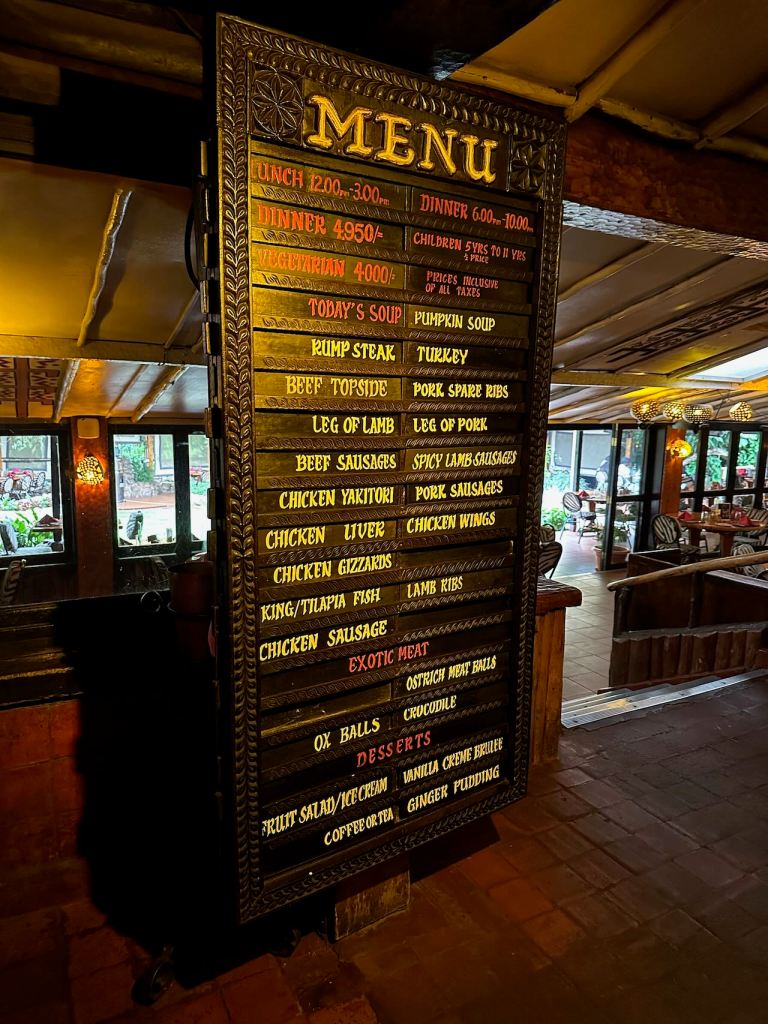
The variety of meats was extensive and I tried almost all of them, except a few of the standard things that we can get at home like turkey.
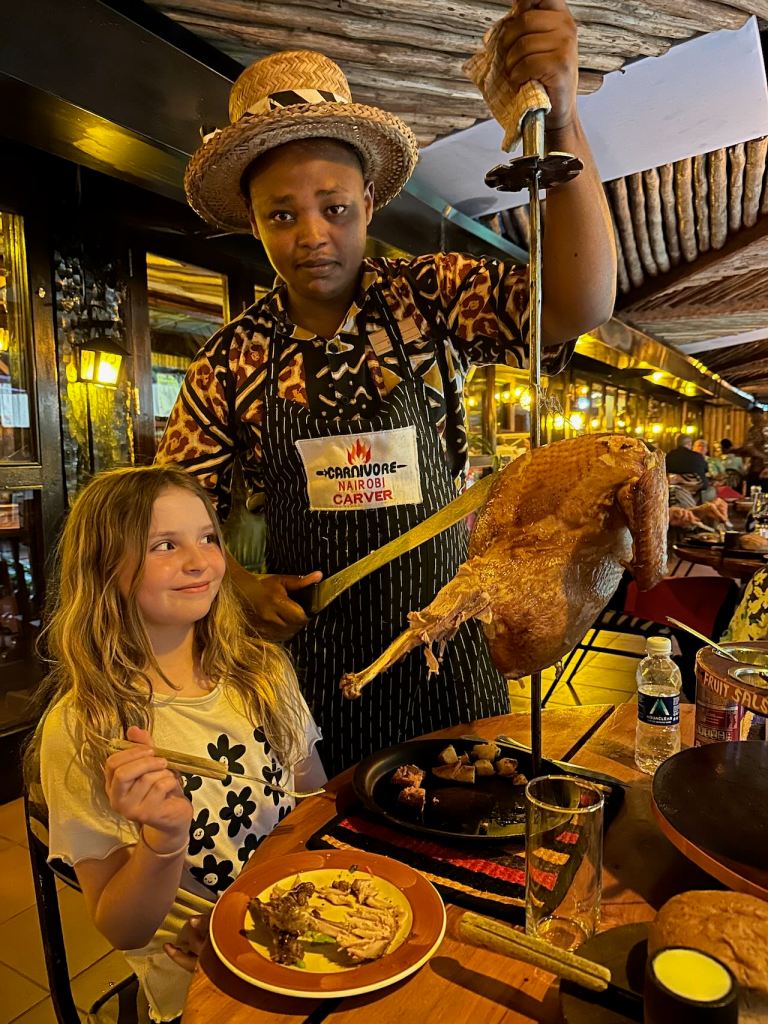
The serving style was like Brazilian rodizio where they come around continuously with meat on swords.
Here’s one interesting thing about Uber in Nairobi. Not only can you request a car, van, or motorbike… but also a safari or a night safari! We just took a regular car, and did I mention that while we were at dinner the heavens opened. It poured for many hours late into the evening. I can’t imagine how things were working out in Kibera.

Oh, Ellie’s phone is in Dubai now. Well, now I know for sure it’s still on the plane, as the airframe that we were on late last night flew to Dubai this afternoon!
We lazed around the camp basically all day on our last day. It was actually pretty relaxing and very peaceful. There were only 3-4 other people staying here. Talk about low season, it’s got to have an occupancy rating of over 100. They also had a zipline that Ellie did dozens of times.
Well, we went to the airport early as our plane with Ellie’s phone on it was coming back into Nairobi from Mombasa. We connected with a super helpful airport worker (who wasn’t even an airline employee, she was a meet and greeters named Ruth) who helped us to get in touch with security again to search the plane. Still nothing!! It must have been jammed way down into the seat pocket. Gone forever.
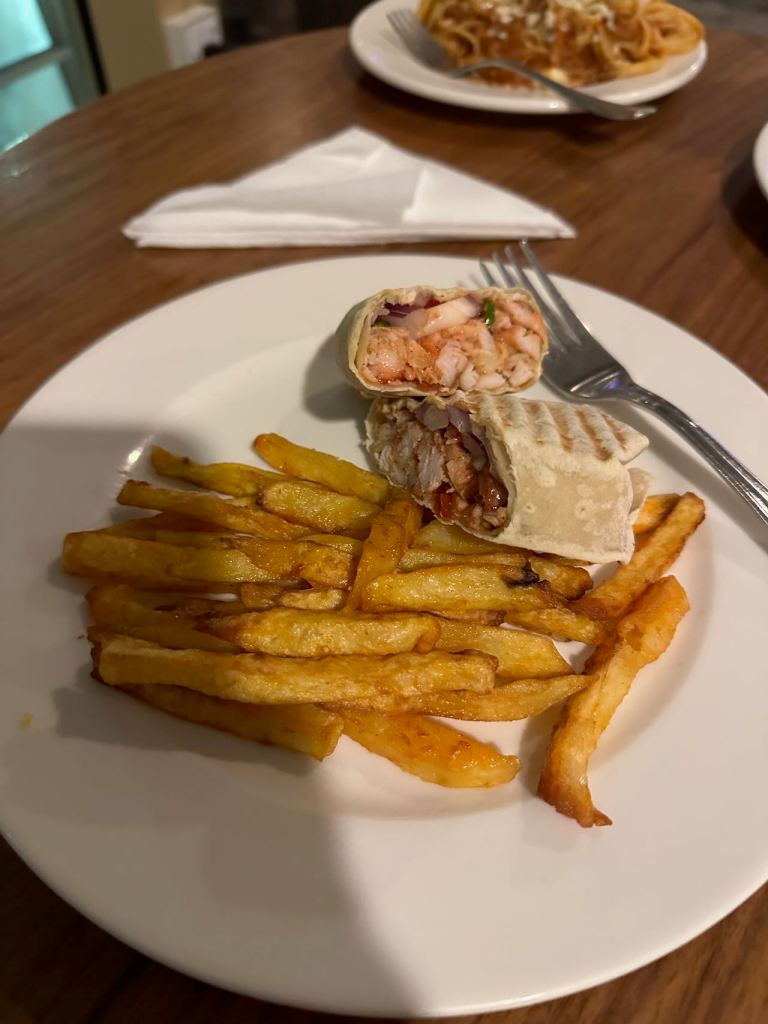
We’d originally checked in and dropped our luggage at the counter before going to seek out the phone. Now that it was more of a regular time to check in for overseas flights, the line to get in the terminal (you have to go through security twice before actually getting inside – once on the road leading to the terminal, and once again right from the sidewalk) was huge, and the passport control line even bigger. I think we had to wait 45 minutes. Sadly, if we’d gone through right away we likely would have been able to go onboard the plane itself and search for the phone, but who’d have known? There was a consolation prize of some decent food in the crowded lounge: a fresh pasta station for Ellie and Granny, and a chicken shawarma wrap and fries for me!
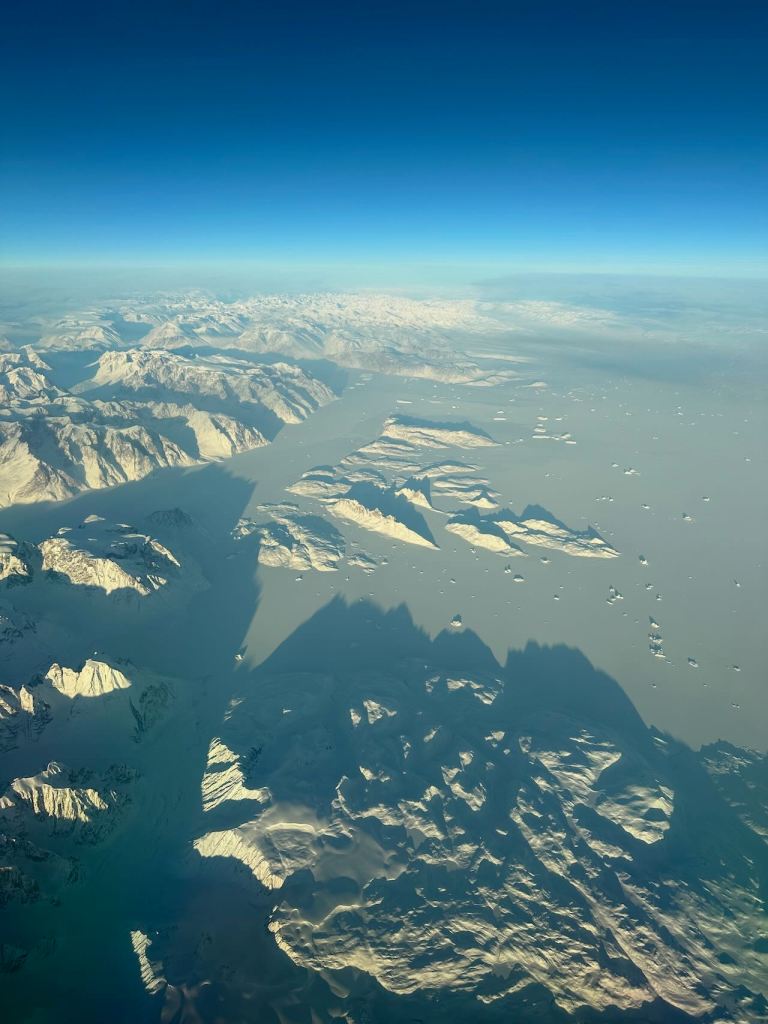
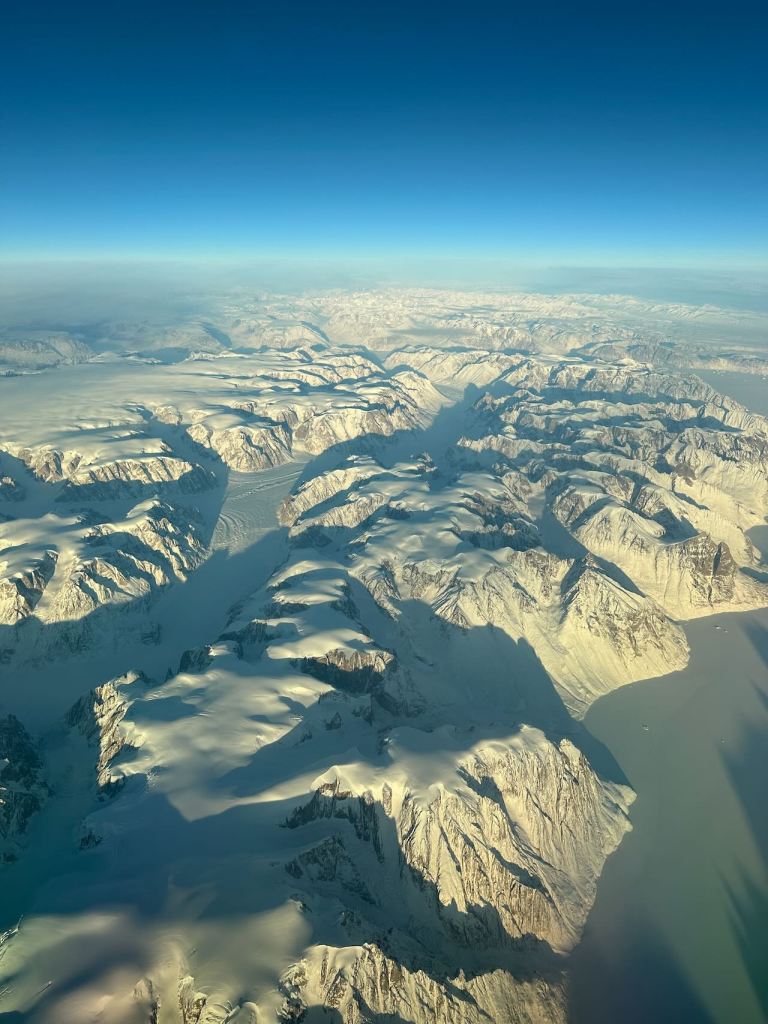
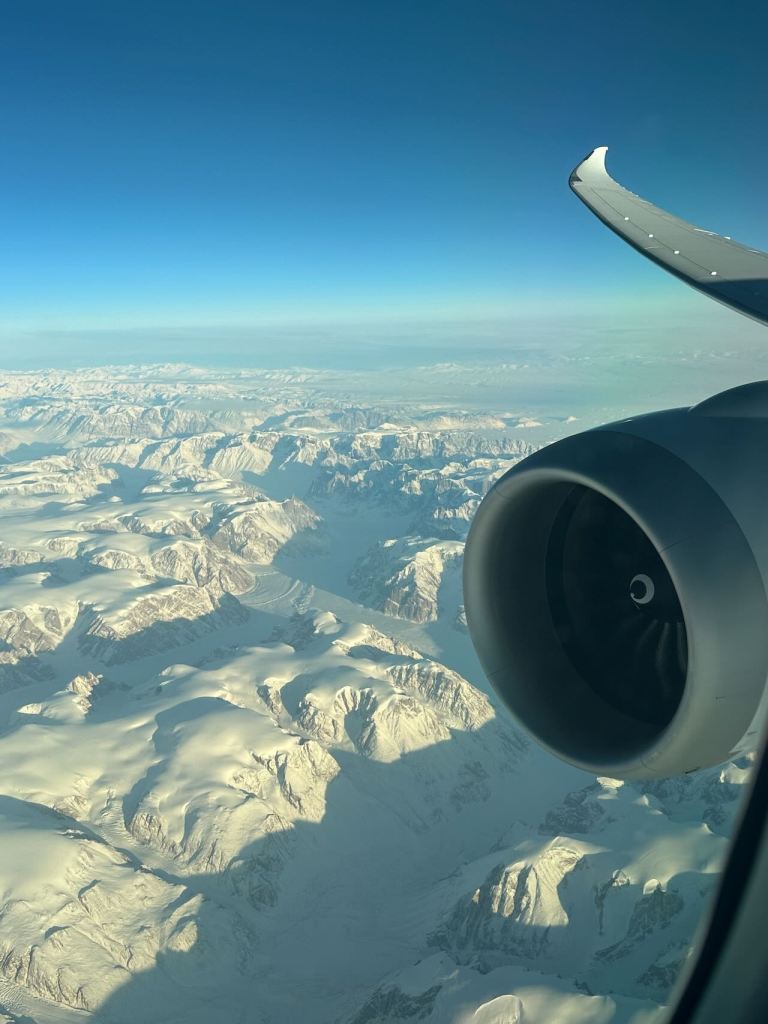
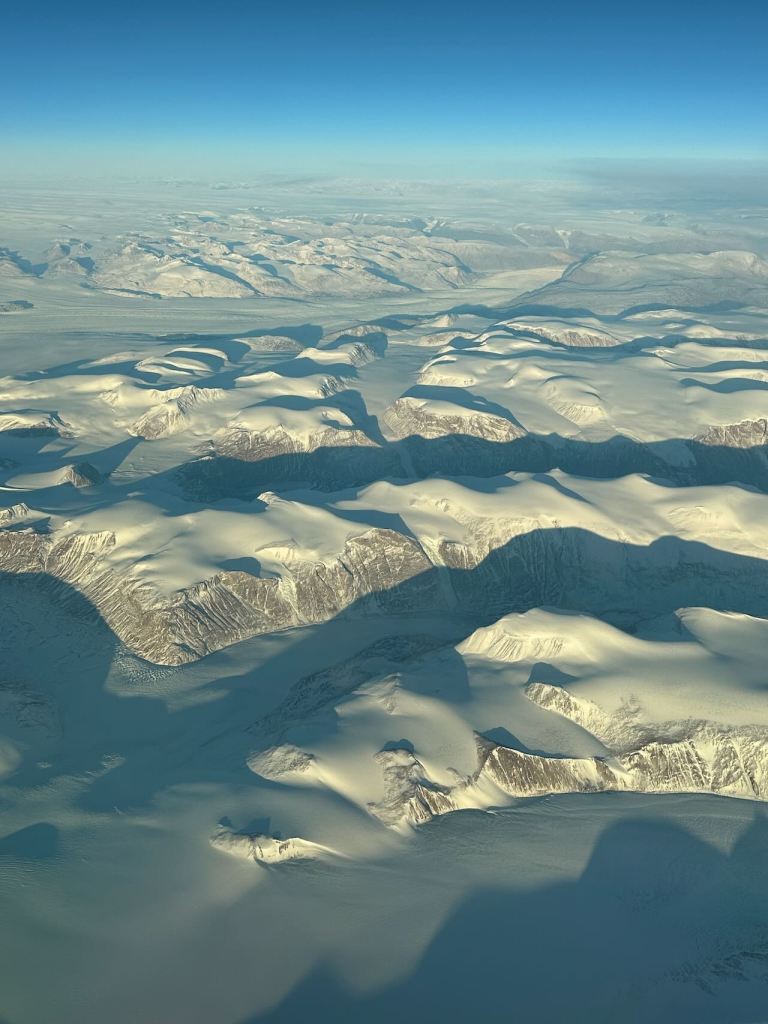
About 20 hours later, we were almost home, and ended the long journey with one of my favourite travelling views: Greenland.
For what it’s worth, Ellie’s phone was found and charged a couple of days after we got home, and has been intermittently roaming around Nairobi since then 😦
 Ellie's Adventures